










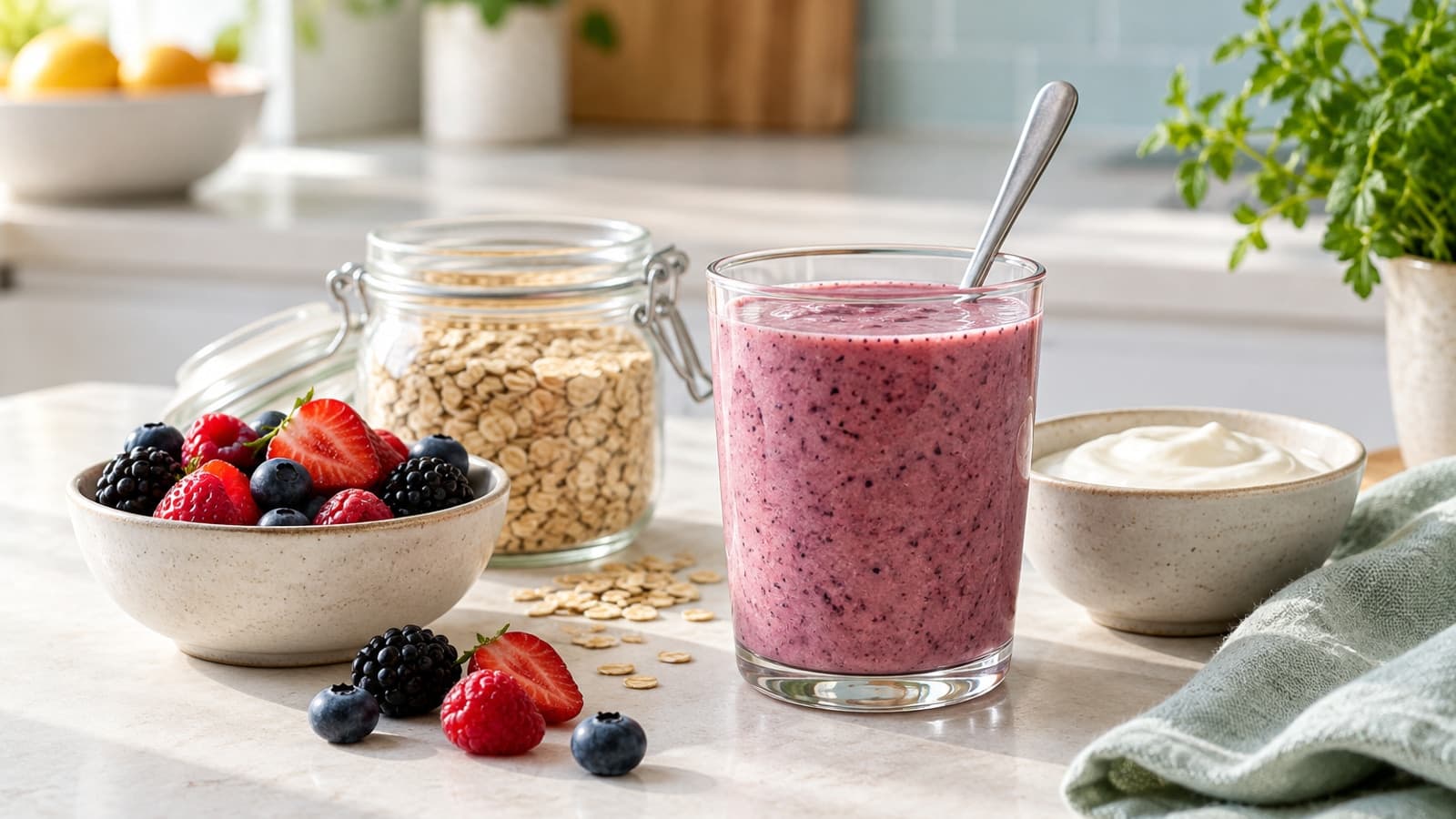
A smoothie can be convenient on a busy morning, but a large glass of fruit and juice may not be what you wanted if you were hoping for a more substantial snack.
Decide what job the smoothie is doing. Are you drinking it alongside breakfast, taking it to work, or having it between meals? That answer helps you choose the ingredients and an amount you'll actually want.
Start with a liquid and a flavor
Milk, a suitable plant-based drink or water can help the blender move. Each option tastes different, and their nutrients differ too. If protein, calcium or another nutrient matters in your choice, compare the labels on the products you use.
Add fruit you enjoy, such as berries or banana. A combination can be as simple as yogurt, berries and a little milk, blended to the texture you like. Start with a modest amount of liquid; you can add more if the mixture is too thick.
Check your blender's instructions for filling and blending order. Don't overfill the container, and stop the machine before removing the lid or adjusting ingredients.
Consider a protein food
Yogurt, milk or silken tofu can contribute protein to a smoothie. Some plant-based drinks and powders provide more protein than others, so the label and the amount you use matter. Adding a spoonful of an ingredient does not automatically make a drink a complete meal.
Choose around your own allergies and tolerances. Dairy yogurt contains milk, and tofu contains soy. A lactose-free dairy product still isn't suitable for someone with a milk allergy. Check every component, including any powder or nut or seed butter.
Powder is optional. If you already use one, compare its ingredients and serving size with your needs rather than assuming a full scoop belongs in every drink. Our guide to protein shakes and food explores when a shake may be useful.
Adjust the texture and portion
Some people like a thick smoothie eaten with a spoon; others prefer a thinner drink. A little extra liquid changes the texture without requiring another ingredient. If you enjoy oats or a suitable nut or seed butter, a small amount can add a different flavor and consistency.
If you're taking a GLP-1 and a large drink feels like too much, pour a smaller first glass and keep the rest safely chilled for later. You can pair the smoothie with another food or have a separate snack when you're hungry. A small glass is not a target you need to enforce.
If you follow a plan for diabetes or another condition, consider how the ingredients fit the advice you've been given. A dietitian can help adjust the combination to your circumstances.
If sweet flavors aren't appealing, try a less sweet combination or choose another snack entirely. There is no need to drink a smoothie every day for a weight-management plan to work.
Keep preparation simple and safe
Rinse fresh fruit under running water and use clean equipment. Keep milk, yogurt and other perishables refrigerated, and follow package instructions for frozen ingredients. Some frozen vegetables require cooking and aren't intended to go straight into a cold drink.
If you pack a smoothie to take along, keep it cold with suitable refrigeration or an insulated bag and cold source. Clean the blender and lid after use, following the manufacturer's directions, taking care around the blades.
If nausea or other symptoms regularly make it hard to eat or drink enough, bring that up with your care team. A smoothie can be one convenient option, but persistent difficulty deserves attention.
Next time, pick one fruit, a liquid and any other ingredient that serves your plan. Blend a little, taste it and adjust the texture to something you'll enjoy.