










You reach for a familiar can and realize you can't read the label as easily as you used to. Or you pour coffee into a dark mug and have trouble seeing how full it is. Small kitchen tasks can start taking much more attention when your vision changes.
There's no single setup that works for everyone. What helps depends on what you can see, the lighting, the kind of task and your own preferences. The aim is to make your kitchen easier to use while keeping the foods and routines you enjoy.
If a change in vision is new, tell an eye-care professional. If you suddenly cannot see from one or both eyes or have sudden severe eye pain, call 911 or go to an emergency department immediately. This article is about practical kitchen adjustments, not a way to diagnose the cause.
Give ingredients a reliable home
Start with the items you reach for most: breakfast foods, a favorite mug, your usual cooking oil, or the container you use for leftovers. Choose a consistent spot for each and ask others in the household to return things there.
It can help to organize a shelf by purpose instead of by container size. For example, keep tea, cereal and oatmeal together in one accessible area. Put similar-looking cans in separate places so you don't have to identify them by shape alone. If you share the space, agree on a system everyone understands.
Avoid transferring a food into an unmarked container just because the container is easier to open. A label needs to tell you what's inside and, when relevant, how to store or prepare it. If another person helps unpack groceries, ask them to label items with you rather than rearranging the kitchen on their own.
Make the label work for you
Large print, a thick marker, tactile dots or an audio label may help distinguish items. Some people use phone features that enlarge text or read it aloud. Others prefer a simple raised mark on a container they know well. Pick a method you can recognize consistently.
Be especially careful with foods that look or feel alike but have different preparation requirements. Keep important cooking directions and date information accessible. If you're not sure what something is or whether it was stored safely, ask for help rather than relying on smell or guessing.
Medication should have its own clear storage and labeling system, separate from food. If you have trouble reading a medication label, ask your pharmacist about accessible options and review any questions about the product with them.
Use contrast where it helps
For some people, a light-colored food is easier to see against a dark plate, while darker food stands out on a light one. A contrasting cutting board, placemat or counter mat may make an ingredient or utensil easier to locate. Test what works in your own lighting; more contrast is useful only if it makes the task clearer to you.
Lighting matters too, but brighter isn't always better. Glare can make a shiny surface harder to use. Move a lamp or adjust a shade if that reduces shadows or reflections, and make sure cords stay out of walking and work areas.
A low-vision professional or occupational therapist can help identify useful changes for your particular kitchen. You may be able to try adaptations before spending money on equipment.
Make the cooking step predictable
Before you start, clear a work area and collect the ingredients and tools you'll need. Put each item back in its place as you finish with it. That can make it easier to keep track of a spoon, an open package or the next step in a recipe.
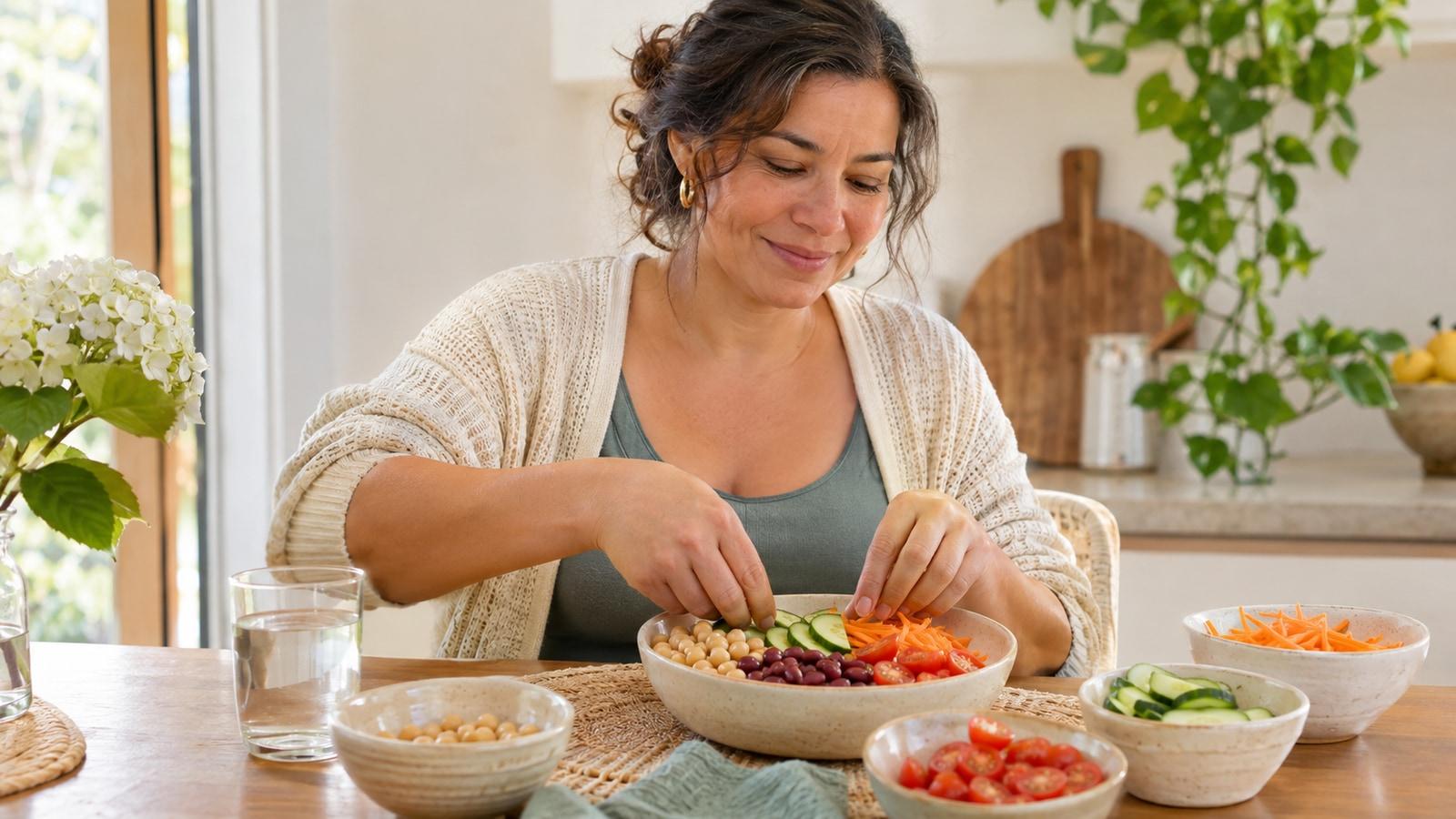
Prepared ingredients may reduce the number of steps on a busy day. A meal can be as straightforward as a ready-to-eat grain, beans and vegetables, or eggs with toast and fruit. Choose familiar foods and preparation methods you can manage comfortably; convenience doesn't make a meal less worthwhile.
For hot pans, sharp knives and appliances, use techniques and equipment that have been shown to work safely for you. If you aren't confident about a task, ask someone to help or choose a safer alternative. An accessible talking timer or clearly marked appliance controls may be useful for some people, but the right choice depends on the appliance and your needs.
Keep food decisions yours
Help in the kitchen should leave room for your preferences. You might ask someone to read labels, portion leftovers or check the setting on an unfamiliar appliance while you decide what goes on the menu. A short list of foods you like and dislike can make grocery help more useful.
If you're working on weight management, you don't need to replace every familiar meal with a complicated new one. Start with the practical obstacle: can you identify the ingredients, prepare them safely and find the portions you want? Making those steps easier can support a routine you can actually enjoy.
One change at a time is enough. Label the two cans that keep getting mixed up, find a plate with better contrast, or ask for a demonstration of an accessible tool.