










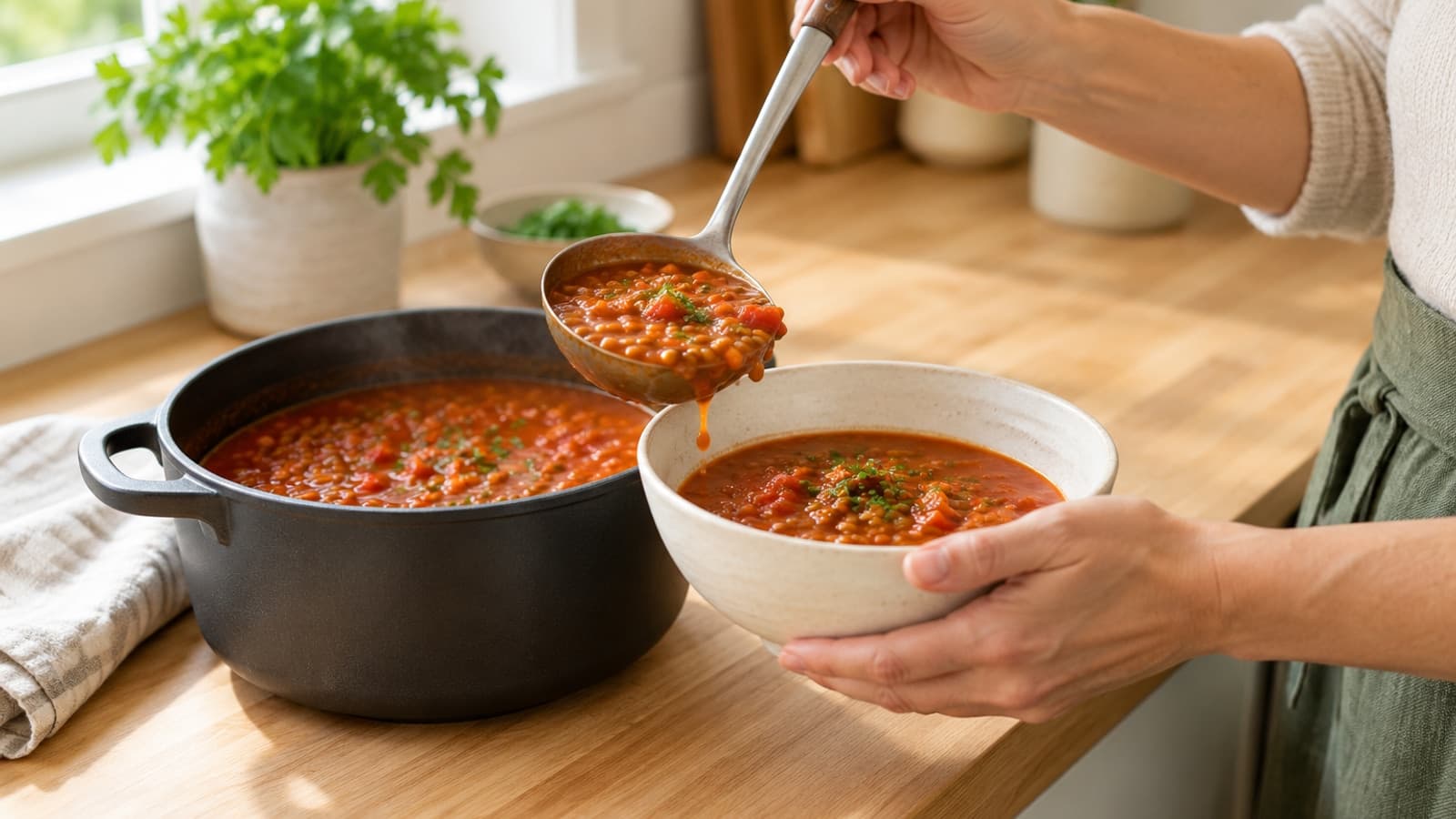
A bowl of soup can be easy to reach for when your appetite is small or you want something warm. But a bowl of broth with a few scattered vegetables may not keep you satisfied for long.
A small bowl can still have a useful mix of ingredients. Start with a soup you enjoy and consider what could make it more substantial without making the serving much larger.
Begin with a base you like
Homemade soup, a refrigerated container or a canned option can all be a starting point. Choose a flavor you actually want to eat. If you buy a prepared soup, read the ingredient list for allergies and compare the label for details that matter to you, such as sodium.
Brothy soups leave room to add ingredients. Thicker soups may already have a texture you enjoy, or you might prefer to thin them a little. There is no single consistency that works for everyone.
If a GLP-1 has changed your appetite, pour a manageable first bowl and keep more available. A side or another eating opportunity later can be useful if you don't want a large serving at once.
Add a protein food
Depending on your preferences, try cooked chicken, beans, lentils, tofu or another suitable protein food. Add an amount that fits your bowl and appetite. If you have cooked ingredients ready, a little can turn a plain vegetable soup into a more substantial meal.
Choose around allergies and individual tolerance. Someone with a soy allergy should avoid tofu; someone who finds beans uncomfortable may prefer a different addition. You can also serve a suitable protein food on the side instead of mixing it into the soup.
For a creamy texture, a food you already tolerate may work as a topping or blend-in. Check whether it suits the soup's flavor and your needs. A sauce or topping can add interest, but the ingredients and amount determine what it contributes.
Decide what else belongs in the bowl
Soft cooked vegetables, a little rice or noodles can make soup feel more like a meal. If you already have a hearty soup, you might prefer a small piece of bread or a separate side. Keep it simple: adding everything in the refrigerator can make a small bowl much larger than intended.
If you're using a prepared soup, try a spoonful before adding seasonings. Some already have plenty of flavor. You can adjust your own bowl at the table and leave the rest of the batch flexible for another day.
Texture matters too. Mash some beans if you like a thicker soup, or leave ingredients whole if you prefer distinct bites. If your care team has recommended a particular texture for swallowing or another condition, follow that guidance.
Herbs or a little lemon can change the flavor without a long ingredient list. Leave out spicy or acidic additions if they don't feel good to you. Comfort is a useful part of deciding what goes in the pot.
Store and reheat the rest safely
Divide a large pot into shallow containers and refrigerate promptly. Perishable food should be refrigerated or frozen within two hours, or one hour if exposed to temperatures above 90°F. Keep the refrigerator at 40°F or below.
Safely handled soups are generally kept refrigerated for three to four days. Freeze portions you won't use within the safe window. When reheating leftover soup, bring it to a boil; don't judge safety by smell alone. Let it cool enough to eat comfortably.
Our guide to eating enough with a smaller appetite offers more ideas for the rest of the day. Your next bowl can start with whatever soup you already like and one addition that makes it work better for you.