










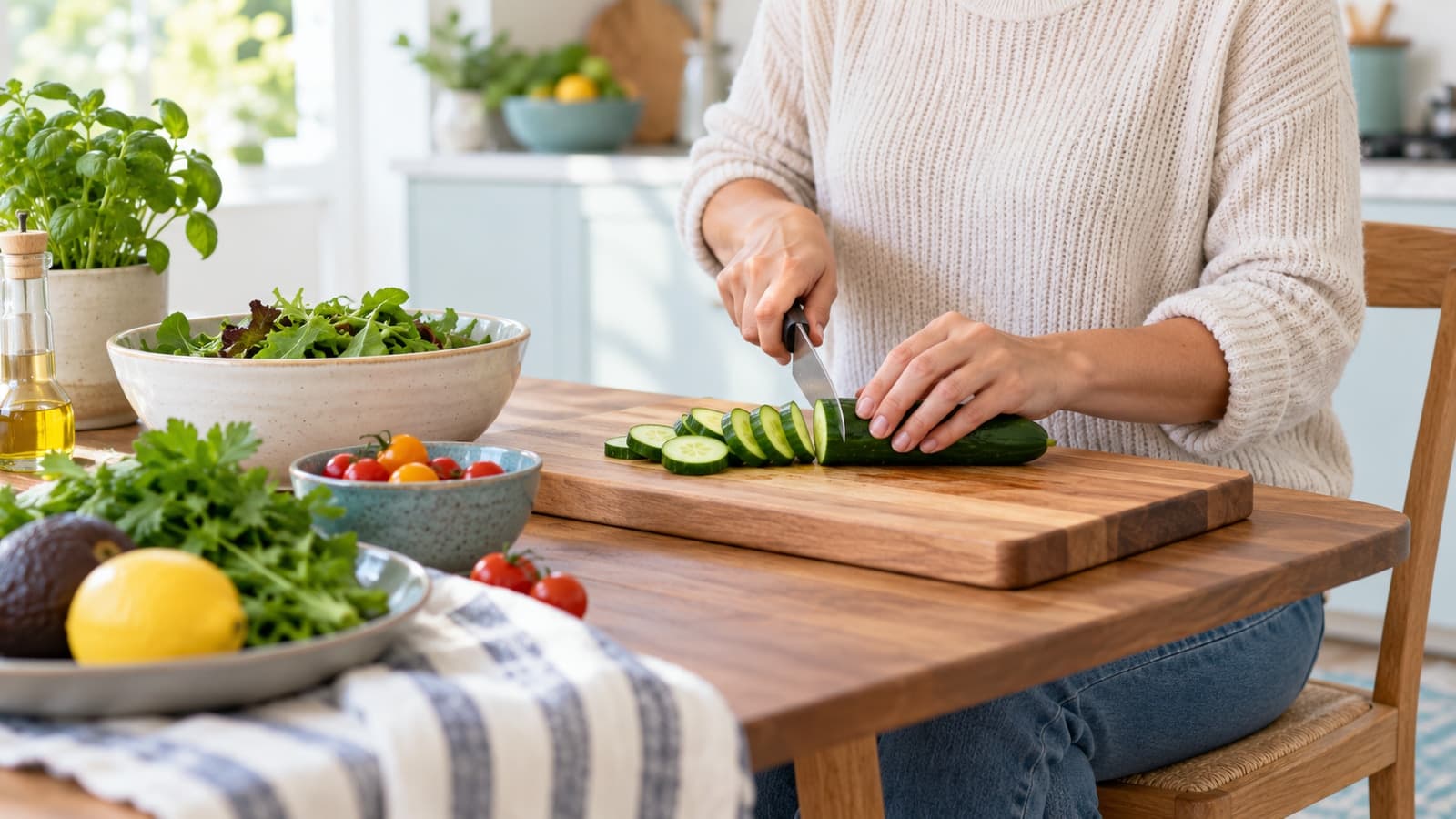
A chair can turn a long stretch of standing into a manageable task. If standing in the kitchen is difficult because of pain, fatigue or another reason, you can prepare parts of a meal from a stable seated position.
The aim is to make food easier to prepare safely. Your setup may look different from someone else's, and it can change from one day to the next.
Pick a stable work spot
A table with a firm chair may be more comfortable than balancing on a high stool. If a perching stool is useful, choose one that fits your space and allows you to get on and off safely. An occupational therapist can help you assess equipment and positioning if you're unsure.
Keep the cutting board on a stable surface at a height that lets you work without reaching far or hunching over. A damp cloth under the board may help keep it from sliding. Move frequently used ingredients and utensils within easy reach before you begin.
Clear spills and obstacles from the route between your chair, refrigerator and sink. Avoid reaching over a hot burner from a seated position. If a task doesn't feel stable, change the setup or ask someone to help.
Divide the meal into smaller jobs
You might wash and cut vegetables at the table, rest, then cook them later. Or use pre-cut produce, a canned food or a frozen item when you don't have the energy for every step. Follow package instructions and keep perishable ingredients refrigerated while they wait.
Gather a bowl, utensils and the foods you need in one trip where possible. A short list can prevent repeated trips around the kitchen. If you're using a trolley, make sure it is suitable and stable for your home.
Think ahead about which part of a task takes the most effort. If carrying groceries is difficult, put away the cold items first and ask for help with heavier bags. If chopping is the tiring part, choose a ready-cut option for that step.
There's no requirement to prepare every component from scratch. A cooked grain pouch, a suitable protein food and vegetables can become a meal with fewer steps. Our low-cook guide has more combinations.
Make a plan for hot and heavy things
A large pot of boiling water can be difficult to move safely. Use smaller cookware when appropriate, serve from a safe position near the stove, or ask someone else to move heavy or hot items. Don't carry a hot container while using both hands to steady a chair or mobility aid.
Keep handles turned away from places where they could be knocked. Place a hot dish on a stable heat-safe surface, and give yourself enough room to set it down. If a task feels unsafe on your own, choose a different method or get help.
Lightweight dishes and a smaller first batch may reduce the amount you have to move. Make enough food for your needs; the goal is less physical effort, not an unnecessarily small meal.
Keep a low-effort backup
On days when even seated preparation is too much, a ready meal or a few safely stored components may help. Keep options you enjoy and can use with the equipment available. If you prepare extra portions, refrigerate or freeze perishables promptly and reheat leftovers to 165°F.
If you're taking a GLP-1, notice whether a smaller appetite or digestive symptoms are also making it difficult to eat enough. Persistent fatigue, dizziness or trouble managing meals deserves a conversation with your care team; don't assume the cause.
Try changing one part of your setup first. A stable seat, a clear work surface and a meal you can make in stages may make the next kitchen session easier.