










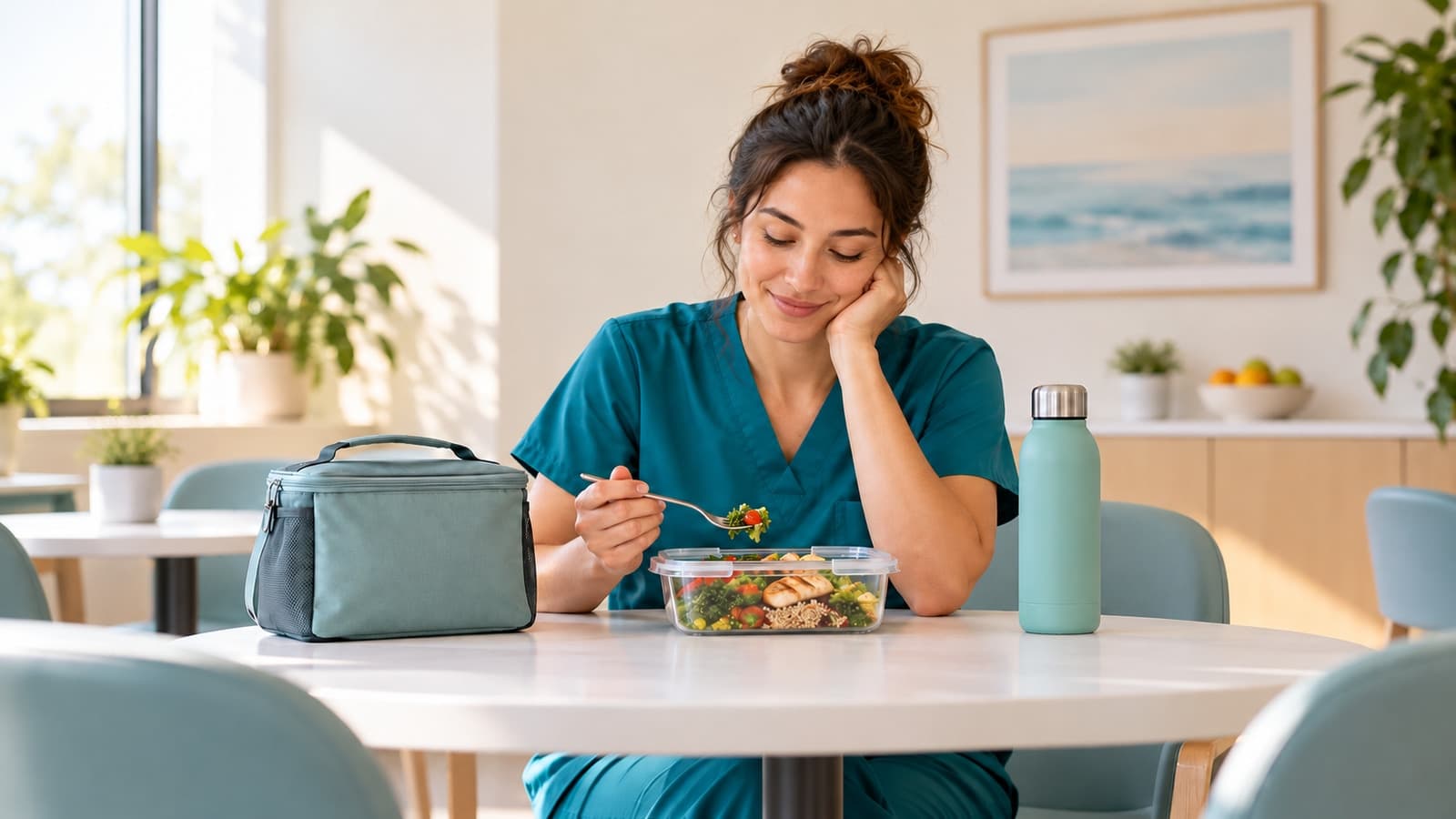
Your lunch is open, you've taken two bites, and your break is already over. It might be hours before you can get back to the fridge.
A twelve-hour hospital shift asks a lot of a lunch plan. Cafeteria hours change, work areas have different food rules, and a break can disappear without warning. When your appetite feels different during treatment, it helps to pack for the shift you actually work. Pack for the break you hope to get and the one that gets interrupted.
Map the gaps before choosing the food
Look at the whole stretch from leaving home to getting back, not just the twelve hours on the schedule. Is there time for breakfast before a commute? Is the cafeteria open when you usually get a break? Where can you keep a lunch bag, and is there a refrigerator close enough to reach?
The answers will differ between units and roles. Follow your workplace's rules about food, drinks and clean areas. If you aren't sure where to keep a bottle or bag, ask before counting on a spot.
Then pick a first opportunity to eat and a second one if the first doesn't happen. A meal before work, food for a longer break and a backup for a late finish are one possible arrangement. On an overnight shift, the order might look different.
Pack an interrupted lunch
Instead of one container you have to finish at once, try two smaller containers: one with the main part of lunch and another with a side you can keep cold until later. Chicken or tofu with rice and vegetables is one combination. A sandwich, fruit and a yogurt is another. Choose foods you enjoy and can manage with the equipment available.
If you need to leave halfway through, close the container and return perishable food to reliable cold storage promptly, provided it hasn't exceeded safe time limits. A refrigerator should keep it at 40°F or below. If you're using a lunch bag, pack enough cold packs and use a thermometer to check that it stays cold.
Keep track of how long food has been out. Perishables shouldn't spend more than two hours at room temperature, or one hour when the temperature is above 90°F. If you can't establish that the food stayed safe, throw it away rather than tasting it to check. A lid helps with handling, but it doesn't keep food cold by itself.
Pack a separate unopened shelf-stable option for the day you can't get back to the refrigerator. Crackers with a suitable nut or seed butter, a ready-to-eat bean pouch, or another familiar food could work. Check the ingredients for allergies and the package for storage instructions after opening.
Make the break easier to use
A spoon, napkin and container you can open quickly are small things that matter when a break is short. Think through whether your meal needs a microwave, a sink or assembly. If the microwave line is always long, a food you enjoy cold may be a better fit for that shift.
If your team coordinates coverage for breaks, ask what arrangements are available rather than assuming you'll have to solve every interruption alone. When you do get a pause, you don't need to rush to finish a large portion. Eat what feels comfortable and plan another opportunity to eat if needed.
Plan for water and symptoms
Find an approved place to keep water or a convenient refill point. Use the opportunities available during the shift, and follow any fluid limits your care team has given you.
If nausea, vomiting or weakness keeps interfering with meals and fluids, get advice from your care team. People who use insulin or certain other glucose-lowering medicines may need a personalized plan for a missed break; ask your prescriber how yours should work. Don't adjust medicine instructions on your own.
Notice what went wrong, then change one thing
After a few shifts, think back: was the fridge too far away, the meal hard to eat cold, or the backup already gone? Adjust the part that kept getting in the way. A plan you can restock between shifts is more useful than an elaborate menu you never have time to prepare.
Our night-shift meal guide also covers eating around sleep and the trip home. This plan is about getting through the workday with food you can safely return to.