










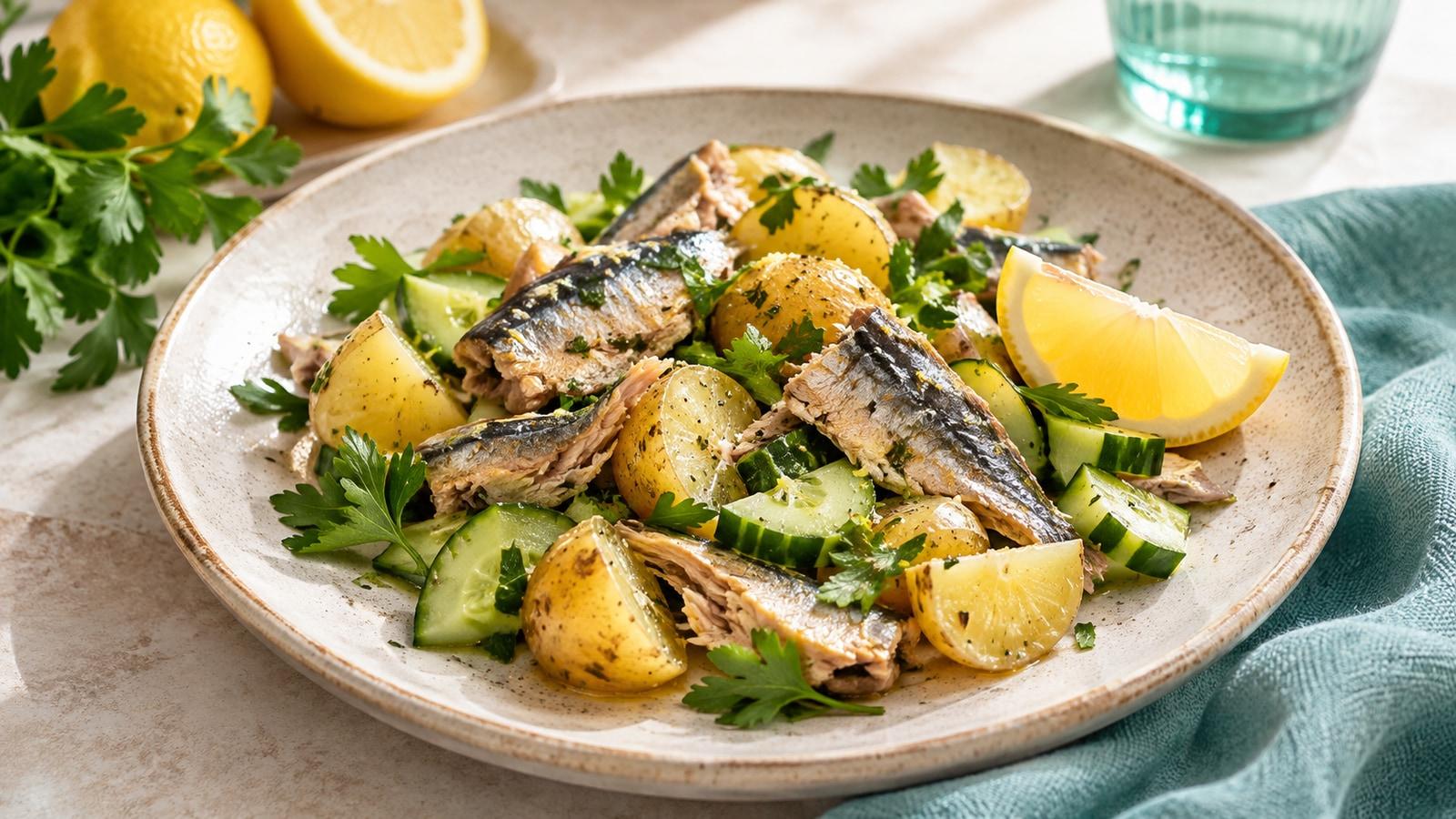
If a can of sardines has been sitting in your pantry because you aren’t sure what to do with it, a potato salad is a friendly place to start. Warm or chilled potatoes soften the fish’s stronger flavor, while lemon, parsley, and cucumber bring freshness to the plate.
You can serve the ingredients layered rather than thoroughly mixed. That lets everyone choose how much sardine and dressing they want, and it keeps the potatoes from breaking apart.
Ingredients
Makes: about 2–3 servings
Prep: about 15 minutes
Cook: about 15–20 minutes for the potatoes
- 1 pound small potatoes
- 1 can sardines, about 4 ounces, drained
- ½ cucumber, diced
- 1 cup halved cherry tomatoes
- 2 tablespoons chopped parsley
- 1 tablespoon olive oil
- 1 tablespoon lemon juice, plus more to taste
- 1 teaspoon capers or a few sliced olives, optional
- Black pepper to taste
Sardines are fish and are not suitable for someone with a fish allergy. Products may be packed in water, oil, or sauce and can vary in salt; check the label and taste before adding more seasoning. Use a fresh can in good condition and refrigerate any unused fish promptly after opening.
Cook and assemble
- Wash your hands. Scrub the potatoes under running water and rinse the cucumber, tomatoes, and parsley before cutting.
- Cut the potatoes into similarly sized pieces. Put them in a saucepan, cover with water, and simmer until a fork enters easily. Drain.
- For a warm salad, let the potatoes cool just enough to handle. For a chilled salad, place them in a shallow container and refrigerate promptly.
- Whisk the olive oil and lemon juice. Add pepper and the optional capers or olives.
- Arrange the potatoes, cucumber, tomatoes, and parsley on plates. Flake the sardines over the top and spoon on the dressing.
If you prefer, toss the potatoes with half the dressing first and add the fish afterward. That coats the warm potatoes without turning the sardines into a paste. Add the remaining dressing at the table.
A first-time sardine choice
Canned sardines are already cooked. Some are sold with skin and soft bones, while others are boneless and skinless. Choose the texture you prefer and check the package for serving and storage instructions. If a piece is unfamiliar, start with a small amount alongside potato and cucumber rather than feeling obliged to eat the whole can at once.
The fish provides protein. Potatoes add a different texture and make the salad more substantial. Exact nutrition varies by brand, packing liquid, and portion, so the label is more useful than a generic number.
Capers and olives are optional and can be salty. Add a little after tasting the fish and dressing. If lemon is too tart for you, use less and add a splash of water to the dressing. Fresh herbs can make the bowl feel bright without needing a long list of ingredients.
Small potatoes can be halved; larger ones are easier to cook evenly when cut into similar-size chunks. Leave the skins on if you like their texture, and give them a good scrub before cutting either way.
Warm or cold?
Warm potatoes absorb dressing readily, making this a useful meal when you’ve just cooked them. Add the cucumber and fish immediately before serving. If you prefer the whole salad cold, cool the potatoes in a shallow container in the refrigerator rather than leaving them on the counter for an extended time.
For a packed lunch, keep the sardines, potatoes, and cut vegetables cold in an insulated bag with ice packs. You can pack the dressing separately and add it just before eating. Use a fork to flake the fish at the table, or assemble it all in one sealed container.
If the smell of fish is unappealing on a particular day, another meal may be a better fit. You don’t have to force a food because it appears in a meal plan. A different protein will change the flavor and nutrition, but the potatoes and vegetables can still make a useful base.
Keep track of leftovers
Refrigerate the prepared salad and any opened sardines promptly, within two hours or within one hour if exposed to temperatures above 90°F. Keep the refrigerator at 40°F or below. Use the mixture within three to four days, taking account of when the potatoes and fish were first opened or cooked; follow the fish package if it gives a shorter window.
If you reheat cooked leftovers, heat them to 165°F. The cucumber and tomato may be nicer added cold after reheating the potatoes and fish. Don’t rely on smell alone to decide whether a perishable food that was left out is safe.
For a smaller appetite, make a little plate and save the rest safely. For a larger meal, add bread, a side of greens, or more potatoes. The recipe is a starting point for using a pantry fish in a way that feels approachable.