










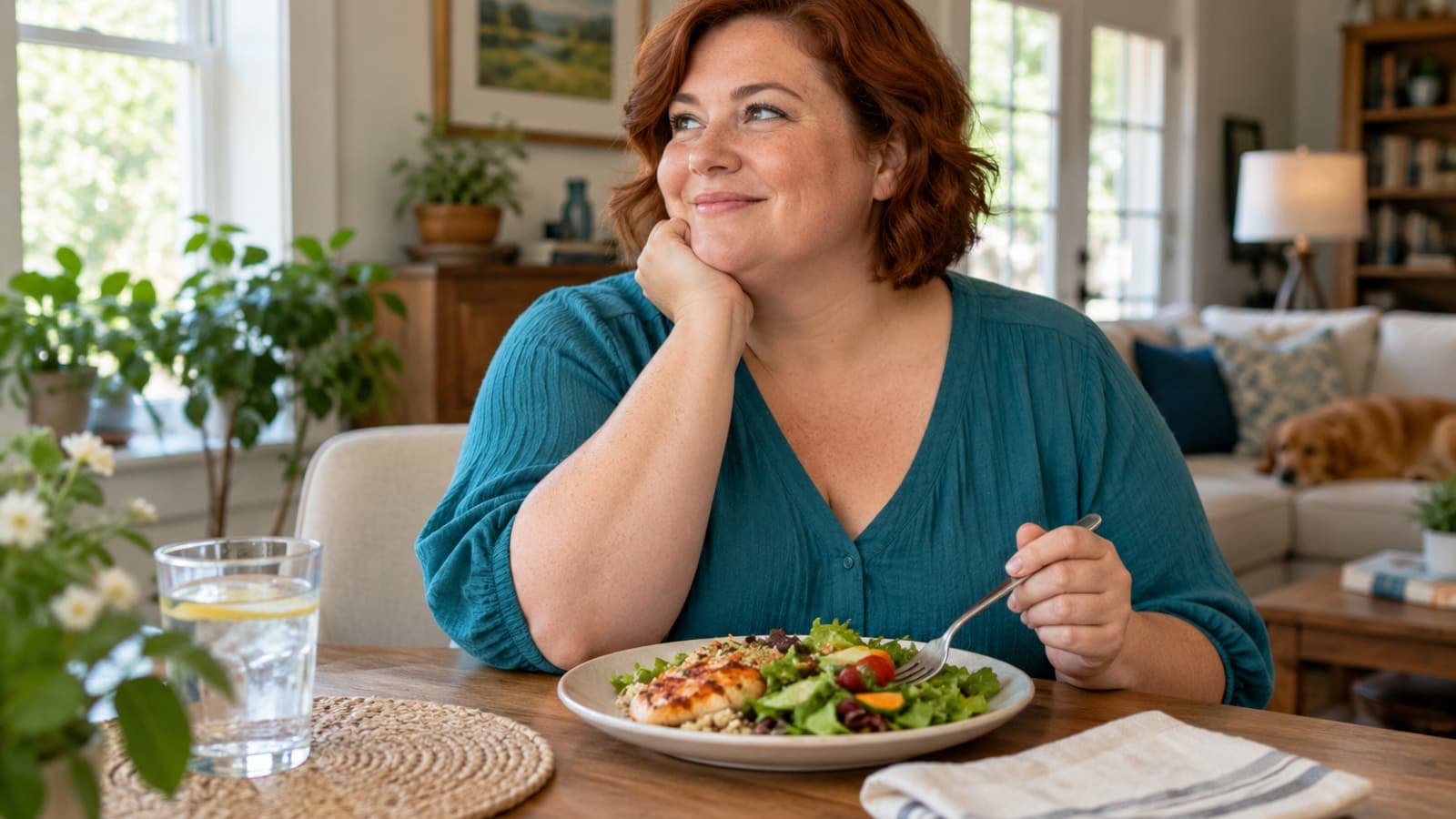
You may notice that a familiar portion feels different after starting a GLP-1. Fullness can arrive sooner, and hunger may be quieter. It can take time to understand those changes without swinging between forcing a meal and forgetting to eat.
Make a little space to notice the meal
When practical, sit down and give the first few bites your attention. Notice the taste, texture, and pace. You don’t need silence or a perfectly distraction-free room; even putting the phone aside for part of the meal may help.
Pause occasionally and ask how comfortable you feel. You can slow down, have more, or save some for later. The goal is useful information, not a rule about the exact number of bites you should take.
Keep nourishment in the picture
Very little hunger doesn’t mean your body has no food needs. Regular eating opportunities can help when appetite alone isn’t a reliable reminder. Keep manageable foods available and discuss a meal pattern with your care team if you’re consistently eating very little.
A small meal may be followed by another eating opportunity later. You don’t have to fit a whole day’s variety into the first plate you can tolerate.
Separate comfortable fullness from symptoms
Feeling satisfied is different from persistent nausea, pain, or a sense that you can’t eat enough to function. Note when those problems happen and bring them up. Don’t treat worsening discomfort as evidence that the medicine is working better.
Severe abdominal pain, repeated vomiting, or inability to keep fluids down needs prompt medical attention. Ordinary adjustments to pacing should not replace assessment of significant symptoms.
Drop the idea of getting it right every time
Meals happen around work, family, stress, and celebrations. Some will be rushed, and some portions won’t feel quite right. You can learn from the experience without compensating by skipping the next meal.
If paying close attention to food increases anxiety or brings back eating-disorder patterns, ask for tailored support. A useful approach should make eating feel more manageable. Over time, a few reliable meals and a better sense of comfort may matter more than closely analyzing every eating decision.