










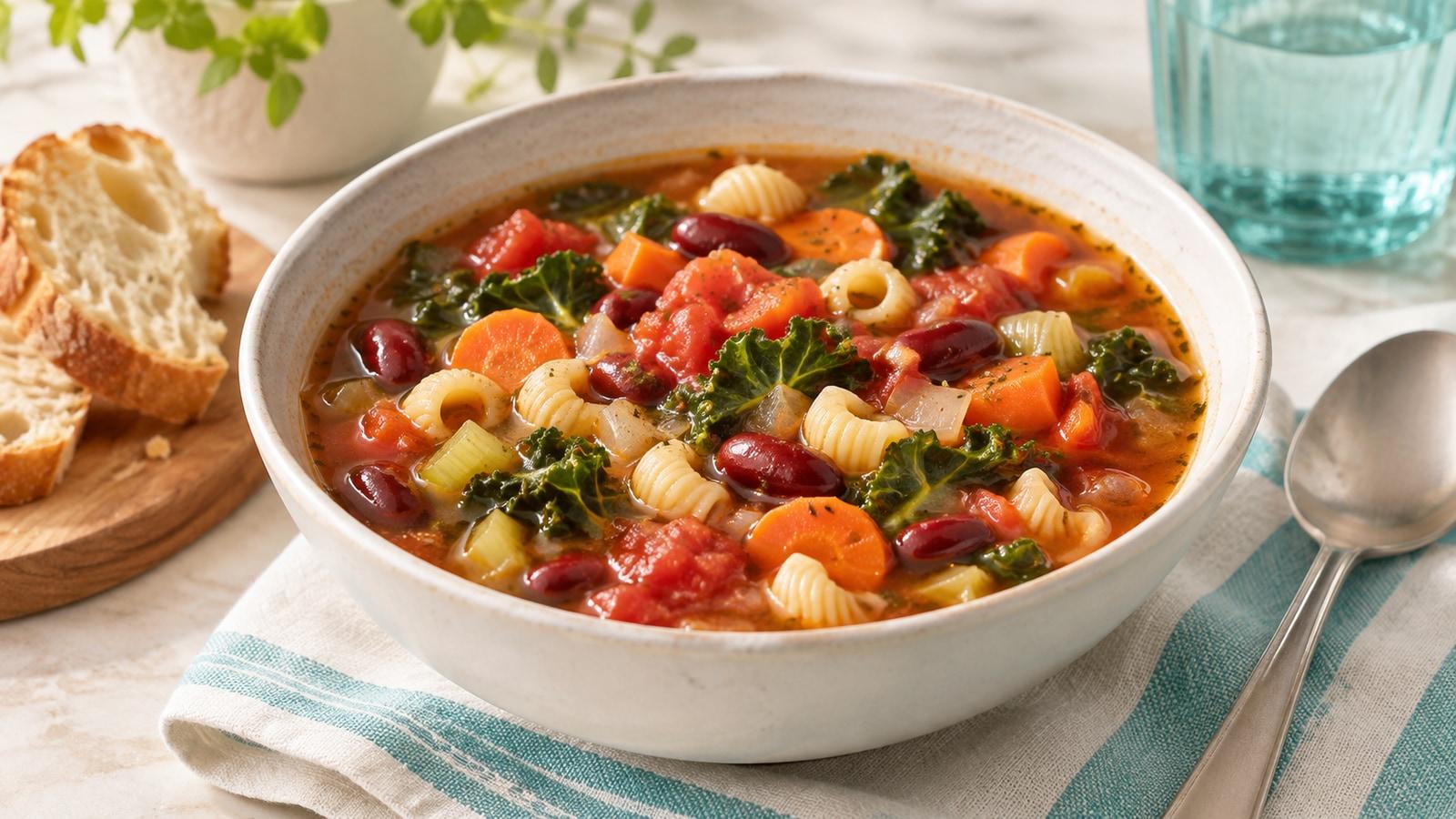
Minestrone is a flexible vegetable soup, and this version uses canned kidney beans and a small pasta shape. The beans make the pot more substantial, while the pasta gives each spoonful a little bite. A handful of greens can go in near the end if you have them.
Cook the pasta separately if you expect leftovers. It’s an extra saucepan, but it keeps the noodles from absorbing as much broth while the soup sits in the refrigerator.
Ingredients
Makes: about 4–5 servings
Prep: about 15 minutes
Cook: about 30 minutes
- 1 tablespoon olive oil
- 1 small onion, diced
- 2 carrots, diced
- 1 celery stalk, diced
- 1 zucchini, diced
- 1 can (15 ounces) kidney beans, drained and rinsed
- 1 can (14–15 ounces) diced tomatoes
- 4 cups lower-sodium vegetable broth
- ½ teaspoon dried oregano or Italian herbs
- ¾ cup dry small pasta
- 1 cup chopped spinach, optional
- Optional: grated parmesan or chopped parsley
This recipe uses canned kidney beans. If you prefer dried beans, cook them safely before adding them; a brief simmer in soup is not enough to prepare raw kidney beans. Wheat pasta contains gluten, so choose a suitable alternative if needed and follow its cooking directions.
Make the soup
- Wash your hands. Rinse the carrots, celery, zucchini, and spinach under running water before cutting.
- Heat the oil in a soup pot. Add the onion, carrots, and celery and cook until the onion softens.
- Add the zucchini, drained beans, tomatoes, broth, and herbs. Bring to a boil, then simmer until the vegetables are tender.
- Meanwhile, cook the pasta in a separate saucepan according to its package. Drain it.
- Add the spinach to the soup if using and simmer until wilted. Spoon some pasta into each bowl and ladle the hot soup over it. Add parmesan or parsley at the table.
If you want a one-pot version, cook the pasta in the soup according to its package timing and add extra broth as needed. The noodles will continue to absorb liquid as the soup sits, so expect a thicker pot later.
Why canned kidney beans?
Canned kidney beans are already cooked, making them a convenient choice for a quick soup. Drain and rinse them, then add them to the simmering vegetables. They don’t need the long preparation that dried kidney beans require.
Raw or undercooked kidney beans contain a natural substance that can cause severe stomach upset. If you cook dried kidney beans, soak them in water for at least five hours, discard that water, and boil them in fresh water for at least 30 minutes before using them. Don’t rely on a slow cooker or a brief soup simmer to make raw kidney beans safe.
Once properly cooked, the beans add plant protein and fiber. If you’re new to legumes, a smaller bowl can be a comfortable way to start. Save the rest safely rather than treating the serving estimate as a target.
Use the vegetables you have
Carrots, celery, and zucchini give the soup a mix of textures. Cut them into similar-size pieces so they cook at a similar pace. If a vegetable needs longer, add it earlier; delicate greens can wait until the end.
Frozen vegetables are convenient too. Follow their package directions before adding them. A small handful of prepared green beans or peas can take the place of zucchini, changing the flavor without requiring a new recipe.
Tomatoes and broth differ in salt. Taste the finished soup before seasoning, then offer parmesan or herbs separately. Parmesan contains milk, so leave it off or choose an appropriate alternative for anyone avoiding dairy.
Keep the pasta separate for lunch
If you’re saving portions, refrigerate the cooked pasta and soup in shallow containers promptly. Keeping them apart lets you add as much pasta as you want later and preserves a brothier texture. It also makes it easier to use a gluten-free pasta for one person and wheat pasta for another, provided utensils and preparation surfaces are kept separate.
Refrigerate within two hours, or within one hour if exposed to temperatures above 90°F. Keep the refrigerator at 40°F or below and use the components within three to four days. For longer storage, freeze the soup sooner; pasta may change texture after freezing.
Bring leftover soup to a rolling boil and reheat cooked pasta to 165°F before combining. If you’re taking lunch away from home, use an insulated bag with ice packs until the food can be refrigerated or reheated.
Make a bowl that suits the day
A cup of minestrone can sit beside a sandwich, while a larger bowl with pasta and toast may be lunch by itself. Add the amount of pasta and beans that sounds good rather than measuring success by an empty bowl.
If you take a GLP-1 medication and persistent nausea makes eating or drinking difficult, contact your care team. A flexible soup can make meal planning easier, but it isn’t a treatment for that problem.
This is a practical pot to adapt: use the beans and vegetables you have, keep the pasta separate when helpful, and finish each bowl the way you like it.