










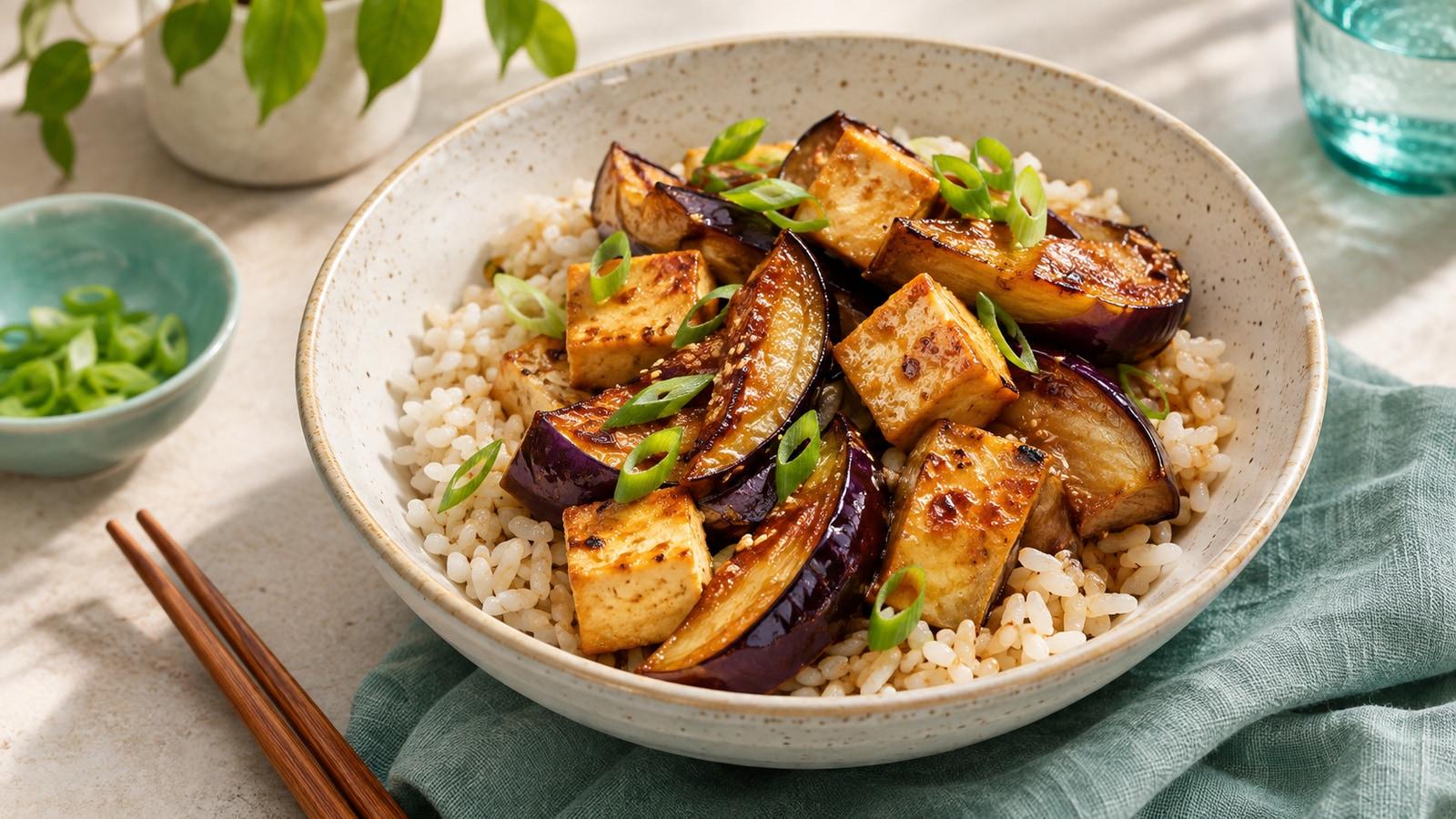
Eggplant becomes tender and almost creamy when roasted, which makes it a good match for a savory miso glaze. Add tofu and rice, and you have a bowl with several textures: soft eggplant, browned tofu, and grains to catch the sauce.
The glaze is brushed on near the end because it can darken quickly in the oven. Start with a thin coating; you can always add a little more after the eggplant has cooked.
Ingredients
Makes: about 4 servings
Prep: about 15 minutes
Cook: about 30 minutes, plus rice cooking time
- 2 medium eggplants
- 1 package (14–16 ounces) firm tofu, drained
- 1 tablespoon neutral oil, divided
- 2 tablespoons miso paste
- 1 tablespoon rice vinegar
- 1 teaspoon honey or maple syrup, optional
- 1–2 tablespoons warm water
- Cooked rice, for serving
- Sliced scallions or toasted sesame seeds, optional
Miso varies in saltiness and flavor. A lighter miso may be milder than a darker one, but check the package and taste a small amount. The glaze should be savory without overwhelming the eggplant.
Roast the eggplant and tofu
- Heat the oven to 425°F. Wash your hands and rinse the eggplants and any fresh garnish under running water.
- Cut the eggplants in half lengthwise. Score the cut sides in a shallow crosshatch, taking care not to cut through the skin. Brush the cut surfaces with half the oil and put them cut-side up on a baking sheet.
- Pat the tofu dry, cut it into cubes, and toss with the remaining oil. Spread it on a second baking sheet or on the same sheet if there’s enough room.
- Roast for about 20–25 minutes, turning the tofu once, until it begins to brown and the eggplant flesh is nearly tender. Follow any additional preparation directions on the tofu package.
- Mix miso, vinegar, honey or maple syrup if using, and enough warm water to make a brushable glaze. Spread a thin layer over the eggplant and return it to the oven for about 5–8 minutes. Watch closely so the glaze doesn’t burn.
- Serve the tender eggplant and tofu with cooked rice. Add scallions or sesame if desired.
How to tell when eggplant is ready
The cut surface may brown before the center is soft. Test the thickest part with a fork; it should give easily. If it still feels spongy or firm, give it more time before applying the glaze. Eggplants vary in size, so a large half can take longer than a small one.
Scoring gives the glaze a place to settle and helps you divide the cooked flesh at the table. Keep the cuts shallow enough that the skin stays intact. If a half won’t sit flat, use a small baking dish to keep it steady rather than cutting away too much of the skin.
If you prefer bite-size pieces, cube the eggplant and roast it on a tray. Toss with a little glaze near the end, watching closely. Smaller pieces may cook faster, so check them earlier.
Balance the glaze
Miso is concentrated, and a little goes a long way. Warm water loosens it into a brushable mixture. Rice vinegar adds acidity, while a small amount of honey or maple syrup is optional. If your miso is already sweet, you may not need the extra sweetness.
Brush on a thin layer first. Too much glaze can make a bowl overly salty, especially if the rice or tofu has also been seasoned. You can serve any unused glaze separately after preparing it with clean utensils, so each person can choose how much to add.
Miso is commonly made with soy and may include barley or other grains. Tofu also contains soy, and sesame is a common allergen if used as a garnish. If you avoid gluten, select a miso labeled for your needs and check every packaged ingredient. Choose a different sauce and protein for someone with a soy allergy.
Build a bowl that suits you
Tofu provides protein and keeps its shape well when cubed. Patting the surface dry helps it brown; use a wide pan so the pieces aren’t crowded. If you prefer a softer tofu texture, prepare it according to its package directions and warm it with the meal instead of aiming for crisp edges.
Rice provides a neutral base for the savory glaze. Add steamed greens, cucumber, or another vegetable if you’d like more color. Keep any cool, crisp toppings separate until the warm components are ready.
Portion the rice, tofu, and eggplant separately at the table. That makes it easy for one person to have more vegetables and another to have more rice. A squeeze of lime or a little extra vinegar can brighten an individual bowl if desired.
Store the components
Refrigerate the cooked eggplant and tofu in shallow containers within two hours, or within one hour above 90°F. Keep them at 40°F or below and use within three to four days. Cool and refrigerate cooked rice within one hour, use it within 24 hours and reheat it only once. Reheat leftovers to 165°F, stirring or rearranging the pieces so they warm evenly. Add fresh scallions or sesame after reheating.
The eggplant may release liquid in the refrigerator. A rimmed dish keeps it contained, and a little rice will absorb the sauce when you serve it. If you made glaze ahead, store it covered in the refrigerator and use a clean spoon when serving.
This meal is easiest when the rice starts first, the tofu and eggplant roast together, and the glaze waits until the final few minutes. That order gives you time to make the sauce without rushing.