










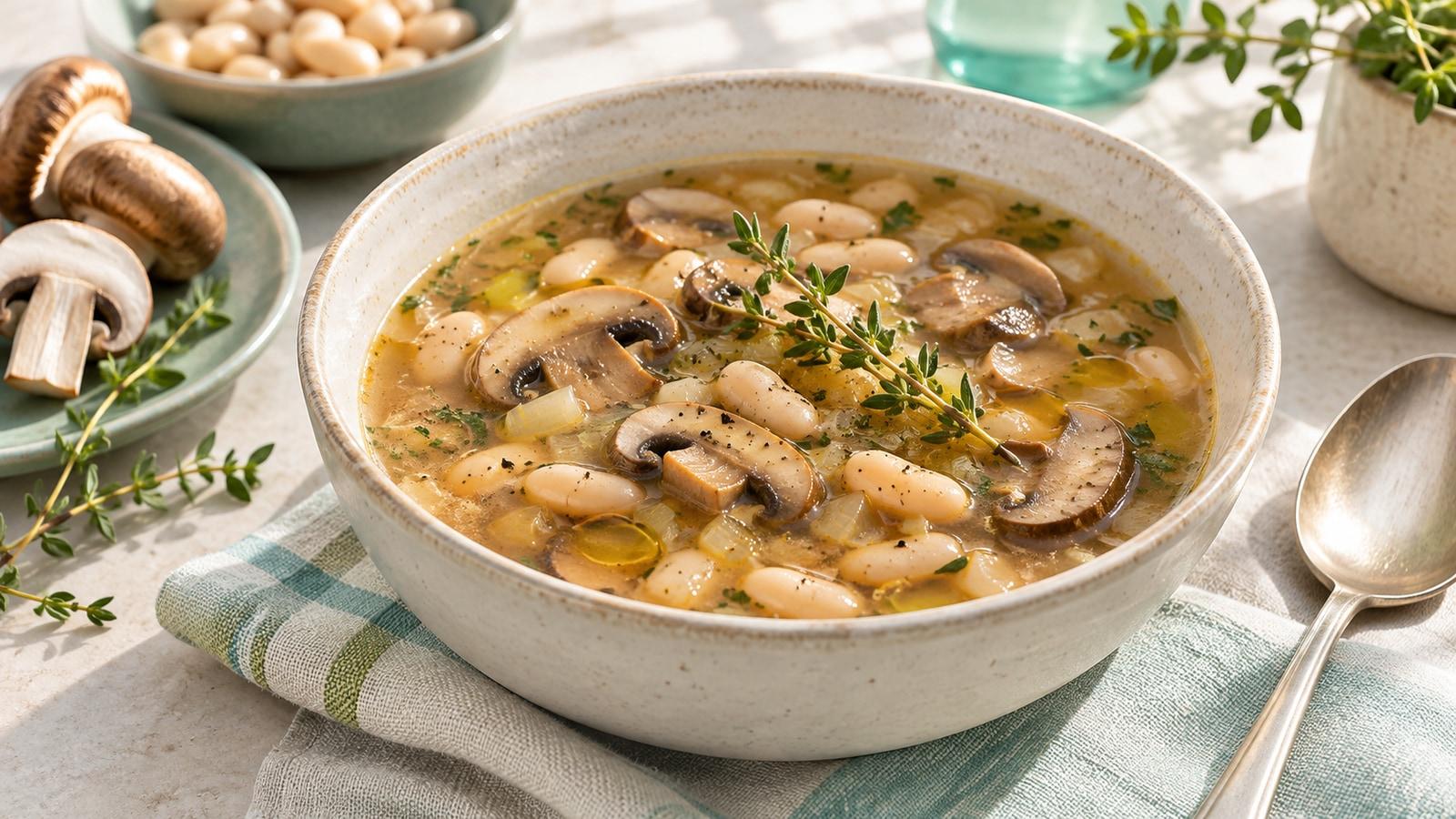
Mushrooms bring a savory flavor to a simple pot of beans and broth. A little thyme fits naturally, and blending some of the beans can make the soup thicker without requiring a cream-based sauce.
This recipe uses canned white beans for convenience. You can leave the soup chunky, blend a portion, or add a spoonful of yogurt to your bowl. Each approach gives the same pot a slightly different feel.
Ingredients
Makes: about 4 servings
Prep: about 15 minutes
Cook: about 25–30 minutes
- 1 tablespoon olive oil
- 1 small onion, diced
- 1 pound mushrooms, sliced
- 1 garlic clove, minced, optional
- 2 cans (15 ounces each) white beans, drained and rinsed
- 4 cups lower-sodium vegetable broth
- ½ teaspoon dried thyme, or a few fresh sprigs
- Black pepper to taste
- Optional: plain yogurt, parsley, or whole-grain toast
Cannellini, great northern, or another canned white bean can work. Drain and rinse them before adding them to the pot. If you use home-cooked beans instead, make sure they’ve been prepared safely and stored promptly.
Cook the soup
- Wash your hands. Wipe the mushrooms with a damp paper towel or rinse them briefly under running water and dry them. Rinse any other fresh produce before cutting.
- Heat the oil in a soup pot over medium heat. Add the onion and cook until it begins to soften. Add the mushrooms and cook, stirring occasionally, until they release their liquid and become tender.
- Stir in the garlic if using. Add the beans, broth, and thyme. Bring to a boil, then lower the heat and simmer for about 15 minutes so the flavors come together.
- For a thicker soup, scoop out a cup or two, let it cool somewhat, and blend it carefully in small batches according to your blender’s hot-liquid instructions. Return it to the pot. Alternatively, mash some beans against the side of the pot with a spoon.
- Remove any woody thyme stems. Taste and add pepper. Serve with parsley, a spoonful of yogurt, or toast if you like.
Hot liquid can build pressure in a tightly sealed blender. An immersion blender used carefully with its blade submerged, or a simple potato masher, avoids transferring a large quantity of hot soup. Leave some mushrooms whole if you want to see and taste their texture in each bowl.
Getting flavor from mushrooms
Give the mushrooms a little room in the pot. A large pile may release liquid before it begins to brown; that’s fine, but you can cook in two batches if your pan is small. If the bottom starts to stick, add a splash of broth and stir up the flavorful bits.
White button or cremini mushrooms are practical choices. A mix can change the flavor, but only use mushrooms that are safe and sold or identified for eating. Don’t add an unfamiliar foraged mushroom to the pot based on an online photo.
Thyme can be subtle or strong depending on the amount and whether it’s fresh or dried. Start small, then taste the cooked soup. A squeeze of lemon or a little parsley at the table can brighten a bowl without changing the whole batch.
Creamy without a complicated sauce
Beans break down when blended or mashed, which can thicken the broth. Blend more for a smooth soup or mash only a few spoonfuls for a chunky one. Add broth a little at a time until the consistency suits you.
If you enjoy dairy, a spoonful of plain yogurt can add tang. Stir it into the serving bowl rather than boiling it in the whole pot if you want to keep the option separate. A dairy-free alternative or no topping at all works too; check labels for allergies.
White beans contribute plant protein and fiber. If you don’t eat beans often, a small serving is a reasonable way to see how they feel for you. Add toast, fruit, or another side when you want a more substantial meal.
Save the rest for another day
Divide leftover soup into shallow containers and refrigerate within two hours, or within one hour if exposed to temperatures above 90°F. Keep the refrigerator at 40°F or below and use the soup within three to four days, or freeze it sooner. Keep yogurt topping separate.
Bring the soup to a rolling boil when reheating and stir so it warms evenly. Add a little broth if the beans have thickened it. For lunch away from home, keep the container cold with an ice pack until you can refrigerate or reheat it.
If you take a GLP-1 medication and a full bowl feels like too much, begin with a smaller portion and save the rest safely. Persistent nausea or difficulty eating and drinking is a reason to contact your care team; soup isn’t a treatment for those symptoms.