










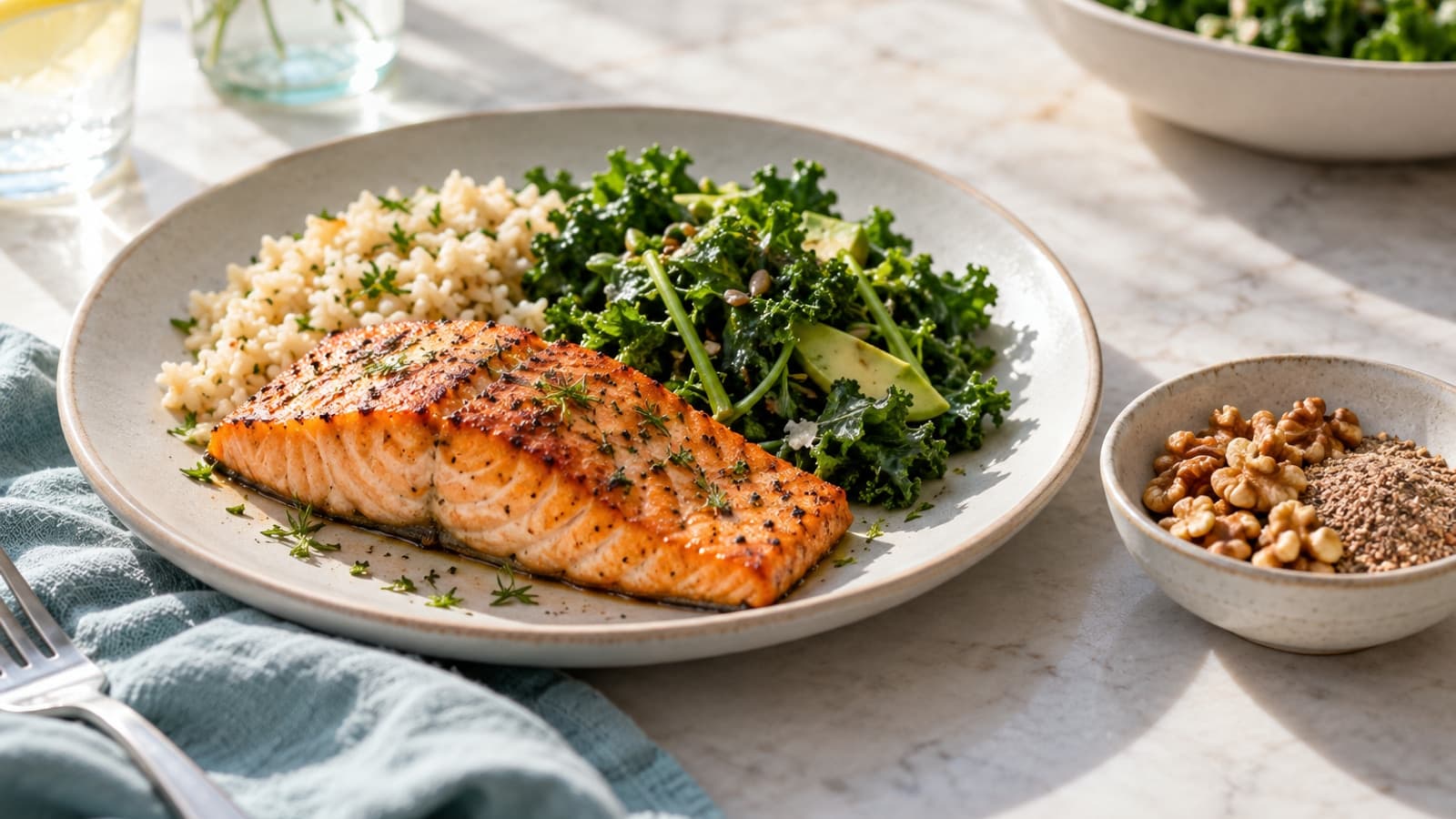
You see “omega-3” on a bag of walnuts, a can of salmon and a bottle of fish oil. Are they all offering the same thing?
They belong to the same family of fats, but the details differ. That matters if you're comparing food choices or deciding whether a supplement is worth discussing with your care team.
Three names you'll hear
The omega-3 fats most often discussed are ALA, EPA and DHA. Plant foods such as walnuts, chia and flaxseed provide ALA. Fatty fish such as salmon, sardines and trout provide EPA and DHA.
Your body can convert some ALA into longer-chain omega-3s, but that conversion is limited. The omega-3 fats in plant foods and fish are not identical. That doesn't make one type of food a requirement for everyone; it means the choice depends on your overall diet and needs.
Some algae-derived supplements provide EPA, DHA or both. Formulations vary, so check the actual label rather than assuming every algae product contains the same amounts.
If you eat fish
Think about forms that suit your budget and routine. Canned salmon or sardines can be convenient; fresh or frozen fish may work when you have more time. A small portion can go into a rice bowl, a sandwich or a familiar dinner.
If you are pregnant, breastfeeding or have another reason to be careful about seafood choices, ask a health professional about suitable types and portions. Fish or shellfish allergies also change which foods and products are safe for you.
If you prefer plant foods
Walnuts can be added to oatmeal or eaten with a snack. Chia or ground flax can be stirred into yogurt, a smoothie or another food you like. You don't need to include every option in the same day.
If you avoid fish and want help planning a dependable omega-3 intake, a dietitian can discuss food choices and whether an algae-derived product has a role for you. Ask what the suggested product contains and why it is being recommended.
Does a GLP-1 change the choice?
You may find that smaller portions or particular foods feel more comfortable while your appetite is changing. Pick a portion you can manage and pay attention to how the meal feels. Our guide to fat, portion size and digestive comfort on a GLP-1 has more practical ideas.
If nausea or another symptom keeps interfering with meals, tell your care team. A list of healthy foods isn't very useful if you can't comfortably eat them.
Before buying a supplement
Fish oil, krill oil, cod liver oil and algae oil are different products. The amount of EPA and DHA can vary, and a large number on the front of a bottle doesn't necessarily tell you how much of either is inside. Read the Supplement Facts panel and ask a pharmacist or health professional to help interpret it.
Mention all your medicines, particularly medicines that affect blood clotting, and any fish or shellfish allergy. Don't replace a prescribed treatment with an over-the-counter supplement. Prescription omega-3 products and ordinary supplements are not interchangeable.
What about weight loss?
An omega-3 supplement isn't a shortcut to losing weight. A review of randomized trials did not find a significant average weight-loss difference compared with placebo in the studies it examined. That doesn't answer every question about omega-3s, but it doesn't support a promise that a capsule will do the work for you.
Start with the foods you like and the question you want answered. You can bring a product label to your next visit if you're unsure whether a supplement fits your routine.