










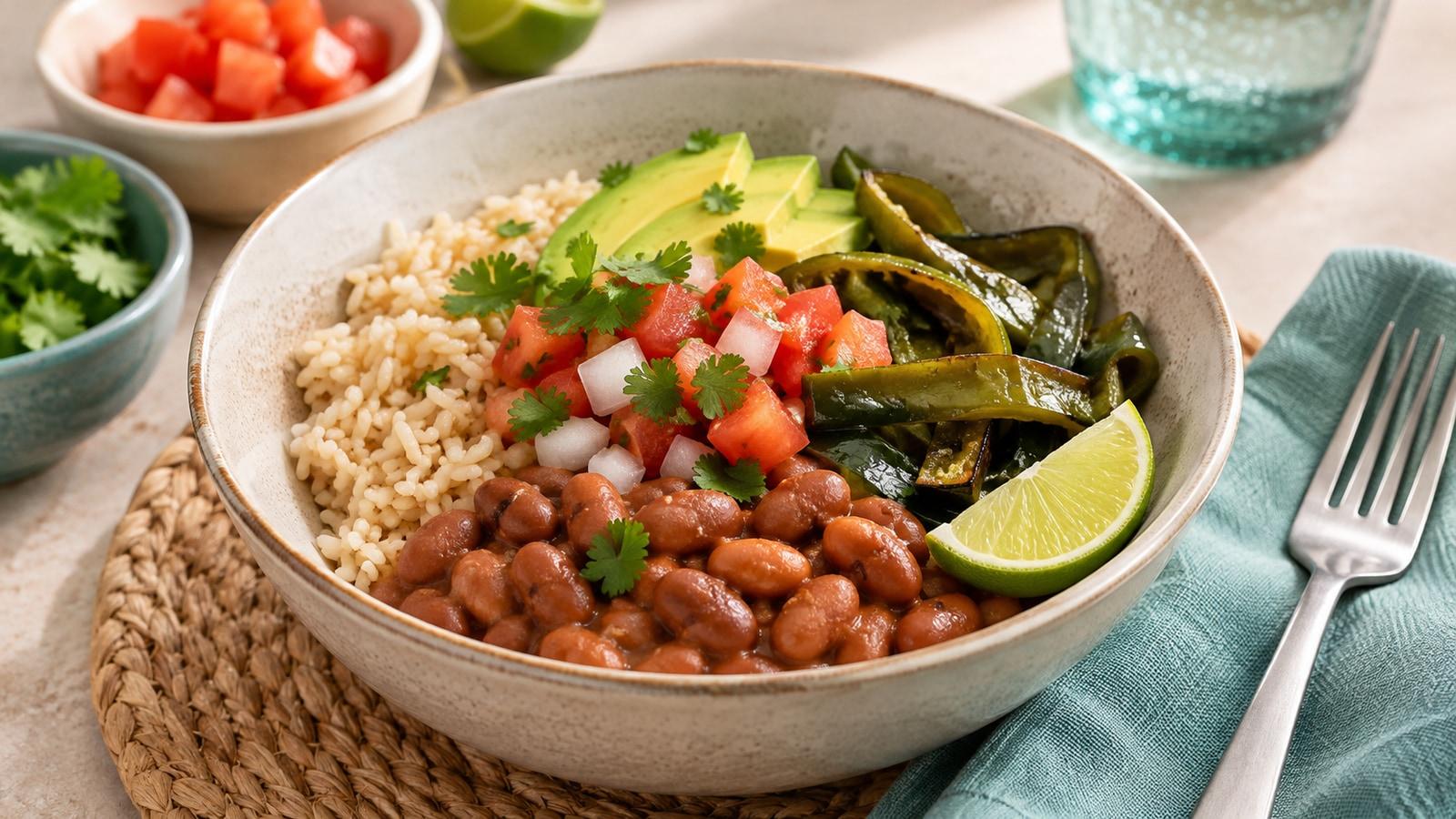
Roasted poblano peppers bring a warm, earthy flavor to this grain bowl without requiring a complicated sauce. Pair them with pinto beans, cooked rice or another grain, and a little lime. Set the toppings out separately and everyone can build a bowl that suits them.
Poblanos are often mild, but individual peppers can vary. Taste a small cooked piece before adding it to the whole batch, especially if you’re cooking for someone who prefers very little heat.
Ingredients
Makes: about 4 bowls
Prep: about 15 minutes
Cook: about 25 minutes, plus grain cooking time
- 2 poblano peppers
- 1 tablespoon olive oil, divided
- 1 small onion, sliced
- 2 cans (15 ounces each) pinto beans, drained and rinsed
- ½ teaspoon ground cumin
- ¼ cup water or lower-sodium broth
- About 3 cups cooked brown rice or another grain
- 1 lime, cut into wedges
- Chopped cilantro, plain yogurt, avocado, or diced tomato, optional
Start the rice or other grain first and follow its package directions. If using cooked rice from the refrigerator, it should have been cooled and refrigerated within one hour, kept cold and used within 24 hours. Reheat it only once, to 165°F, and only in the amount you plan to eat now.
Roast, warm, and assemble
- Heat the oven to 425°F. Wash your hands and rinse the peppers, lime, and any fresh toppings. Halve the peppers, remove the stems and seeds, and place them cut-side down on a baking sheet. Brush lightly with half the oil.
- Roast for about 18–22 minutes, until the skins blister and the flesh is tender. Transfer carefully to a covered bowl for several minutes. When cool enough to handle, peel away any loose skin and slice the peppers. It’s fine if a little skin remains.
- While the peppers cook, warm the remaining oil in a skillet. Add onion and cook until soft. Stir in cumin, beans, and water or broth. Simmer for about 5 minutes, stirring gently, until the beans are hot.
- Put warm rice in bowls. Add beans, onion, and sliced poblano. Serve with lime wedges and any toppings you like.
A little pepper preparation goes a long way
Roasting softens the poblano and gives its skin a blistered surface. Covering it briefly afterward makes loose skin easier to remove. Let it cool enough to handle; hot steam can be uncomfortable, so open the cover away from your face.
If you don’t want to peel the pepper, slice it thinly and cook it in the skillet with the onion until tender. The texture will be different, but dinner will still come together. A bell pepper is a useful swap if you want a reliably milder flavor.
Wear gloves if you’re sensitive to peppers, and wash your hands and cutting board after handling them. Avoid touching your eyes. Removing seeds and the pale inner ribs can reduce some heat, though it won’t make a hot pepper perfectly predictable.
Choosing a grain
Brown rice has a firmer texture and takes longer to cook than many other grains. Quinoa, barley, or farro can work in its place, with different cooking times and flavors. Follow the package and make enough for the number of bowls you want.
Barley and farro contain gluten. If you need a gluten-free meal, choose a suitable labeled grain and check packaged broth and other ingredients. Rice is a straightforward option, but watch for cross-contact if that matters to you.
Beans provide plant protein and fiber. A bowl can have more beans, more grain, or more vegetables depending on your appetite. Keep the roasted pepper in a separate container if you want to add it after reheating, or mix it through the warm beans for a more even flavor.
Toppings and texture
Try a piece of poblano with the beans before adding toppings. If the pepper is hotter than expected, serving it in a separate bowl lets everyone choose how much to add. Yogurt or sliced avocado offers a softer texture; set the lime and cilantro on the table for anyone who wants them.
For more vegetables, add cooked corn, shredded lettuce, or leftover roasted squash. Follow frozen corn’s package cooking directions. If using lettuce, put it on the bowl after the hot ingredients so it stays crisp.
You can mash a few beans in the skillet to thicken their liquid or leave them whole. If the pan dries out, add another spoonful of water. For a soupier bowl, add a little more broth and serve with a spoon.
Lunch tomorrow
Refrigerate cooked beans and peppers in shallow containers within two hours, or one hour above 90°F; use within three to four days at 40°F or below. Cool other cooked grains within one hour as well. Cool and refrigerate freshly cooked rice within one hour; use it within 24 hours and reheat it only once. Keep cold toppings such as yogurt and avocado separate. Reheat the cooked components to 165°F, stirring for even heating, then add the toppings and lime.
The rice may firm up in the fridge. A splash of water in a covered microwave-safe dish can help it warm without drying; stir and check the temperature in several places. Don’t leave cooked rice out on the counter while the other ingredients cool.
If you have extra peppers, chop them into eggs or add them to a quesadilla. Extra beans can go into another grain bowl with a different vegetable. The point is to use the components in ways that make the next meal easier.