










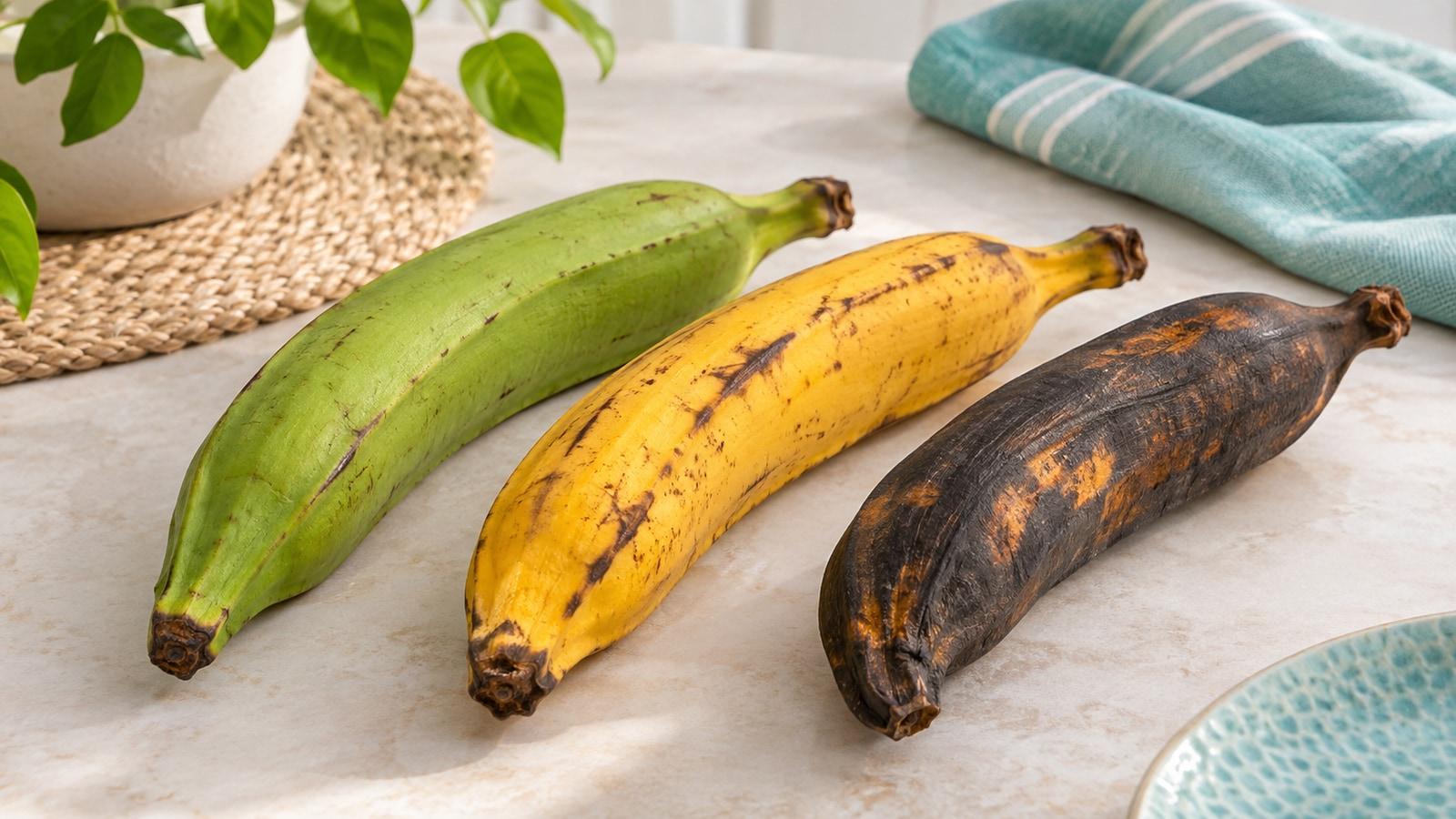
A green plantain and a nearly black plantain may look like they belong in different baskets. They’re the same kind of fruit at different stages, and both can be useful. The trick is knowing which one suits the meal you have in mind.
If plantains are already part of your family’s cooking, you may have a favorite way to prepare them. If they’re new to you, start by choosing for texture and flavor. Green ones cook up firm and starchy; yellow and dark ones become softer and sweeter.
There’s room for familiar foods in a weight-management plan. You don’t have to make plantains an everyday staple, and you don’t have to strike them off the menu because they contain carbohydrates. Think about how they fit with the rest of a meal and what amount leaves you feeling comfortable.
Pick the color for the job
Green plantains are quite firm and taste mild once cooked. They work well in savory preparations where you want a sturdy texture. Cooks boil, mash, slice, or fry them, depending on the dish. Don’t expect them to become sweet simply because you cook them.
Yellow plantains have started to soften and develop sweetness. They can still hold their shape, especially if they are mostly yellow rather than heavily darkened. Try them baked, grilled, or pan-cooked alongside a savory main dish.
Very dark or nearly black plantains are generally softer and sweeter. The dark peel alone doesn’t mean the fruit has spoiled. Look for intact fruit without mold, cracks, or leaking spots, and avoid anything that smells unpleasant or has visibly spoiled flesh when opened.
Color is a useful guide, not a perfect clock. Plantains vary in size and variety, and the feel matters too. A yellow one that gives slightly under gentle pressure will behave differently in the pan from a hard green one.
Ripen them on your counter
If the shop only has green plantains and you want a sweeter result, leave them in a ventilated place at room temperature and check them as the peel changes color. How long that takes depends on the fruit and the conditions in your kitchen, so it’s better to watch the color and feel than to count on a particular day.
Once a plantain is ripe, use it within a few days. You can also buy different stages for different meals: one green plantain for a savory dish now and one yellow one to use later. Keep an eye on both rather than forgetting them in a closed bag.
If the fruit has already been cut, refrigerate the pieces promptly in a covered container. Treat cooked plantains as leftovers: refrigerate them promptly in a shallow container and reheat leftovers to 165°F. Don’t leave perishable food at room temperature for more than two hours, or one hour when the temperature is above 90°F.
Peeling gets easier as they soften
Wash your hands, then rinse the outside of the plantain under running water before cutting. The peel can carry dirt to the flesh on your knife.
Set it on a stable cutting board and trim the ends. Make a shallow cut along the length of the peel, taking care not to press deeply into the flesh. Lift the peel away with your fingers or the edge of the knife. A green plantain can be much harder to peel than a ripe one; work slowly and keep the board from slipping.
Cut the flesh according to your plan. Small pieces will generally cook faster than thick ones, so try to make them similar in size. Use a clean knife and board, especially if you’ve also been preparing raw meat or poultry.
Three ways to put them on the table
For a simple side, bake slices of ripe plantain until they are tender, turning as needed. A little oil can help with browning. Watch thinner pieces closely, and adjust the cooking time to the thickness rather than relying only on the color at the edges.
For a savory mash, boil peeled pieces of green plantain in water until tender, then drain and mash. Add seasonings you enjoy and enough liquid to get a texture you like. Start with a small amount of liquid; you can always add more.
For a pan-cooked addition, cook slices of ripe plantain in a little oil, turning them so both sides can soften and brown. Use a pan with enough room between pieces and lower the heat if the outside is darkening before the center feels tender.
These are starting points, not substitutes for a family recipe. Plantains show up in many Caribbean, African, Latin American, and other food traditions, each with its own techniques and flavors.
Make the rest of the meal work for you
A few plantain slices can sit alongside eggs and sautéed greens at breakfast, or next to fish and vegetables at dinner. Green plantain mash can accompany beans and a crunchy cabbage salad. Pick the combination you actually enjoy rather than forcing every plate into the same formula.
If your appetite has changed while taking a GLP-1 medicine, you might start with a modest portion and add more if you’re still hungry. A smaller first serving is a way to see how a meal sits, not a rule that you must finish less. Include a protein food and, when they sound appealing, vegetables or another source of fiber across your meals.
For someone who needs to manage blood sugar, portion needs vary. Ask your care team or dietitian how to fit plantains into your own meal plan, particularly if you take other medicines that can affect blood sugar.
Choose firm and green plantains for a savory mash, or softer and darker ones for sweetness.