










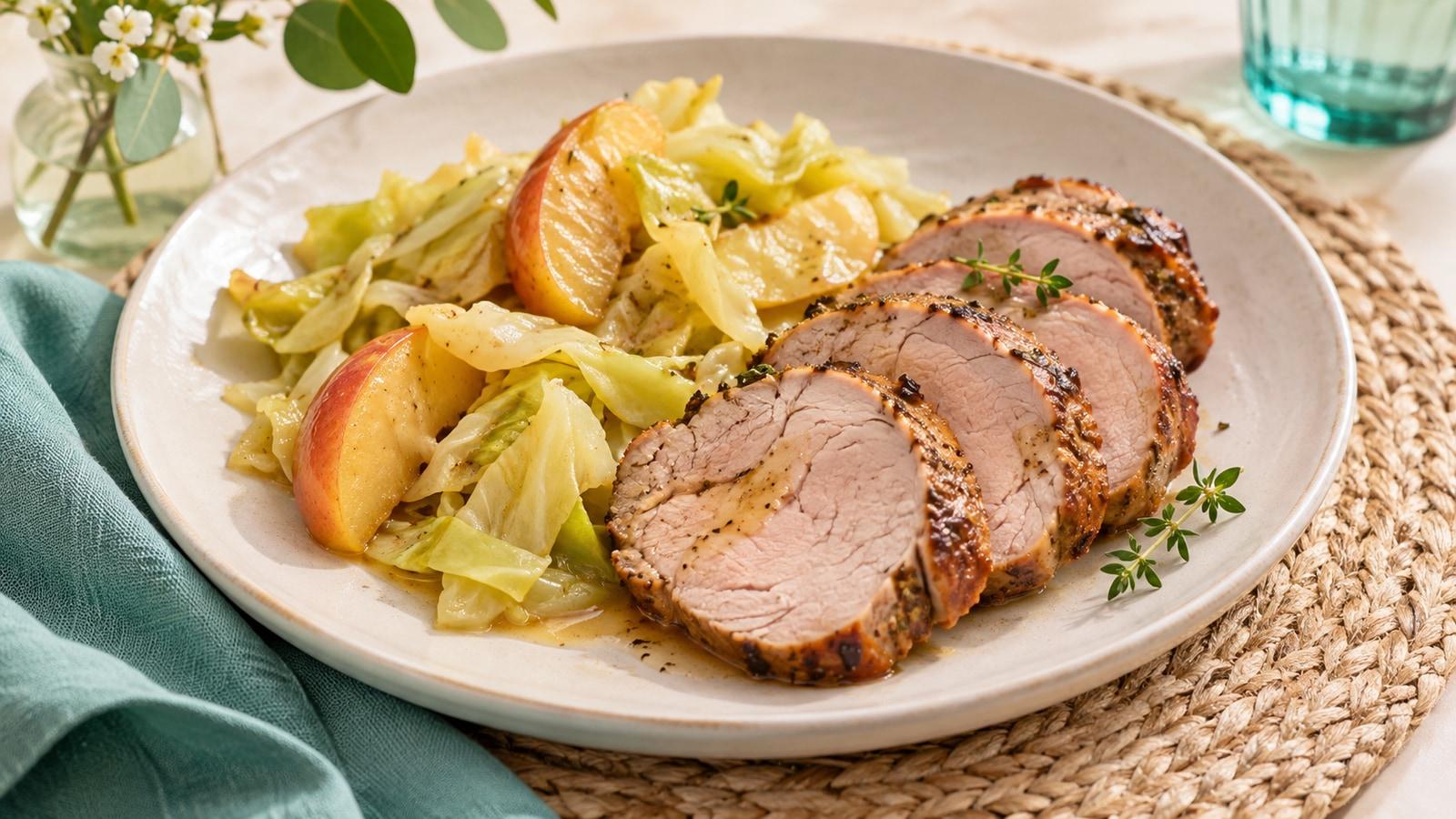
Pork, apple, and cabbage make a satisfying dinner with a mix of savory and sweet flavors. The tenderloin roasts while the cabbage and apples soften in a skillet. Slice the pork after a short rest and serve everything together, with potatoes or another side if you like.
The rest is part of the cooking method. Use a food thermometer to check the pork, then let it stand before slicing.
Ingredients
Makes: about 4 servings
Prep: about 15 minutes
Cook: about 25–35 minutes, plus resting
- 1 pork tenderloin, about 1–1¼ pounds
- 1 tablespoon olive oil, divided
- ½ medium green cabbage, thinly sliced
- 2 apples, cored and sliced
- 1 small onion, sliced
- ½ teaspoon dried thyme
- ¼ cup water or lower-sodium broth, plus more as needed
- Black pepper and a small splash of cider vinegar, optional
Pork tenderloin is a long, narrow cut and is different from a larger pork loin roast. Cooking times vary with size and thickness. Keep the meat refrigerated until you’re ready to cook it.
Start the pork
- Heat the oven to 425°F. Wash your hands. Rinse the cabbage and apples under running water, then slice them along with the onion. Set the vegetables aside before handling raw pork.
- Place the tenderloin on a rimmed baking sheet and rub with half the oil, thyme, and pepper. Don’t rinse raw pork. Wash your hands and any surfaces or utensils that touched the raw meat.
- Roast until the thickest part reaches at least 145°F on a food thermometer, about 20–30 minutes depending on size. Transfer to a clean plate and rest for at least 3 minutes before slicing.
Cook the apples and cabbage
While the pork roasts, warm the remaining oil in a large skillet over medium heat. Add the onion and cabbage and cook, stirring, until they begin to soften. Add the apples and broth. Cover and cook for several more minutes, stirring occasionally, until the cabbage and apples reach your preferred tenderness.
If the pan dries out, add a splash of water. If there’s too much liquid, uncover and let some evaporate. A small splash of cider vinegar at the end adds brightness but is optional.
Slice the rested pork and serve it with the apple-cabbage mixture. Use a clean knife and cutting board for the cooked meat.
Why the thermometer and rest matter
For a whole pork tenderloin, the safe minimum is 145°F followed by a rest of at least three minutes. Insert the thermometer into the thickest part, away from the pan. A thinner end may finish earlier than the center, so check the portion most likely to need more time.
Ground pork has different guidance: cook it to 160°F if you choose it for another dish. Don’t use the tenderloin timing as a substitute for the temperature check, especially when the cut is a different size.
Rest the cooked meat on a clean plate, not the board or tray that held it raw. The vegetables can finish during those minutes. Slice across the tenderloin into pieces that are comfortable to eat.
Getting the cabbage and apples right
Thin cabbage slices soften quickly and are easy to serve with the pork. If you like more bite, keep the strips a little wider and check them earlier. For a softer side, add a little more broth and cover the skillet longer.
Apples vary in firmness and sweetness. Firmer apples tend to hold their shape; softer ones may break down into the cabbage. Both can work. Add the apples later if you want distinct slices, or earlier if you prefer them very soft.
Thyme is a simple seasoning, but sage or black pepper could be used instead. Vinegar adds a sharp note; put it on the table if you’d rather let each person decide. A squeeze of lemon is another option.
Build the plate
Pork provides protein, while cabbage and apples add vegetables and fruit. Potatoes, rice, or bread can make the meal more substantial. Serve the pieces separately so everyone can choose the balance that suits their appetite.
For a softer plate, slice the pork thinly and cook the cabbage and apples until tender. If you enjoy crunch, serve a small fresh salad alongside. The skillet mixture can also sit over mashed potatoes, with the pork on the side.
Save the leftovers
Refrigerate cooked pork, cabbage, and apples in shallow containers within two hours, or within one hour above 90°F. Keep them at 40°F or below and use within three to four days. If serving rice, cool and refrigerate it within one hour, use it within 24 hours, and reheat it only once. Reheat leftovers to 165°F, checking the center of the meat. A splash of broth and a covered dish can help keep the pork from drying out.
Leftover pork can be sliced into a sandwich or warmed with rice and the cabbage mixture. Keep the components refrigerated until serving, and use a clean board for slicing.
Starting the vegetables before handling the raw meat and using a thermometer for the tenderloin makes the meal easier to manage. The rest is simply a matter of cooking the cabbage and apples to the texture you prefer.