










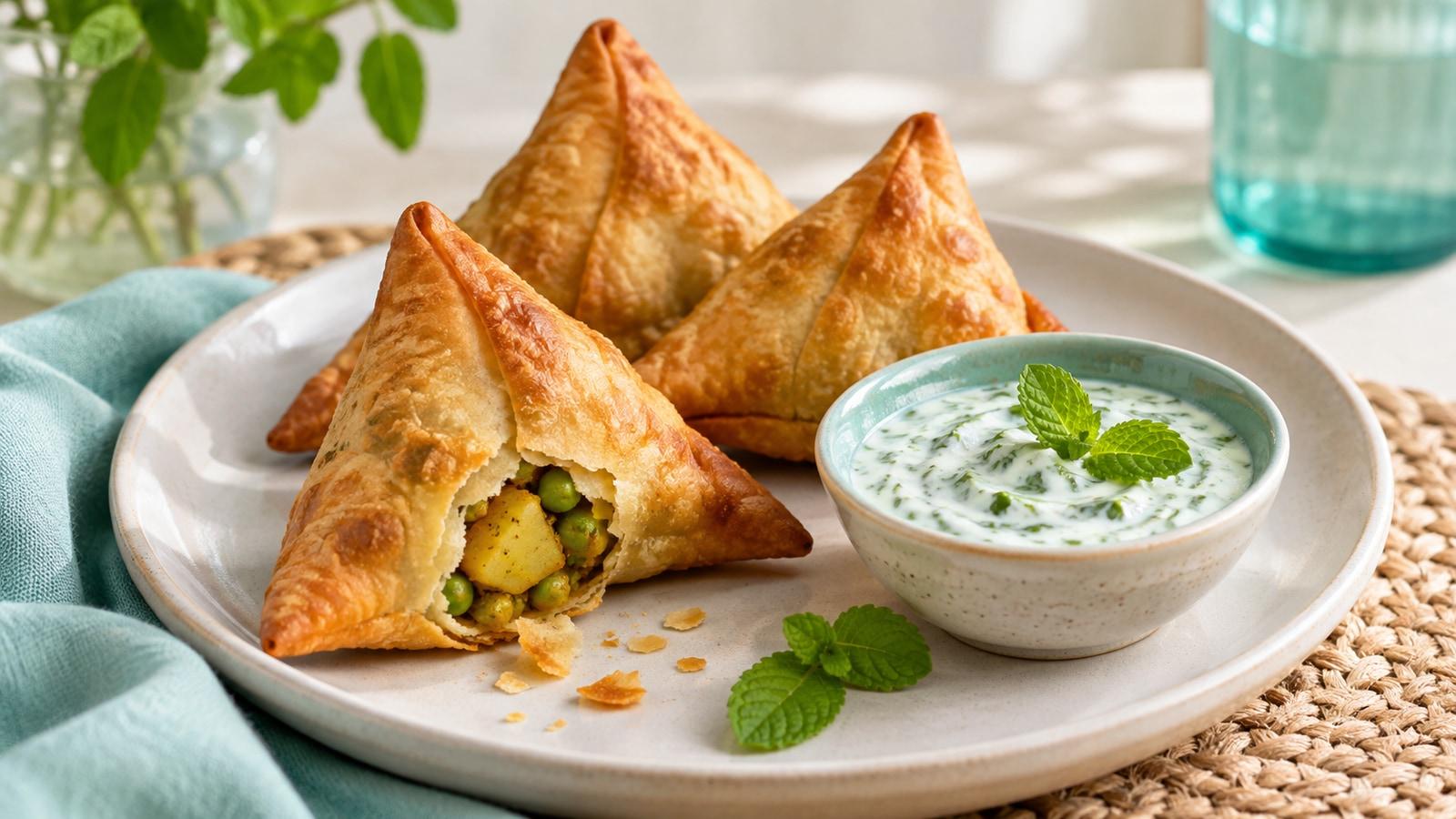
Potato and pea samosas make a lovely snack or part of a meal. This baked home version uses prepared pastry for convenience, with a mint-yogurt dip served separately. The filling is gently spiced; you can add more heat to your own plate if you want it.
Samosas have many regional and family variations, including different pastry, filling, and cooking methods. This is one simplified approach, so expect a different texture from a freshly fried samosa made with a traditional dough.
Ingredients
Makes: about 8 small samosas, depending on pastry size
Prep: about 25 minutes
Cook: about 25 minutes, plus potato cooking time
- 2 medium potatoes, peeled and diced
- 1 cup peas
- 1 teaspoon neutral oil
- ½ small onion, finely diced
- 1 teaspoon grated ginger
- ½ teaspoon ground cumin
- ½ teaspoon ground coriander
- 8 prepared pastry wrappers or dough discs, thawed as directed
- ½ cup plain yogurt
- 2 tablespoons chopped fresh mint
- 1 teaspoon lemon juice
- Water and black pepper, as needed
Cook the potatoes until tender before filling the pastry. If using frozen peas, follow their package cooking directions. Keep the pastry refrigerated or thawed according to its label, and use an oven temperature and baking time appropriate for that product.
Prepare the filling
- Wash your hands. Rinse the potatoes and mint under running water. Peel and dice the potatoes into small pieces.
- Put the potatoes in a pot, cover with water, and bring to a boil. Simmer until tender, then drain. Cook the peas according to their package directions.
- Warm the oil in a skillet. Cook the onion until soft, then add ginger, cumin, and coriander and stir briefly. Fold in the cooked potatoes and peas.
- Mash some of the potatoes with a fork while leaving a few pieces intact. If the mixture seems dry, add a spoonful of water. Transfer it to a shallow dish and cool enough to handle; refrigerate promptly if you won’t assemble the samosas right away.
Shape and bake
Heat the oven as directed on the pastry package. Place one wrapper on a clean work surface and add a modest spoonful of filling. Fold it into a triangle or half-moon, depending on the shape of the wrapper, and seal the edges according to the package instructions. Repeat with the remaining wrappers.
Arrange them on a baking sheet with room between them. Bake for the time and temperature specified by the pastry maker, until the pastry is fully cooked and golden. If using filling cooked and refrigerated ahead, check that the center reaches 165°F. Let the samosas rest briefly; the potato filling can stay hot after the outside cools.
Mix the yogurt, chopped mint, and lemon juice. Add a teaspoon of water if you want a looser dip. Refrigerate it until serving and pass it separately at the table.
Raw dough should not be tasted. Wash utensils and surfaces after handling it, and place the finished samosas on a clean plate.
Make the filling easy to seal
The filling should hold together on a spoon. Mashing some potato helps bind the peas and spices, while leaving a few small pieces gives the samosas texture. Avoid adding too much water; a wet filling can make the pastry difficult to seal.
Use less filling than you think the wrapper will hold. Leave a clear border, press out excess air, and seal the edge firmly. If filling gets on the rim, wipe it away before closing. A fork can help crimp some doughs, but follow the package for the particular wrapper you have.
If a wrapper tears, patch it with a small piece of dough or bake the filling in a separate dish. The shape doesn’t have to be perfect. The pastry does need to cook all the way through, especially around a thick folded edge.
Spice and dip to taste
Ginger, cumin, and coriander give the filling warmth without requiring a lot of heat. Add a little chili to individual portions if you like spice. Lemon in the yogurt dip provides brightness; begin with a small squeeze and adjust after tasting.
Fresh mint can be strong, so chop it finely and start with a little. Cilantro can be used alongside it, or leave the herbs out for a plain yogurt dip. For a dairy-free option, choose an unsweetened alternative suitable for the person eating.
Prepared pastry often contains wheat, and yogurt contains milk. Both can be allergens; wheat also contains gluten. Read labels and choose suitable alternatives when needed. A gluten-free wrapper may require different handling and baking times.
Serving ideas
These can be part of a snack plate with cucumber, tomatoes, and the dip, or served alongside a lentil dish and greens for a larger meal. The number of pieces per person depends on their size and what else is on the table.
If you have extra filling, warm it with a cooked egg or serve it over rice rather than trying to force it into the wrappers. The potato-pea mixture is also good with a spoonful of the mint yogurt.
Save the leftovers
Refrigerate the cooked samosas and yogurt dip separately within two hours, or within one hour above 90°F. Keep them at 40°F or below and use within three to four days. If serving rice, cool and refrigerate it within one hour, use it within 24 hours, and reheat it only once. Reheat the samosas to 165°F, checking the center; an oven can help the pastry crisp again. Keep the dip cold until serving.
If making the filling ahead, chill it promptly in a shallow container. Assemble and bake the pastry when you’re ready, allowing enough time for the filling to heat through. Don’t leave perishable food on the counter while waiting for the oven.
The most helpful step is keeping the filling modest and the seal clean. After that, let the pastry package guide the baking and serve the dip on the side.