










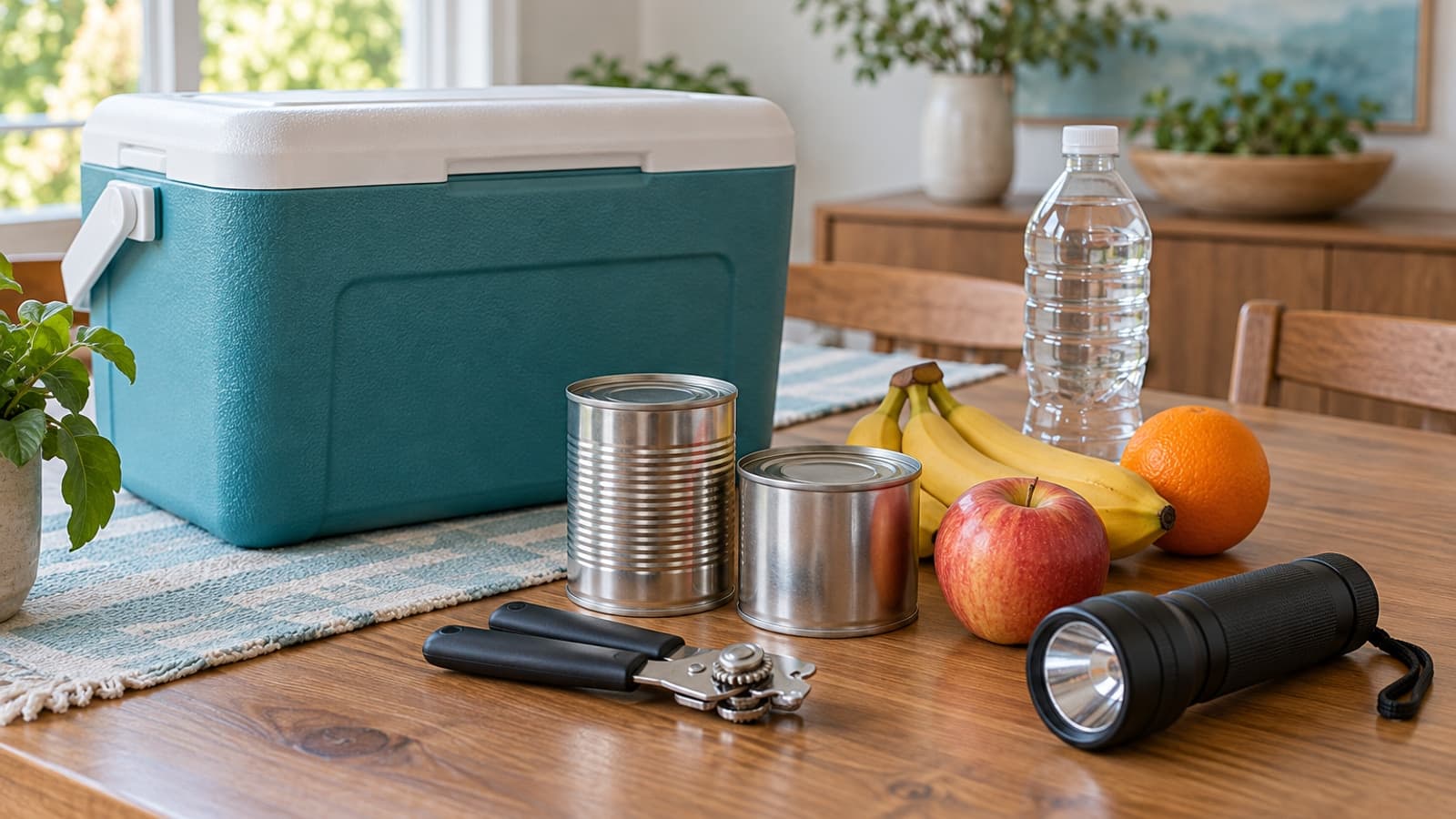
The lights go out just before dinner. You have a refrigerator full of groceries, a phone with a low battery and no clear idea how long the outage will last.
Start with the food you can use safely and a way to drink clean water. A few simple decisions can make the next meal easier while you figure out what happens next.
First, leave the cold air in
Keep the refrigerator and freezer doors closed. An unopened refrigerator generally keeps food cold for about four hours. A closed, full freezer can hold its temperature for roughly 48 hours; a half-full freezer, about 24 hours. These are estimates, not promises about every appliance or situation.
Note when the power went out. If it may be off longer, a cooler with enough ice or frozen packs can help keep refrigerated perishables at 40°F or below. Use a thermometer when possible. Move food while it is still safely cold rather than waiting until it has warmed for an unknown length of time.
A temperature reading after the power returns can’t tell you how warm food became during the outage. If the refrigerator has been without power for four hours or longer and perishables weren’t moved in time to a cooler that stayed at 40°F or below, discard items such as meat, fish, eggs, milk and leftovers. Check other foods individually. Never rely on smell, appearance or taste to decide whether food is safe.
Partly thawed frozen foods need item-by-item decisions. Many can be refrozen if they still contain ice crystals or have stayed at 40°F or below. Ice cream and frozen yogurt that have started to thaw should be discarded, even if they contain ice crystals. If you can’t establish safe handling, discard the item. An appliance or food thermometer is more useful than feeling the outside of a package. Follow medication storage instructions separately.
Assemble a no-cook meal
Look first for unopened foods that don’t need refrigeration before use. A ready-to-eat bean pouch with crackers and whole fruit is one possibility. Shelf-stable fish or another suitable protein, bread and fruit could be another. Check ingredients for allergies and make sure a food is ready to eat as packaged.
Bring a manual can opener to the table. Once a shelf-stable food is opened, follow its storage directions; many leftovers become perishable. If you have no safe way to keep the remainder cold, smaller packages may reduce waste.
If a GLP-1 has changed your appetite, serve a manageable amount and keep unopened portions for later. You don’t have to turn a stressful evening into an elaborate meal. Familiar foods are useful when the usual equipment is unavailable.
Use water and cooking equipment safely
Use water from a safe source for drinking and food preparation. If the local supply is affected, follow current local guidance and use safe bottled or properly treated water. Keep a supply available before storms or other outages when you can.
Never use a generator, grill or fuel-burning camp stove inside a home or garage. These can produce dangerous carbon monoxide. Keep a generator outdoors and at least 20 feet from doors, windows and vents, following its instructions. If you can’t cook safely, choose a no-cook option or another safe place to eat.
Restock for the next interruption
After power returns, replace the foods you used and put a flashlight, opener and thermometer where you can find them. A short list of two meals your household would actually eat may be more useful than a box of unfamiliar emergency supplies.
If ongoing nausea, vomiting or another issue makes it difficult to eat or drink, contact your care team. For an extended outage, also consider what help you may need from family, neighbors or a local community resource.
Our low-cook meal guide has more ideas for simpler days. During an outage, safe storage and a workable meal come first.