










A cable chest fly looks a bit like bringing your arms around a wide tree. Standing between two pulleys, you guide the handles toward each other in front of your body, then let your arms open again with control. The movement can feel unfamiliar if you’re used to pressing a weight straight forward.
Start with a light setting and a comfortable range. You’re not trying to stretch your shoulders as far back as they’ll go, and you don’t need the handles to meet at any cost.
Set up the station
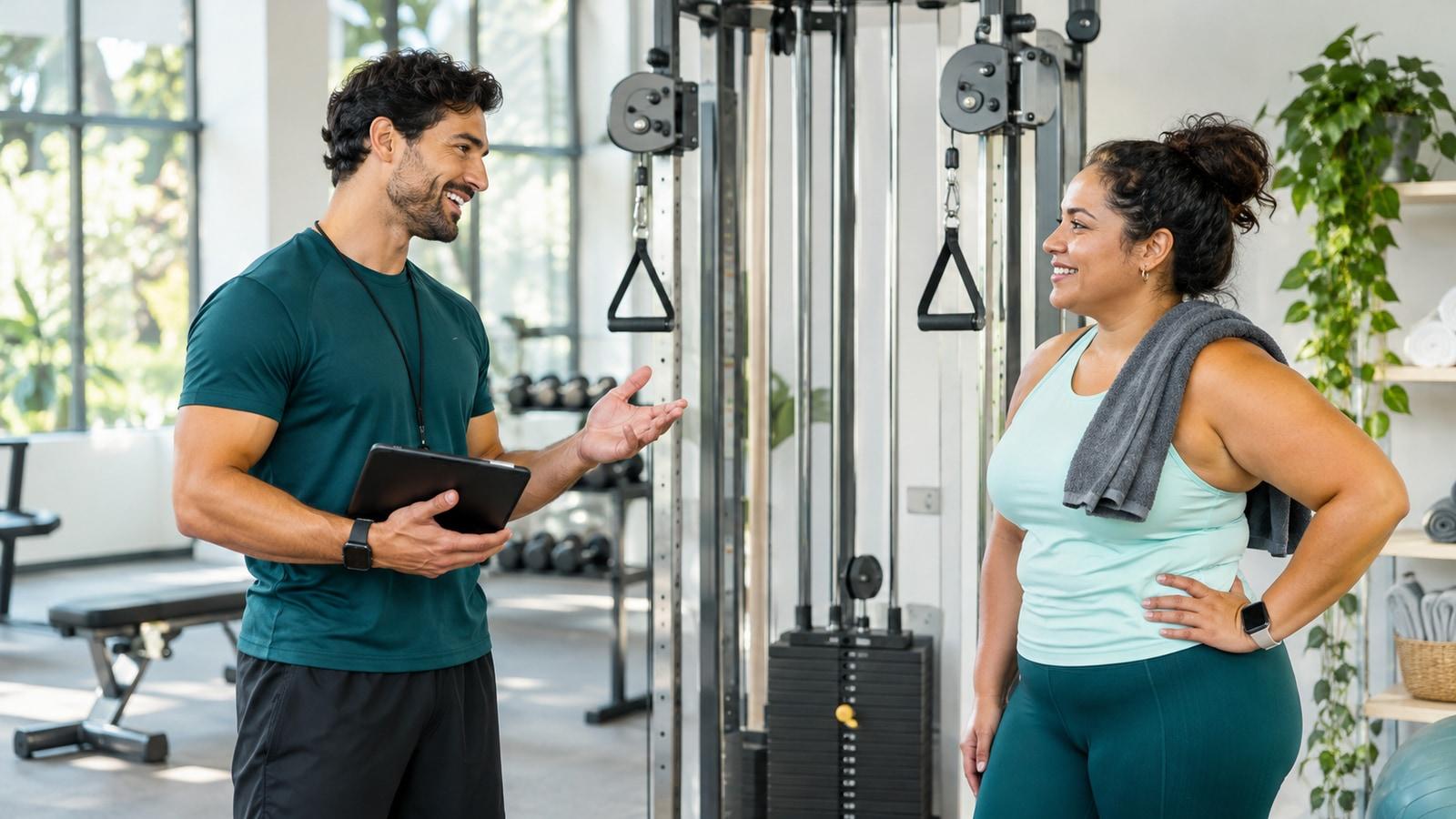
Many cable stations have two adjustable pulleys and individual handles. Ask a gym staff member how to set the height and secure the attachments on the machine you’re using. The handles should be clipped in fully, and the pulley locks should be secure before you select a weight.
For a basic standing fly, a trainer can help you position the pulleys around shoulder height or as the machine’s instructions suggest. Select a light resistance on both sides. Put each pin fully into the resting weight stack, and check that the cables and handles are in good condition.
Make sure the area between the pulleys is clear. You need enough room to stand steadily and move your arms without hitting another person or piece of equipment. If reaching both handles or standing between the stacks is difficult, ask whether the station can be adjusted or whether a different exercise would work better.
Get into position without rushing
Take one handle in each hand with a secure grip. Step into a comfortable stance, with one foot a little ahead of the other if that helps you feel steady. Keep your knees relaxed and your torso upright rather than leaning so far forward that the cables pull you off balance.
Begin with your hands in front of you and a soft bend in your elbows. From there, allow your arms to open slowly to the sides through a comfortable range. Avoid letting the cables pull your hands far behind your body. Then bring the handles back toward one another in front of your chest, as if closing a large hug.
Keep the bend in your elbows fairly consistent as your arms move. Breathe out as you bring your hands together and breathe in as you open. The cables should move smoothly; if the weights jerk or crash, pause and lower the resistance.
How far should your arms open?
There isn’t a prize for the biggest stretch. Your shoulder mobility, the handle position, and the machine all affect where the movement feels comfortable. Start with a modest opening that you can control, keeping your hands from traveling far behind the line of your body.
If you feel a sharp pinch, pain, or a sense that the weight is pulling your shoulder backward, stop. Ask a qualified trainer to check the pulley height, resistance, and range. If you have a shoulder injury or have been given restrictions after surgery, ask your clinician or physical therapist whether this exercise belongs in your plan.
You can also choose another chest exercise. A seated machine press, an adapted band movement, or another option suggested by a professional may be more comfortable. The cable fly is one choice, not a required step in a strength routine.
Fly versus press
In a chest press, your elbows bend and straighten more noticeably as you push the handles forward. In a fly, your arms move in a broad arc while your elbows stay softly bent. Both can involve chest muscles, but they feel different and use different setups.
Because the fly’s open position can be demanding for some shoulders, a lighter starting weight is sensible. Avoid comparing your cable setting with the weight you use on a press machine. Equipment and movement paths differ, so those numbers don’t translate directly.
If one handle moves faster than the other, slow down and check that both sides are set to the intended resistance. A trainer can help you see whether the pulleys are at matching heights and whether you’re standing comfortably in the middle.
Finish the set safely
Try a few easy repetitions, then pause and decide whether you can maintain the same control. A shorter range or lighter weight is a reasonable adjustment. You don’t need to feel sore afterward to know you practiced the movement.
At the end, bring the handles back carefully and allow each stack to settle before letting go. Ask staff for help if returning both handles feels awkward. Don’t release a handle while the cable is still pulling it toward the pulley.
Note the pulley height and weight that worked so you have a starting point next time. Check them again when you return, since someone else may have changed the station. The aim is a smooth arc you can repeat comfortably, with enough control to stop whenever you need to.
Strength work can be part of a weight-management routine, but this one exercise won’t choose where weight comes off. Pair it with other activities that fit your goals and schedule, and give yourself time to learn the equipment.