










The meal you want might be simple. Getting there can be the hard part: holding an onion still, opening a jar, or carrying a hot pan across the kitchen.
If your hands shake, you don't have to abandon cooking or do every step the way you used to. It can help to identify the particular task that's difficult and change that part of the routine. Some adjustments cost nothing; others are worth trying with an occupational therapist before you buy equipment.
Skip the chop when you can
Start with ingredients that don't require a knife. Canned beans, frozen vegetables, bagged salad, applesauce, and pre-cut produce can all make a meal possible with fewer steps. A bag of frozen diced vegetables may be easier than trying to steady a rolling carrot on a day when your tremor is more noticeable.
Prepared ingredients aren't always the cheapest option, so choose where the convenience matters most. You might chop vegetables yourself when you feel comfortable doing so and keep one frozen option for harder days. Or ask the person shopping with you to pick up a pre-cut ingredient for a meal you've chosen.
Some stores will cut certain items at the counter. It doesn't hurt to ask what they offer and what it costs. Delivery and pickup can also make it easier to choose familiar products without handling a large bag in the store, if those services are accessible to you.
Make the work surface more stable
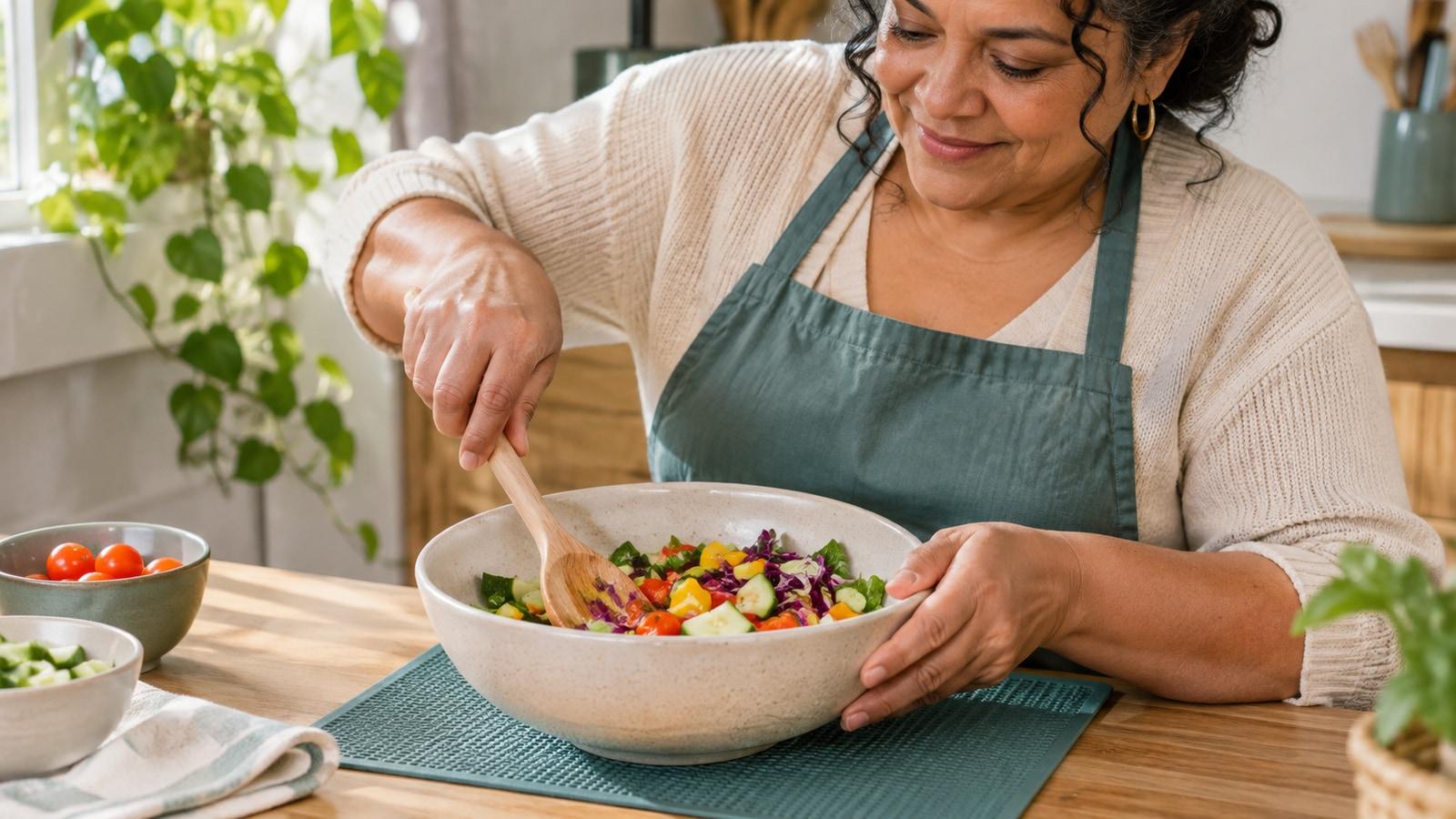
A bowl that slides around can turn stirring or scooping into a frustrating task. A non-slip mat under a bowl or plate may help keep it in place. Put the work within comfortable reach and clear away items you don't need before you start.
If you choose to use a cutting board, check that it stays stable on the counter. Work slowly and use tools you can control comfortably. If holding a knife or the food in place doesn't feel safe, stop and choose a pre-cut option or ask for assistance. A particular knife or gadget is not automatically safe for every person or every type of tremor.
An occupational therapist can look at your setup and help you decide whether a board, utensil, or grip is suitable. They can also suggest ways to position a task around your own reach, strength, and movement. It's reasonable to ask to try a tool before buying one.
Notice when your hands are steadier
Tremor isn't identical for everyone. You may notice it most when reaching for a cup, carrying a spoon, or trying to hold a knife steady. Make a note of the particular movements that make meal preparation difficult and whether the shaking changes during the day.
Fatigue or caffeine can make some people's tremor more noticeable. If you've spotted a pattern, tell your clinician rather than assuming it explains the cause. You might arrange demanding kitchen tasks for a time when you feel steadier, while keeping easy-to-prepare foods available for other days.
An occupational therapist can help you test a lidded cup, larger-handled utensil, or another aid against the task you want to do. Heavier utensils help some people but may be awkward for someone else, so avoid assuming weight alone makes a tool safer. If you're considering equipment, try it with professional guidance before buying when possible.
Give hot food a separate plan
Think through where a hot dish will go before you heat it. Clear a landing spot close to the appliance, and use a container and mitts you can grip securely. You may prefer to heat a smaller portion or ask someone to help move a hot pan. If carrying hot liquid doesn't feel safe, don't rush it.
Follow the food's cooking and reheating directions. Prepared doesn't always mean ready to eat, and a meal still needs appropriate cooking and storage. Let an appliance finish and use care when opening a hot container, since steam can burn.
It can also help to prepare food at the counter where you'll serve it, rather than carrying several dishes across the room. The best arrangement depends on your kitchen and what you can manage comfortably.
Keep your preferences in the plan
If someone helps you cook, be specific about the help you want. You might ask them to cut vegetables and leave the seasoning and assembly to you. Or you may prefer to choose the menu together and have them handle the hot pan. Assistance doesn't have to mean giving up the decisions you enjoy.
For someone managing weight or taking a GLP-1, an accessible meal routine matters just as much as a list of ingredients. Tell your dietitian or care team if preparation is getting in the way of eating meals that work for you. They can help think through options that fit your appetite, budget, and abilities.
When to bring up the tremor
Tremor can have different causes. If it persists, worsens, interferes with daily life, or comes with other concerning symptoms, contact a healthcare professional. New symptoms deserve attention rather than an assumption that they're simply part of getting older or a medication effect.
Bring a concrete example: “I can open the refrigerator, but I can't safely steady food while cutting it.” That gives the care team a useful place to start. The goal is a kitchen routine you can use with confidence, one task at a time.