










A bar is easy to keep in a bag, desk drawer or car for the kind of day that gets away from you. The harder question is what you expect it to do: hold you over for an hour, stand in for breakfast, or add protein to another meal?
Start with the package and your plans for the day. A protein number alone doesn’t tell the whole story.
Compare two real labels
On October 31, 2026, we looked at two chocolate-flavored bars on their makers’ websites:
- A Quest chocolate chip cookie dough bar listed 21 grams of protein and 12 grams of fiber in one 60-gram bar. It also listed 6 grams of sugar alcohols.
- An RXBAR chocolate sea salt bar listed 12 grams of protein and 5 grams of fiber in one 52-gram bar. Its ingredient list included dates, egg whites, cashews and almonds.
Those are different products and different weights, not a contest with one winner. A person who wants more protein in a single bar may prefer the first. Someone else may prefer the ingredient list or texture of the second. Check the exact package you buy; flavors and formulas can change.
If you eat half a bar, you’re also eating roughly half the listed amounts. That sounds obvious, but it matters if your appetite on a GLP-1 is smaller than the labeled serving.
Notice how it feels to eat
Some bars are dense and chewy; others are softer or crumbly. Think about whether you enjoy the texture and whether you’ll have water available. A bar that sits untouched at the bottom of a bag isn’t much help.
Ingredients matter too. The RXBAR example contains egg and tree nuts. Other bars may contain milk, soy, wheat, peanuts or sesame. Read the label every time and follow your own allergy plan; don’t assume similar-looking bars have similar ingredients.
Some people experience gas, bloating or diarrhea from sugar alcohols. Fiber amounts also vary. If a particular bar consistently leaves you uncomfortable, try a different option or discuss persistent symptoms with your care team. You don’t have to push through discomfort because a label looks impressive.
When is a bar a snack?
If lunch is an hour away and you’re hungry now, a bar may be enough to bridge the gap. You can eat one that suits your appetite and keep your next meal as planned. If half is comfortable, wrap the remainder according to its storage instructions.
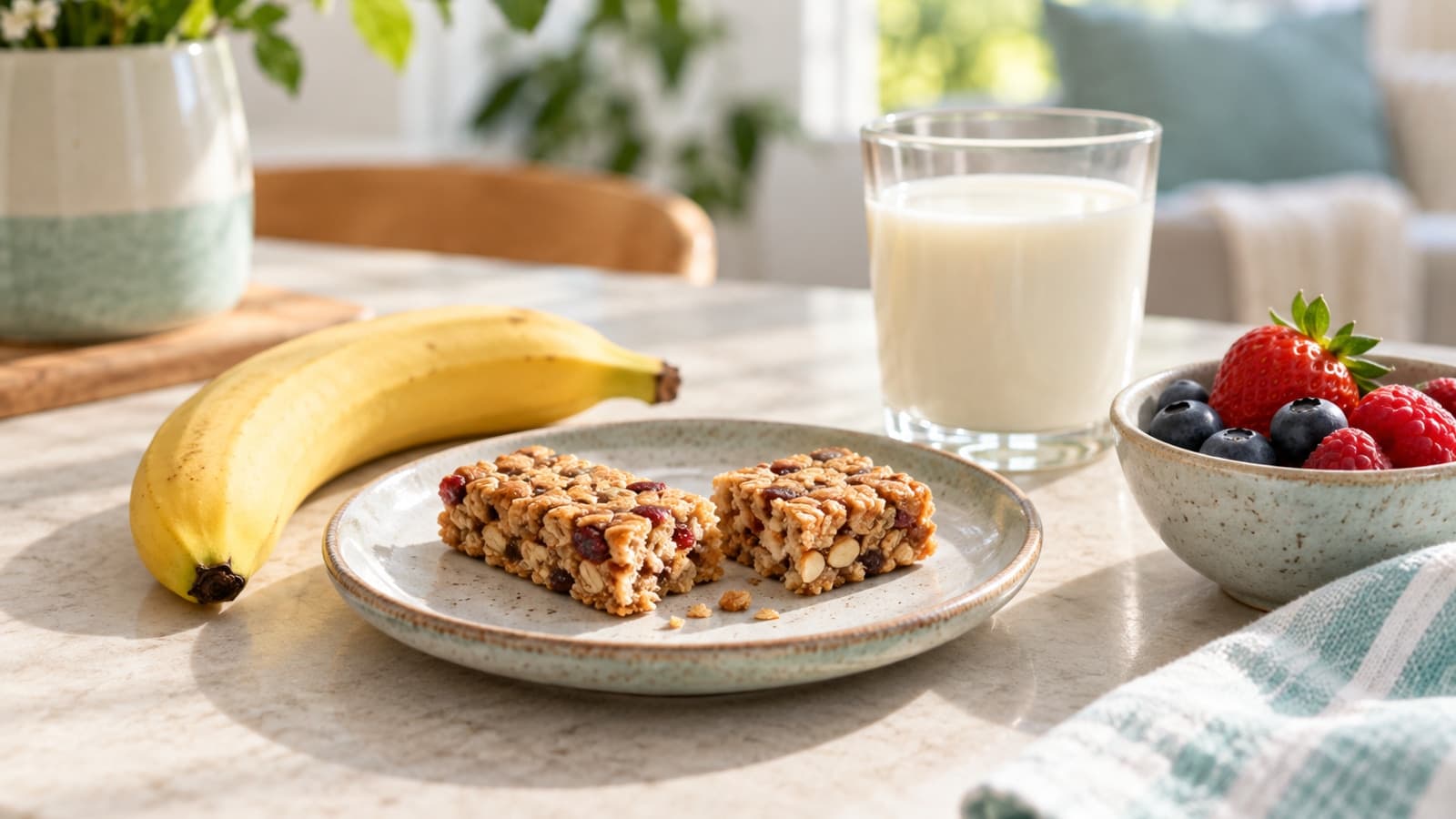
For a longer stretch without another chance to eat, think beyond the protein number. Would you enjoy fruit, yogurt, milk or another suitable food alongside it? A bar plus a banana and a drink, for example, gives you a different mix of foods from the bar alone.
There isn’t a universal rule that a bar can never be a meal. Sometimes convenience is what the day allows. If bars regularly replace several meals, a dietitian can help you check whether your overall eating pattern meets your needs.
Buy for your real routine
Compare price per bar, not just the price of the box. A larger box may be cheaper per piece, but only if you like the flavor and will use it. Look at serving weight, protein, fiber, added sugars and ingredients that matter to you.
Keep bars away from heat if the package advises it; a melted coating in a warm car can make a mess. Perishable foods you pack alongside, such as yogurt or milk, need a cold source.
For more ideas between meals, see snacks when meals feel too large. The best bar is one that fits your needs, your budget and the moment you actually plan to eat it.