










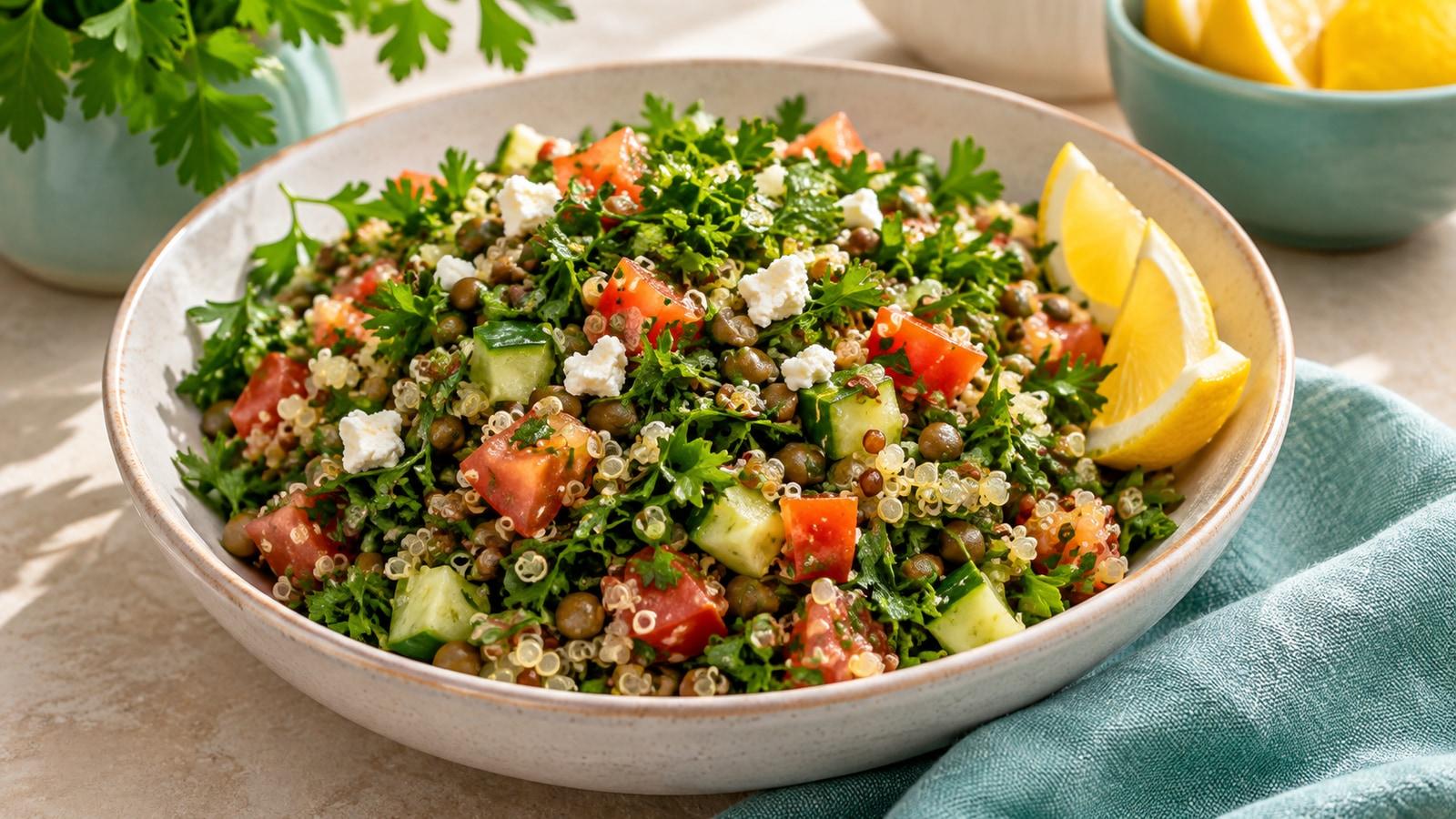
Tabbouleh is often recognized by its generous herbs and bright lemon flavor. This quinoa-and-lentil version takes that idea in a different direction: parsley stays prominent, while quinoa and lentils turn the salad into a more substantial lunch. Feta adds a salty, tangy finish.
You can prepare the grains and lentils ahead, cool them promptly, and chop the herbs when you’re ready to assemble. The salad is meant to be flexible, so taste the dressing before adding all of it.
Ingredients
Makes: about 4 servings
Prep: about 20 minutes, using cooked quinoa and lentils
- 1½ cups cooked quinoa
- 1½ cups cooked green or brown lentils
- 1 packed cup chopped parsley
- 1 cup diced cucumber
- 1 cup diced tomato
- 2 green onions, thinly sliced, optional
- 2 tablespoons olive oil
- 2 tablespoons lemon juice, or to taste
- ½ cup crumbled pasteurized feta
- Black pepper to taste
Start with quinoa and lentils that were cooked according to their package directions and cooled promptly. Canned lentils can be drained and rinsed if the label indicates they’re ready to eat. Keep the cooked ingredients refrigerated until you mix the salad.
Assemble the bowl
- Wash your hands. Rinse the parsley, cucumber, tomatoes, and green onions under running water before chopping.
- Put the chilled quinoa and lentils in a large bowl. Add the parsley, cucumber, tomato, and optional green onion.
- Whisk the olive oil and lemon juice together. Pour about half over the salad and toss; add more to taste.
- Fold in the feta or sprinkle it on individual portions. Add pepper and refrigerate promptly if not serving right away.
If the tomatoes are especially juicy, you can remove some seeds before dicing or add them just before serving. The salad should be moist enough to hold together on a fork, not swimming in dressing.
Keep the herbs in the lead
Parsley is more than a garnish here. Wash and dry it, remove any tough stems, and chop it finely enough to distribute through the quinoa. If you like mint, add a little along with the parsley; its stronger flavor can take over quickly, so start modestly.
This is a quinoa adaptation, not a claim that traditional tabbouleh is made the same way everywhere. Recipes and proportions vary. The lemon, herbs, and diced vegetables are the inspiration; the quinoa and lentils make this version its own bowl.
Green or brown lentils can hold their shape when cooked until tender. Avoid cooking them so long that they collapse if you want a distinct texture. If they’re already very soft, fold them in gently and expect a creamier salad.
Adjust the dressing and feta
Lemon juice and feta both bring a sharp taste, and feta can also be salty. Add the cheese after the first toss, then decide whether the salad needs more lemon or seasoning. Keeping extra feta separate lets each person choose their own amount.
Feta is a dairy product. Use a pasteurized version and keep it refrigerated. If you avoid dairy, leave it off or choose a suitable alternative; the flavor and nutrient content will differ. Check packaged products for allergens that matter to you.
Quinoa is naturally gluten-free, but cross-contact can happen during processing. Someone with celiac disease should choose products suitable for a gluten-free diet and check the labels of all ingredients. Traditional tabbouleh often contains bulgur, a wheat product, so don’t assume a prepared salad is gluten-free just because this version uses quinoa.
Serve it as a meal or side
Lentils provide plant protein and fiber, and quinoa adds a grain-like base. Serve a modest portion alongside chicken, tofu, or another food you enjoy, or make a larger bowl for lunch. The most useful serving size is the one that fits your appetite and the rest of your meal.
If legumes are new to you, start with a smaller portion and see how you feel. Add more herbs or cucumber for freshness rather than relying on a large amount of dressing. For a packed lunch, use a sealed container and an insulated bag with ice packs.
Keep the salad cold
Refrigerate the mixed salad within two hours, or within one hour if exposed to temperatures above 90°F. Keep the refrigerator at 40°F or below and use it within three to four days, accounting for when the quinoa and lentils were originally cooked. A newly mixed salad doesn’t make older ingredients fresh again.
If you prepare the components ahead, cool cooked quinoa and lentils in shallow containers and refrigerate them within one hour. Keep the herbs and vegetables separate until you’re ready to mix if you prefer a fresher texture. Use clean utensils to serve and return the container to the refrigerator promptly.
For someone taking a GLP-1 medication, a small bowl may be easier to manage on a low-appetite day. Persistent nausea or difficulty eating and drinking deserves advice from your care team. The salad is a flexible meal, not a treatment for symptoms.
Taste once more before serving: a little lemon or a handful of fresh parsley may be all the bowl needs.