










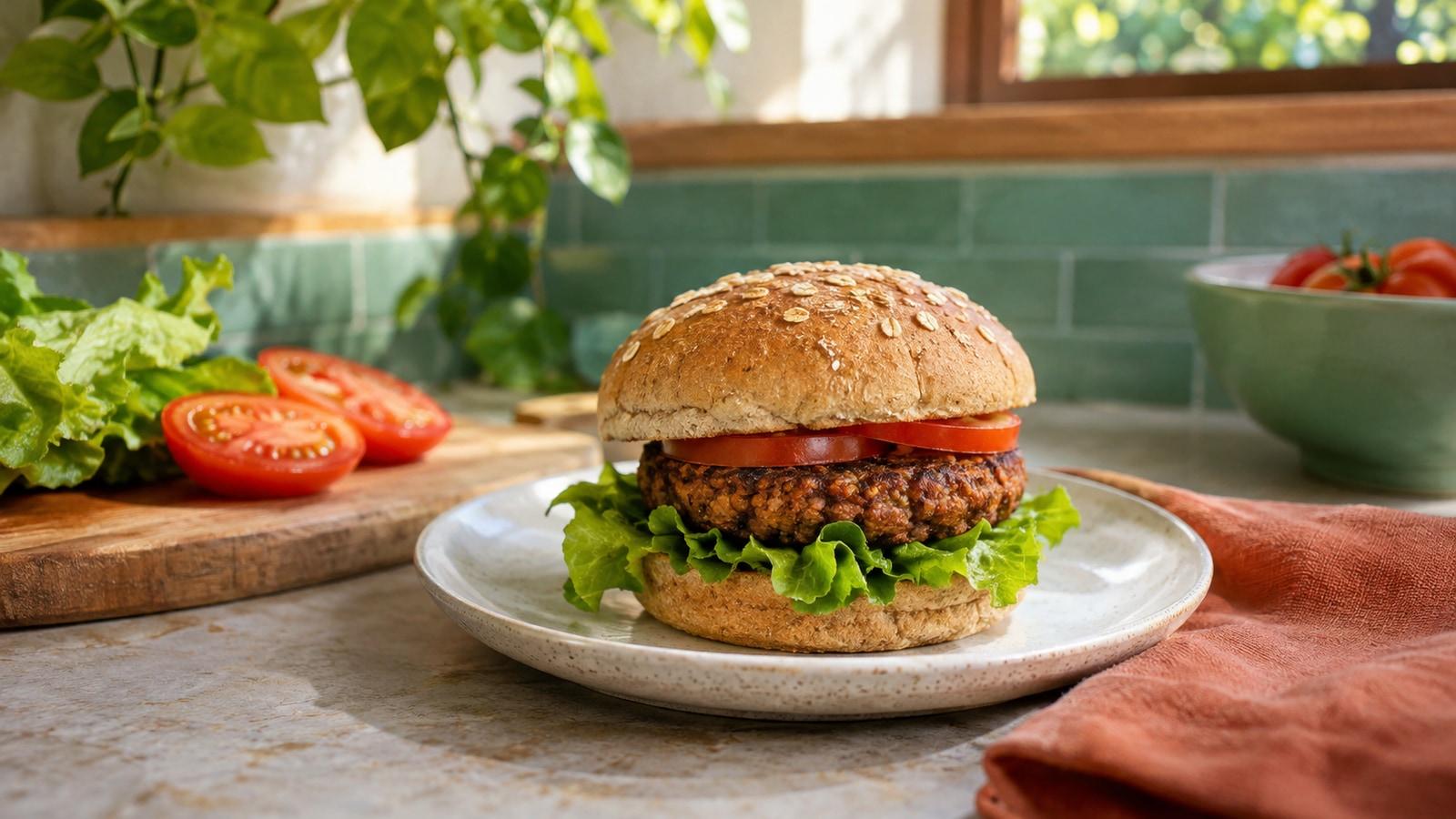
Plant-based burgers, crumbles, and sausages can make a familiar meal without the meat. They can also be quite different from one another. Two packages that look nearly identical may use different proteins, have different cooking instructions, and fit into a meal in different ways.
You don't need to memorize a list of ingredients to choose one. Start with what matters for your meal, then compare a few details on the package.
First, compare the amount you'll eat
Look at the serving size before comparing numbers. One package might list a single patty; another may list two smaller patties or an amount by weight. The protein, sodium, and other values all refer to that labeled amount.
Suppose two imaginary products both list one similarly sized patty as a serving. Product A has 12 grams of protein and 480 milligrams of sodium; Product B has 18 grams of protein and 640 milligrams of sodium. The second has more of both in that comparison. Which matters more depends on your meal, preferences, and any instructions from your care team.
Those numbers are invented examples, not information about a particular brand. Real serving sizes may differ, so check the package rather than assuming every patty is the same size.
Look at the protein source
Plant-based alternatives can use ingredients such as soy, peas, beans, wheat, or a combination. Some provide more protein per serving than others. A vegetable patty built mainly from grains and vegetables may be useful in a meal, but its protein amount may differ from a product designed to replace a meat patty.
If protein is something you're paying attention to, check the grams per serving and think about what else is on the plate. You could pair a lower-protein patty with beans or a yogurt-based sauce, for example, if those foods fit your preferences. There's no need to assume that the product must supply everything by itself.
If you're taking a GLP-1 and usually eat smaller portions, consider what you're able to eat across the day rather than trying to make one meal carry the whole load. A dietitian can help if you're having trouble eating enough or have specific protein needs.
Check sodium and saturated fat in context
Some products contain more sodium than others. The Nutrition Facts panel lets you compare the amount in the serving you're likely to use. A lower-sodium patty can be a useful option, but the bun, cheese, sauce, and side dishes also contribute to the finished meal.
Saturated fat varies too. Some products use oils that contribute more of it; others use a different mix of ingredients. If you're managing cholesterol or have a sodium plan, ask your care team how to use the label for your situation. You don't have to treat every meal as a test of whether you picked the “best” product.
The rest of the package can answer different questions: how much it costs, how many portions it contains, and whether you'll actually enjoy the flavor. A product you can find, afford, and use is more practical than one that looks ideal on paper but doesn't work for your household.
Read the ingredients for your needs
Soy and wheat are ingredients in some alternatives and are allergens for some people. Read the ingredient list and any allergen statement on the exact package, even if you've bought a similar product before. Formulations can differ.
Also check whether the item fits the way you eat. “Plant-based” on the front doesn't by itself answer every question about eggs, dairy, or other ingredients. If you avoid a particular ingredient for an allergy, preference, or religious reason, look for it on the package and contact the manufacturer if you're uncertain.
Some products include added vitamins or minerals, while others don't. If you rely on a particular food for a nutrient, compare the labels or ask a dietitian how it fits into your overall eating pattern. A meat alternative doesn't have to be nutritionally identical to meat to have a place in a meal, but it helps to know what it provides.
Don't skip the cooking directions
Some alternatives are sold frozen, refrigerated, or fully cooked; others require cooking before eating. Follow the instructions on the package for the exact product. Keep it at the recommended temperature, use clean utensils, and handle leftovers according to the storage directions.
Think about how you want to use it before buying. Crumbles may work in a tomato sauce, a patty may fit a sandwich, and strips might be convenient in a bowl with rice and vegetables. The best choice for one recipe isn't necessarily the best choice for another.
A quick shelf-side comparison
Pick two products that appeal to you. Check the serving size, protein, sodium, and saturated fat; then look at ingredients, allergens, preparation, and price. If the serving sizes differ, compare the amounts you expect to eat rather than just the numbers printed in the largest type.
You can make a choice without declaring all plant-based products healthy or unhealthy. Each package tells its own story, and the meal around it matters too.