










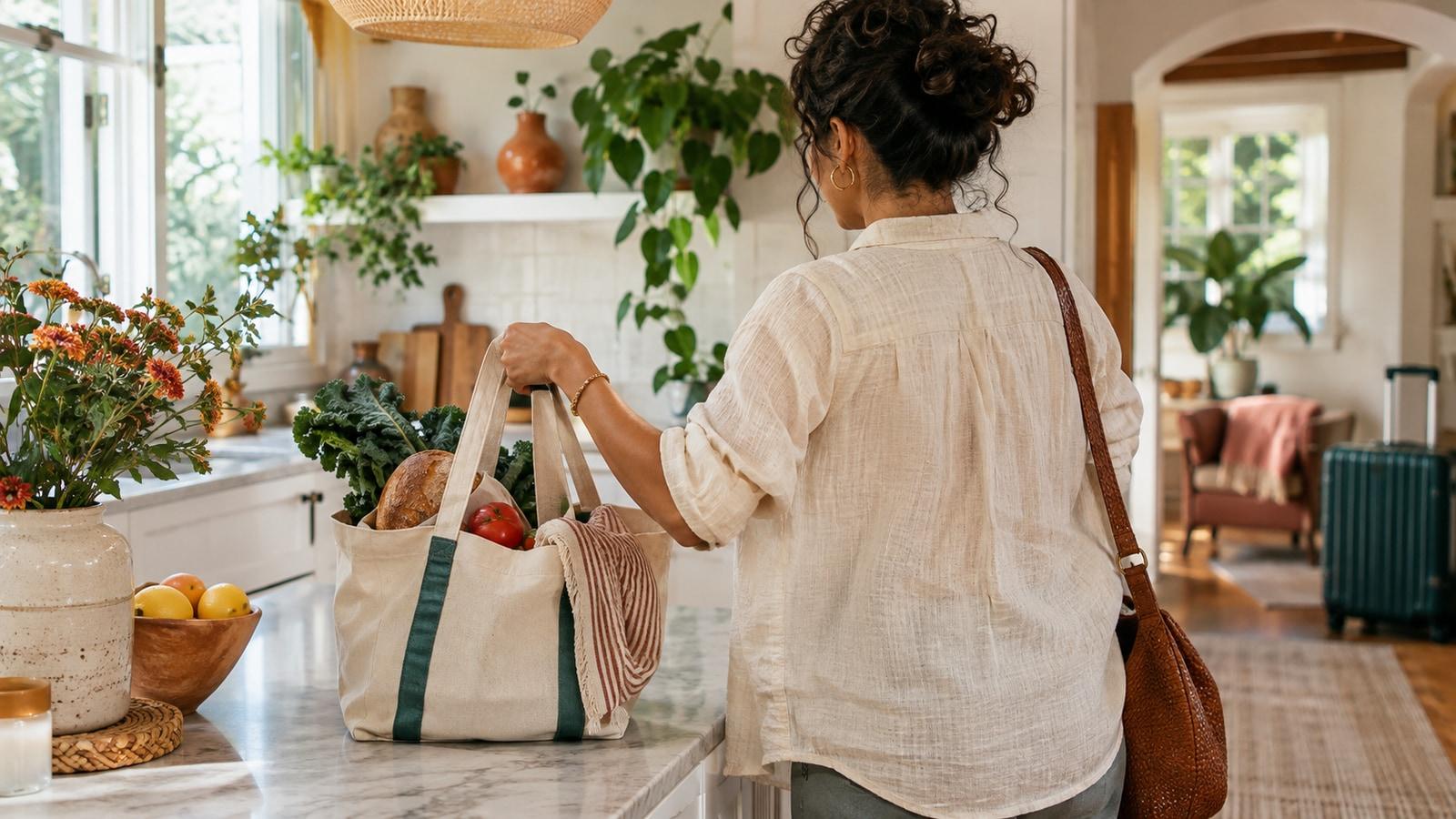
The suitcase is still open, the refrigerator is nearly empty, and tomorrow's calendar looks full. After a long trip, getting back to your usual meals can feel like one more task waiting at home.
You don't need to compensate for what you ate on vacation. Start by making the next few days easier: find a couple of foods you like, plan one or two simple meals, and give yourself room to settle back in.
Make the first day simple
Before you make a large grocery list, look at what you already have. Check pantry staples, the freezer, and any food that was safely stored while you were away. Discard perishable items that weren't kept at a safe temperature or are no longer safe to use; don't rely on smell alone.
Then choose an easy meal. That might be eggs and toast, beans and rice, soup and a sandwich, or a frozen meal with fruit on the side. If the best option tonight is takeout because you arrived home late, that's a practical choice. You can shop when you have more time.
For tomorrow, consider a breakfast and lunch you can assemble without much thought. Yogurt and fruit, oatmeal, a cheese sandwich, or leftovers from a safely stored meal can all be starting points. The goal is to have food available, not to recreate an ideal routine in one evening.
You don't need a “reset” diet
After a trip, you may see advice to fast, skip meals, or follow a strict plan to make up for vacation food. You don't have to earn your next meal. A return to familiar eating can be gradual, and a special dinner or dessert on a trip doesn't need a punishment afterward.
If tracking food or weight is part of a plan you and your clinician find useful, decide when and how to return to it in a way that feels supportive. If it tends to make you anxious or prompts restrictive behavior, discuss that with a qualified professional. Tracking is a tool, not a requirement for everyone.
Focus instead on questions with practical answers: When will you have time to eat? What food is available at work? Is there something you can bring that you actually enjoy? Those details are more useful than judging the trip.
Plan a short grocery trip
For the first few days, you might buy:
- Two or three foods for easy breakfasts or snacks.
- A protein option you enjoy, such as beans, eggs, fish, tofu, yogurt, or chicken.
- A grain or starchy food you like, such as rice, bread, potatoes, or tortillas.
- Fresh, frozen, or canned produce that fits your schedule.
- One convenient backup for a night when cooking isn't realistic.
Choose quantities you can use and afford. Frozen vegetables, canned beans, and shelf-stable grains can be useful if you're not ready for a full meal plan. If someone else is shopping, tell them what substitutions work for you and which ingredients need a label check.
Once home, put refrigerated and frozen foods away promptly. If you cook extra, divide leftovers into shallow containers, refrigerate them within two hours—or one hour above 90°F—and use refrigerated leftovers within three to four days.
Keep a good part of the trip
Returning home doesn't mean leaving every vacation meal behind. Maybe you enjoyed a new fruit, a breakfast you had time to sit down for, or a dinner shared with someone you care about. You could bring a version of that into your regular week if it appeals to you.
There's no need to reproduce a restaurant dish exactly. A seasoning, a favorite side, or a slower meal on a day off may be enough. Food can be both practical and enjoyable.
Your schedule may be less flexible at home, so adapt the idea rather than treating it as another standard to meet. A five-minute breakfast at the table can be a welcome change if a long brunch isn't possible on a workday.
If your medication schedule was interrupted
Travel can change routines. If you missed a GLP-1 dose or aren't sure how an interruption affects another medicine, check the instructions for your exact product and contact your pharmacist or prescriber. Don't double up or invent a restart schedule to “catch up.”
Tell the care team about persistent nausea, vomiting, or difficulty eating and drinking. If you use insulin or have another condition with a specific sick-day or missed-dose plan, follow the guidance you've been given and ask for clarification when needed.
This is also a good time to refill a prescription or update reminders if that helps. A calendar notification, a note by your keys, or a conversation with the pharmacy may be more useful than relying on memory while you unpack.
Choose one thing to repeat
You might begin by having breakfast before leaving home, taking a lunch break away from your desk, or keeping a backup meal in the freezer. Once that feels manageable, you can decide whether anything else needs attention.
Give yourself the same flexibility you would offer a friend returning from a busy trip. Your routine can be a place to return to, not a test you failed while you were away.