










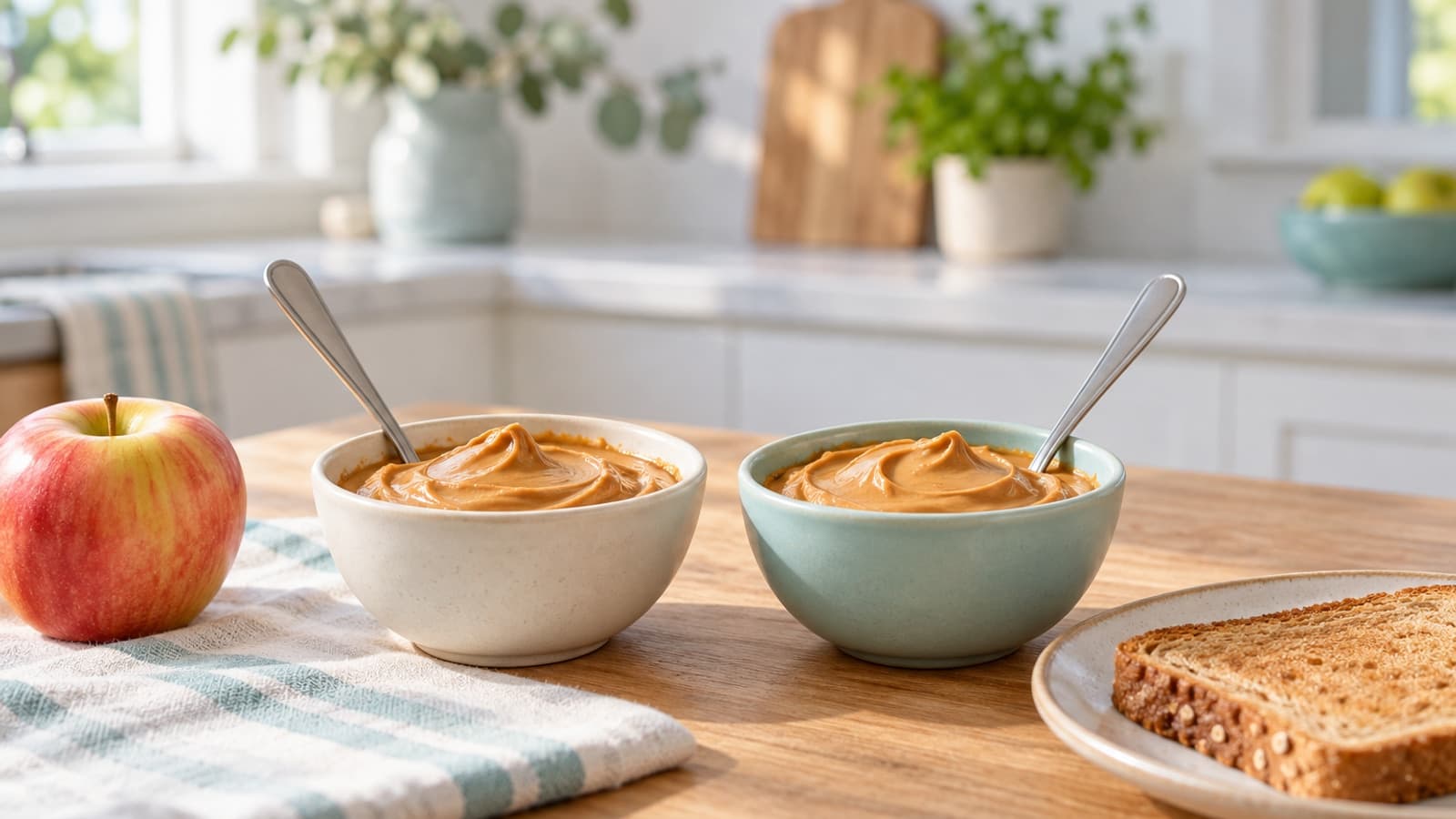
You reach for your usual peanut butter and notice a reduced-fat version beside it. The jars look almost identical. Which one makes more sense?
It depends on what you want from it. A word on the front can point you toward one difference, but you’ll need the rest of the label to see the tradeoffs. Reduced in one thing does not tell you everything else.
Start with a real comparison
Take two Jif products as an example. When we checked their online labels on October 31, 2026, regular Creamy Peanut Butter listed 16 grams of fat and 190 calories for two tablespoons. Its Reduced Fat Creamy Peanut Butter Spread listed 12 grams of fat and 190 calories for its two-tablespoon serving.
The serving weights weren’t identical: 33 grams for the regular and 36 grams for the reduced-fat spread. The same labels listed two grams of added sugar in the regular serving and three in the reduced-fat serving. Both listed seven grams of protein. These numbers describe those particular products, not every peanut butter on the shelf; check your own jar because recipes can change.
If you prefer the reduced-fat spread, that’s a reasonable choice. If you like the regular one, you don’t need to assume the other jar is automatically a better fit. Both contain peanuts, which matters much more than the front label if you have a peanut allergy.
Compare the amount you actually use
Look first at the serving size, then at the numbers you care about. One package might give information for one slice and another for two, or a snack may have more than one serving in the bag.
You don’t have to measure every bite. The serving size simply gives the numbers context. If you usually spread a teaspoon rather than two tablespoons, the label’s full-serving numbers describe more than you’re eating at that moment. If you use more, the opposite is true.
For a reduced-sugar food, you might compare added sugar, ingredients, flavor and price. With a lighter dressing, you might care about fat, sodium and whether you enjoy it enough to use it. There isn’t one number that settles every purchase.
Taste is part of the decision
Picture the job the food will do. A dressing you like can make a bowl of vegetables more appealing. A yogurt you dislike may sit in the refrigerator until it expires, even if the label initially looked promising.
You can buy a small container to try a new version when that’s practical. Notice its texture and flavor in the meal you actually make, not just on its own. If it doesn’t work, you can go back to your usual choice or try something else next time.
If you’re on a GLP-1 and rich foods are uncomfortable for you, a smaller amount or a different preparation may be worth discussing with your care team. Tolerance varies, and a lower-fat label doesn’t guarantee that a particular food will feel comfortable.
Check the ingredient list when it matters
Different versions can use different ingredients or sweeteners. If you have an allergy, check each package even when it comes from a familiar brand. A product’s name doesn’t reliably tell you every ingredient inside.
Also look at the cost of the amount you expect to use. Sometimes the smaller jar costs more per ounce but suits your household better. Sometimes the larger one is a good choice because you already know you’ll finish it.
Our guide to reading food labels walks through the panel in more detail. Next time two packages compete for your cart, turn them around, compare the serving and choose the one that fits your meal and your preferences.