










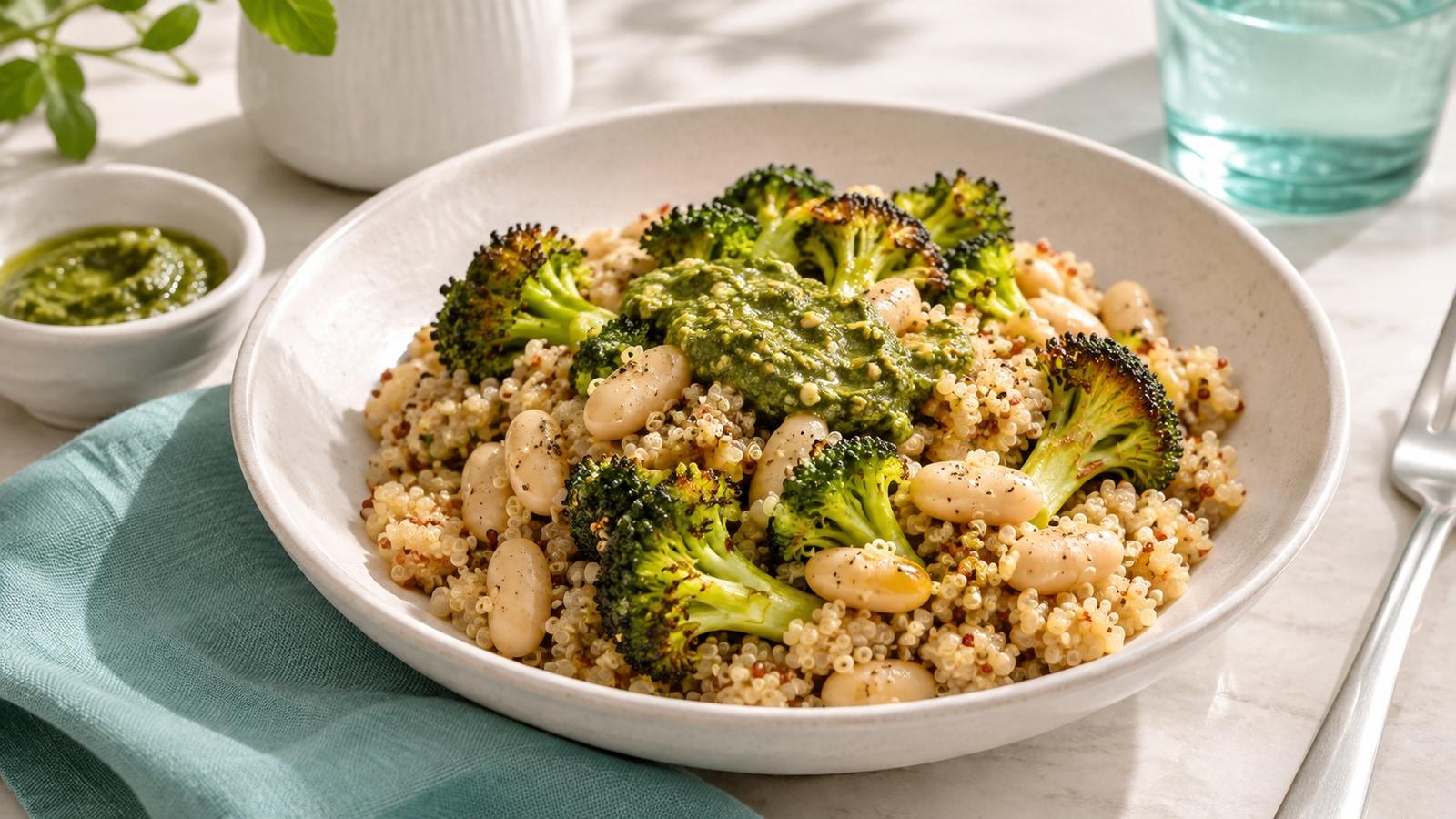
This bowl is built around three useful things: a tray of roasted broccoli, a pot of quinoa, and a can of white beans. Pesto ties them together, but you can add it a little at a time so the finished bowl tastes as bright or as rich as you like.
It’s also a practical way to use cooked quinoa from another meal. Keep the components separate if you’re packing lunches, then assemble a bowl when you’re ready to eat.
Ingredients
Makes: about 4 bowls
Prep: about 15 minutes
Cook: about 25 minutes, plus quinoa cooking time
- 1 large head broccoli, cut into florets
- 1 tablespoon olive oil
- 2 cans (15 ounces each) white beans, drained and rinsed
- About 3 cups cooked quinoa
- 3–4 tablespoons pesto, or to taste
- 1 lemon, cut into wedges
- Black pepper and grated parmesan, optional
Use cannellini, great northern, or navy beans. Store-bought pesto is convenient, though its ingredients vary. Some contain milk, nuts, or other allergens, so check the label. A dairy-free or nut-free version may be an option if it suits the people eating.
Make the bowls
- Heat the oven to 425°F. Wash your hands and rinse the broccoli and lemon. Cut the broccoli into similar-sized florets. Peel any tough outer stem and slice the tender center.
- Toss the broccoli with oil and spread it on a baking sheet. Roast for about 18–22 minutes, turning once, until tender with browned edges.
- Cook quinoa according to its package directions if it isn’t already prepared. Drain and rinse the beans. Warm them in a small skillet with a splash of water, or add them to the tray for the final few minutes of roasting.
- Divide the warm quinoa, beans, and broccoli among bowls. Add a little pesto to each and toss gently. Finish with lemon and pepper; add parmesan if you like.
If using cooked quinoa or broccoli left over from another meal, make sure it was refrigerated promptly and reheat it to 165°F. Freshly cooked components can go straight into the bowls.
Give the broccoli space
A crowded sheet pan traps steam, so use a second pan if the florets are piled on top of one another. You’re looking for tender stems and some browned edges, not blackened pieces. Cut especially large florets in half so they cook at a pace closer to the smaller ones.
The stem is useful too. Trim the dry end, peel the fibrous outside if needed, and slice the center thinly. It may take a little longer than the florets, so cut it smaller or put it on the tray first.
If you prefer softer broccoli, add a few minutes in the oven or steam it instead. Frozen broccoli can be convenient; follow the package cooking directions and allow for a different texture. A squeeze of lemon after cooking brightens either version.
Make pesto work for you
Pesto is concentrated, so start with a small spoonful. Toss the warm quinoa with it, then decide whether you want more. If it’s too thick to distribute, stir in a little warm water or lemon juice before adding it to the bowl.
Different pestos contain different combinations of herbs, oil, cheese, and nuts. Read the ingredient list if anyone has an allergy. You can also use a simple herb-and-lemon dressing in place of pesto. For a dairy-free bowl, skip parmesan and choose a suitable sauce.
If lemon tastes too sharp to you, offer wedges at the table instead of squeezing them over the entire batch. Black pepper and chopped herbs can add flavor without making the bowl more acidic.
Adjust the balance
White beans provide plant protein and fiber. The quinoa gives the bowl a grain base, and the broccoli adds a vegetable with a different texture. You can vary the proportions: more beans for a heartier bowl, more broccoli for a vegetable-forward one, or extra quinoa for someone with a larger appetite.
Canned beans are convenient; rinsing them removes some of the packing liquid. Drain them well before adding them to the tray or skillet so the bowl doesn't become watery. Lower-sodium varieties leave more room to adjust the seasoning with pesto and lemon.
This recipe is also flexible about toppings. Try chopped tomatoes, cucumber, or a spoonful of yogurt if those foods fit your preferences. Keep cool toppings separate from the hot components until serving.
Pack and reheat
Cool and refrigerate cooked quinoa within one hour. Put the beans and broccoli in separate shallow containers and refrigerate within two hours, or within one hour above 90°F. Keep the fridge at 40°F or below and use the components within three to four days. Store pesto according to its package instructions. Reheat the cooked components to 165°F, then stir in the pesto and add lemon. If using a microwave, stir and check in more than one place so the bowl heats evenly.
The quinoa may dry out slightly in the refrigerator; add a spoonful of water before warming. For a packed lunch, a divided container keeps toppings from becoming soggy and makes it easy to add the sauce after heating.
Extra roasted broccoli can go into an omelet or pasta, and extra beans can top a salad. The bowl is a starting point, not a rule: use the components in the way that makes the next meal easier.