










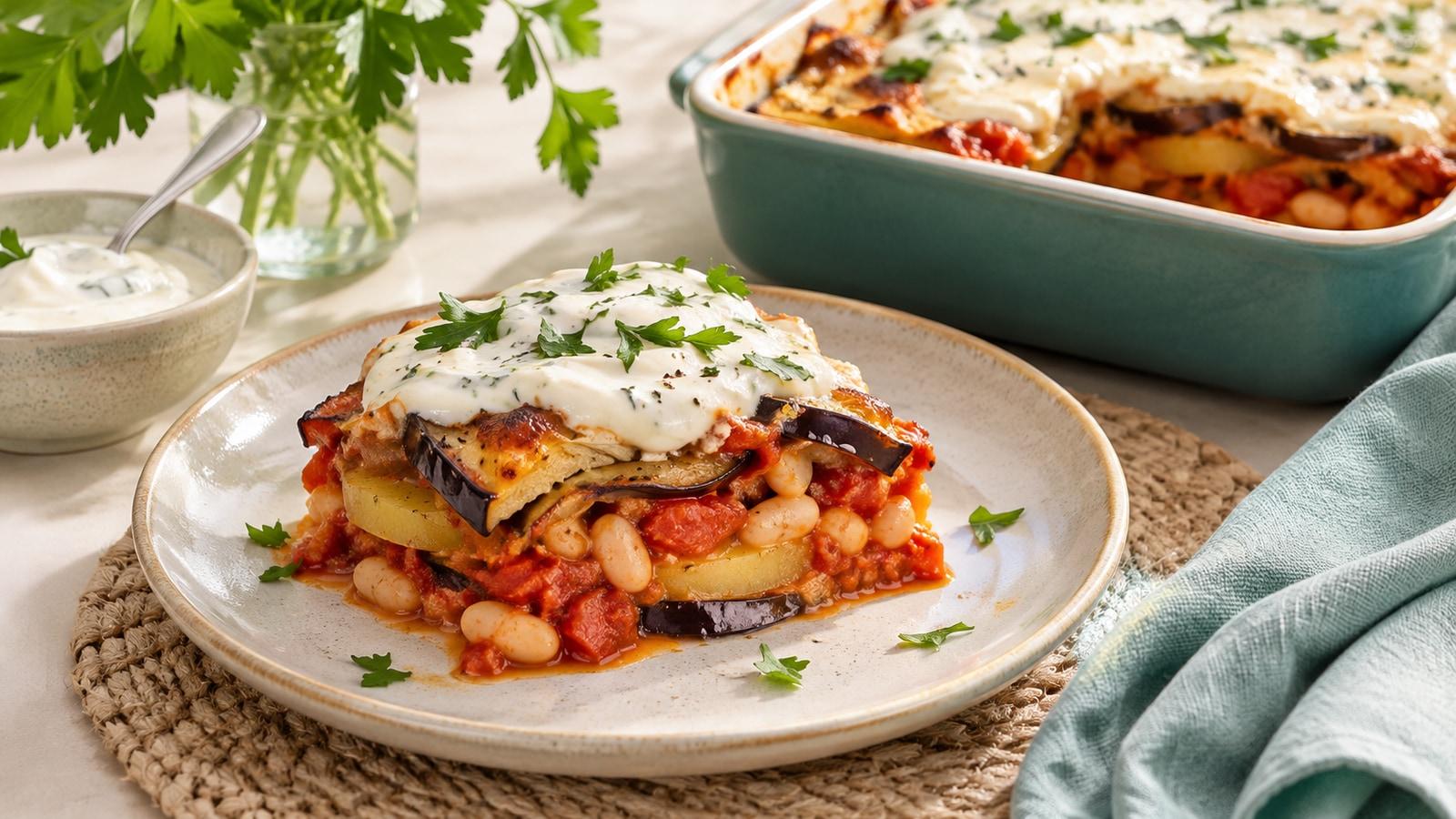
Moussaka has many regional and family variations. This vegetable-centered home adaptation layers roasted eggplant and potatoes with a tomato-white bean filling, then finishes the dish with a simple yogurt topping. It’s meant to be spooned onto plates after a short rest, with a salad or greens if you like.
The layers take a little preparation, but most of the time is hands-off. Roast the vegetables while the tomato mixture simmers, then assemble the dish and let the oven bring it together.
Ingredients
Makes: about 4 servings
Prep: about 25 minutes
Cook: about 45–55 minutes
- 1 medium eggplant, sliced into ½-inch rounds
- 2 medium potatoes, scrubbed and thinly sliced
- 1½ tablespoons olive oil, divided
- 1 small onion, diced
- 2 garlic cloves, minced
- 1 can (14–15 ounces) crushed tomatoes
- 1 can (15 ounces) white beans, drained and rinsed
- ½ teaspoon dried oregano
- A small pinch of cinnamon, optional
- ¾ cup plain yogurt
- 2 tablespoons grated parmesan, optional
- Chopped parsley, optional
The yogurt topping is simpler and tangier than a traditional béchamel. Choose plain yogurt rather than sweetened yogurt, and keep in mind that it may soften or separate a little in the oven. The recipe is a starting point for a layered vegetable bake, not a claim to reproduce every version of moussaka.
Roast, layer, and bake
- Heat the oven to 425°F. Wash your hands and rinse the eggplant, potatoes, and herbs under running water. Slice the potatoes thinly enough to become tender in the oven.
- Toss the eggplant and potatoes with about two-thirds of the oil. Arrange them on baking sheets in a single layer. Roast for about 20–25 minutes, turning once, until the eggplant is soft and the potatoes are nearly tender.
- Meanwhile, warm the remaining oil in a skillet. Cook the onion until soft, add garlic briefly, then stir in tomatoes, white beans, oregano, and cinnamon if using. Simmer for 10 minutes. Mash a few beans to thicken the sauce.
- Reduce the oven to 375°F. In a baking dish, layer half the potatoes and eggplant, followed by half the bean sauce. Repeat with the remaining vegetables and sauce.
- Stir the yogurt and parmesan together, if using, and spread lightly over the top. Bake for about 20–25 minutes, until the filling is hot and bubbling. Check that the potatoes are fully tender; if using previously cooked and refrigerated ingredients, check that the center reaches 165°F.
- Rest for about 10 minutes, then spoon onto plates and add parsley if desired.
Make the layers tender
Potatoes take longer than eggplant if cut too thick. Aim for thin, even slices and test one of the larger pieces before assembling the dish. It should be close to tender after roasting. If it is still firm, give the tray more time; the final bake may not be long enough to fix thick, undercooked slices.
Eggplant should be soft enough to yield to a fork. Crowding the baking sheet can make it steam instead of brown, so use two trays if needed. A small amount of browning adds flavor, but tenderness matters more than getting every slice equally golden.
The tomato filling should be thick enough to stay between layers. If it looks watery, simmer it uncovered a few more minutes. Mashing some beans gives the sauce body while leaving the rest whole for texture.
About the topping
Yogurt adds a tangy contrast, but it doesn’t behave exactly like a flour-thickened sauce. Spread it in a thin layer and avoid expecting a perfectly smooth, firm crust. If it separates slightly, the dish can still be served; a spoonful of fresh yogurt at the table is another option.
For a dairy-free version, leave the topping off or use a suitable unsweetened plant-based alternative. Milk is a common allergen, so check both yogurt and cheese labels for the person eating. If you prefer a more traditional sauce or have a family method, use that approach and adjust the cooking directions accordingly.
The pinch of cinnamon is optional. It adds warmth rather than sweetness, but it should remain in the background. Start small; you can add more to another batch after you know what you like.
Serving and storing
White beans provide plant protein and fiber, making the vegetable layers more substantial. Serve a portion with a salad, cooked greens, or bread. If the layers slide apart, use a spoon; the dish doesn’t need to hold a perfect square to make a good dinner.
Put leftovers in shallow containers and refrigerate within two hours, or within one hour above 90°F. Keep them at 40°F or below and use within three to four days. Reheat to 165°F, checking the center because layered dishes can warm unevenly. Add a little water to the dish before reheating if the sauce has thickened, and finish with fresh parsley afterward.
You can roast the vegetables ahead, but refrigerate them promptly and keep them covered. Assemble and bake when ready, allowing enough time for the center to reach 165°F if using cold, previously cooked components.