










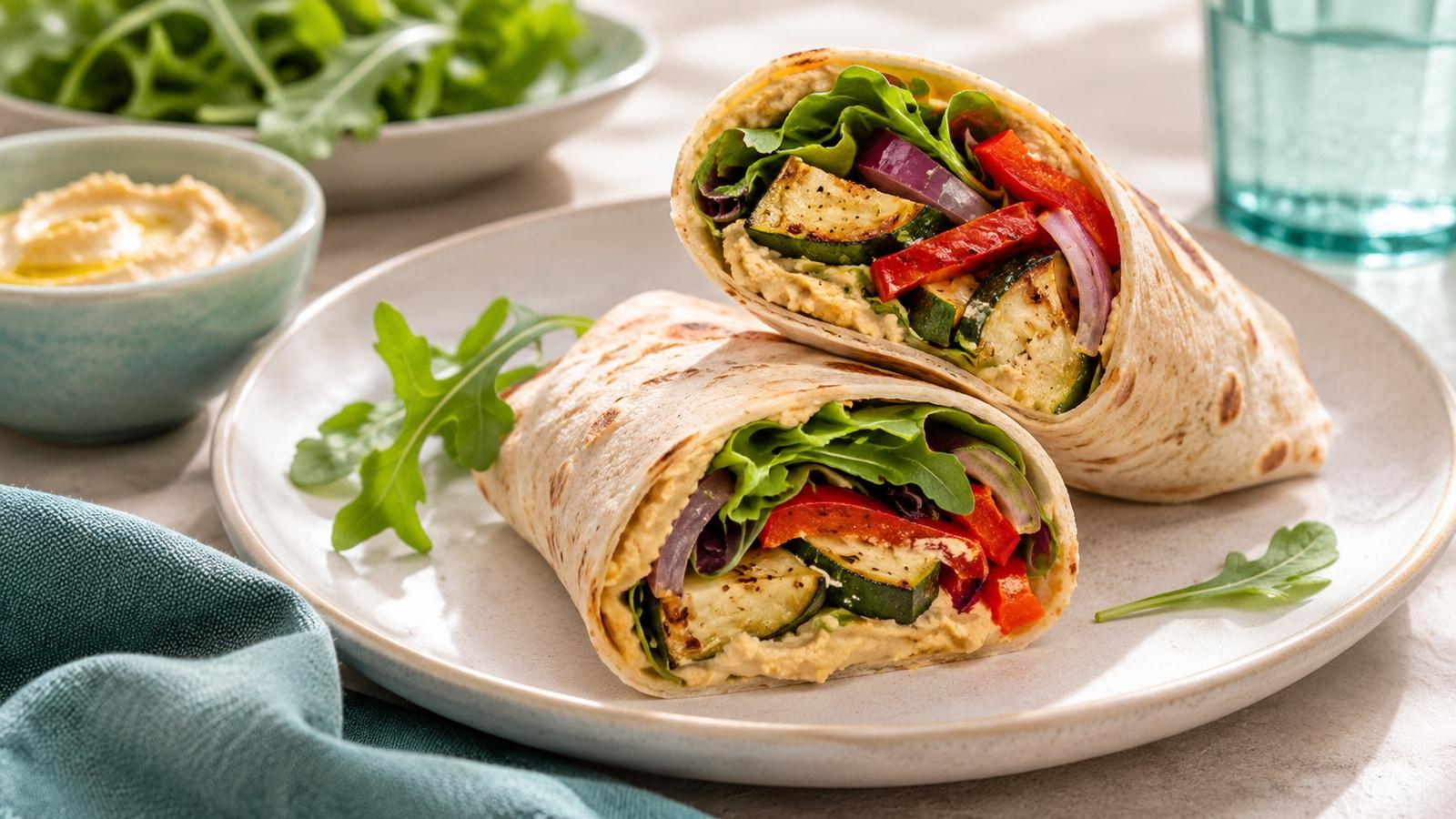
Roasted vegetables are good straight from the pan, but they can also become tomorrow’s lunch. Spread hummus on a tortilla, add the vegetables and a handful of greens, and roll it up. The result is easy to portion and doesn’t require a separate sauce.
This version uses zucchini, bell pepper, and red onion. You can roast them together, then keep the filling chilled until you’re ready to assemble. If a wrap tears, turn it into an open plate instead; the meal still works.
Ingredients
Makes: about 3 wraps
Prep: about 15 minutes
Roast: about 20–25 minutes
- 1 zucchini, cut into short strips
- 1 bell pepper, cut into strips
- ½ red onion, thinly sliced
- 1 tablespoon olive oil
- ½ teaspoon dried oregano
- 3 whole-grain tortillas
- ½ cup hummus
- 1½ cups washed baby spinach or other tender greens
- Black pepper or lemon juice, optional
Tortillas vary in size; a large one may hold more than a small one. Most whole-grain wheat tortillas contain gluten. Choose a suitable alternative if needed and check labels for cross-contact. Hummus often contains sesame, so check the ingredients if you have an allergy.
Roast, spread, and roll
- Heat the oven to 425°F. Wash your hands and rinse the zucchini and pepper under running water before cutting them. Wash the greens unless the package says they’re prewashed.
- Toss the zucchini, pepper, and onion with the oil and oregano. Spread them on a baking sheet in a single layer.
- Roast until the vegetables are tender and lightly browned, turning once. Begin checking after about 20 minutes; thicker pieces may need longer.
- Warm the tortillas according to the package if that makes them easier to fold. Spread a little hummus over each, leaving a border around the edge.
- Add roasted vegetables and greens. Fold in the sides and roll, or serve the filling on top of the tortilla as an open wrap.
Don’t overfill the first tortilla. A thinner layer is easier to roll, and any extra vegetables can go on the side. If you’re preparing the wraps later, cool the cooked vegetables promptly in a shallow container and refrigerate them before packing.
Cut the vegetables for the wrap
Short strips are easier to bite through than long pieces that pull the whole filling out at once. Try to keep the zucchini and pepper pieces similar in thickness so they roast at a similar pace. Onion can be sliced thinner because it softens more quickly.
If a few pieces brown before the rest are tender, move those to a plate and return the pan to the oven. You can roast the vegetables softer if you prefer a gentler texture, or leave a little bite. Both are useful; the right version is the one you enjoy eating.
Other vegetables can work, but water content and cooking time change the result. Mushrooms release moisture, for example, while carrots usually need longer than zucchini. Cut them accordingly and give each ingredient the time it needs rather than assuming every vegetable roasts at the same speed.
Hummus is the spread and part of the filling
A thin layer helps hold the vegetables in place and contributes chickpeas to the meal. Hummus products differ in texture, seasoning, and sodium, so choose one you like and taste before adding more salt. If it’s very thick, a little lemon juice can loosen it.
If you avoid sesame, look for a product suitable for your allergy or use another spread. If you’re not used to beans, start with a modest amount of hummus and see how it feels. Add another protein or a side of fruit if you want a more substantial lunch.
The greens add a fresh contrast. Put them between the hummus and vegetables, or pack them separately if you’re making lunch ahead. Cooked vegetables that are still hot can wilt delicate leaves quickly, which may or may not bother you.
Pack a wrap that holds together
For a lunch away from home, pack the chilled roasted vegetables, hummus, and greens in a sealed container with ice packs. Bring the tortilla separately and assemble when you’re ready to eat. That keeps the bread from absorbing moisture during the morning.
If you prefer to roll it at home, keep the filling cool and use less hummus near the edges. Wrap the finished tortilla snugly in a clean food-safe wrapper, but don’t rely on the wrapper to keep it cold. Refrigerate it when you arrive if possible.
Store the extras
Refrigerate the cooked vegetables and opened hummus promptly, within two hours or within one hour if exposed to temperatures above 90°F. Keep the refrigerator at 40°F or below. Use the vegetables within three to four days and follow the hummus package’s after-opening instructions.
Reheat the vegetables to 165°F if serving them warm as leftovers, then add cold hummus and greens. You can also eat safely chilled vegetables cold. Keep the different components separate if you want the freshest texture.
If your appetite is smaller, make half a wrap and save the rest safely. If ongoing nausea makes eating or drinking difficult, contact your care team. The goal is a convenient lunch you can adjust, not a portion you have to finish.