










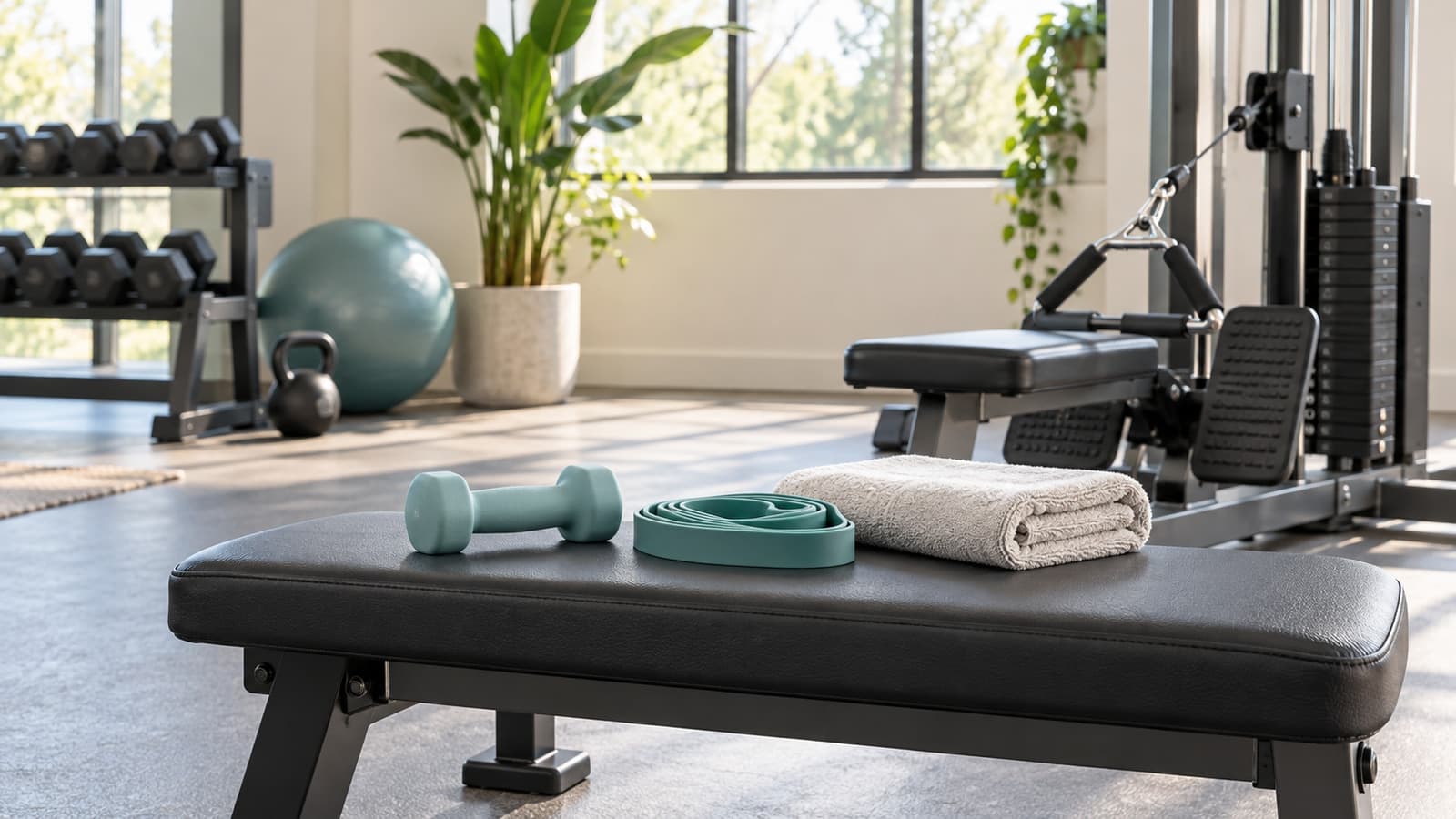
A row at the gym isn’t necessarily a boat-shaped machine or a cardio workout. In strength training, a row is a pull followed by a controlled return. You might use a band, a dumbbell or a machine to practice it.
Each setup asks something different of your hands, shoulders and balance. You only need to choose one to start.
A supported dumbbell row
Find a stable bench and a light dumbbell you can handle comfortably. One common version uses a hand and knee on the bench for support while the other hand holds the weight. Keep your body steady, bend the working elbow and draw it back toward your side, then lower the weight with control.
You don’t need to twist your torso or pull the weight as high as possible. Stop the pull where you can maintain your position. If getting a knee onto a bench isn’t comfortable or steady, ask a trainer for a supported standing variation or choose a different setup.
Put the weight down safely before changing sides. If you’re unsure whether a bench or chair will support you, don’t lean on it until someone can check it. A lighter weight makes it easier to learn the motion without using momentum.
A resistance-band row
A band may be useful at home, provided it’s appropriate for the movement and in good condition. Check for tears or wear before use and follow the manufacturer’s instructions. If the exercise needs an anchor, use one designed and secured for that band; an improvised attachment can slip.
In one standing version, the band is positioned under your feet and held in both hands. With a comfortable knee bend and a steady torso, draw your elbows back, then allow the band to return slowly. Keep the band secure underfoot and don’t let it snap back toward you.
A seated band or machine variation may suit someone who prefers not to lean forward. Ask a professional to show you the setup, particularly if grip, balance or shoulder movement is a concern. Different bands feel different, so color alone isn’t a reliable measure of resistance.
A seated row machine
At a gym, ask staff to show you how the particular machine adjusts. Set the seat and handles so you can reach them without straining, place your feet securely and choose light resistance. Pull toward your body in a comfortable range, then return the handles slowly rather than letting the weight stack drop.
Some machines have a chest pad; others use a cable. Their instructions differ. Avoid leaning far back to move a weight you can’t otherwise control. If something pinches or the machine doesn’t fit, ask about an adjustment or another exercise.
Compare the practical details
Think about more than the muscle you want to work. A band is portable but needs a secure setup. A dumbbell row needs a stable place to support your body and room to put the weight down. A machine may be convenient when someone can help you adjust it, though you’ll need access to that equipment. Choose the option you can set up reliably, not the one that looks most impressive.
What should it feel like?
You may notice work around your upper back and arms. You shouldn’t have to jerk, twist or hold your breath to complete a repetition. Start with a small number you can manage smoothly, rest, and pay attention to how you feel afterward.
Stop for sharp pain, dizziness or an unusual symptom. If you have a shoulder or back condition, get individual advice before choosing a row. Strength work during GLP-1 treatment also needs adequate nourishment and recovery; a day when you cannot keep fluids down is not the day to push through a workout.
For more on checking equipment and choosing resistance, see our resistance-band guide. A well-supported, controlled row is more useful than the heaviest one you can force.