










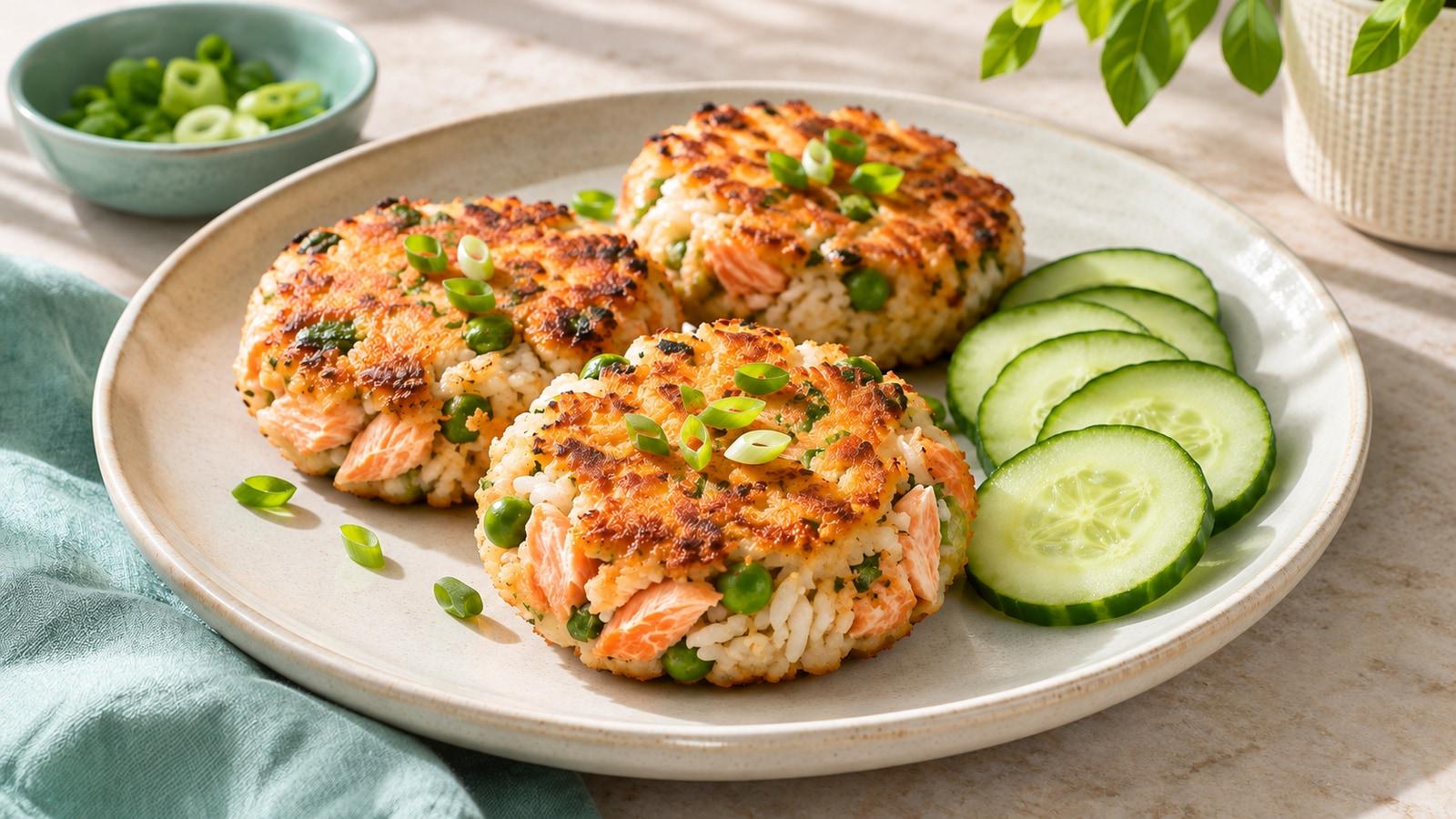
These oven-baked rice cakes pair salmon and rice with ginger, scallions, and finely chopped peas. A little cucumber on the side makes the plate feel fresh.
If you plan to save and reheat finished cakes, use freshly cooked rice and assemble and bake the mixture without a refrigeration break. If the rice or assembled mixture has already been chilled, bake only the portion you plan to eat now: baking reheats the rice, which should be reheated only once. Keep cooked salmon cold until mixing. The cakes contain egg, so the center needs a thermometer check before serving.
Ingredients
Makes: about 8 small cakes
Prep: about 20 minutes
Bake: about 15–20 minutes; check the center
- 2 cups cooked salmon, flaked and checked for bones
- 1½ cups cooked rice
- ½ cup frozen peas, prepared according to the package and cooled
- 2 tablespoons finely chopped scallions
- 1 teaspoon grated fresh ginger
- 1 large egg
- ¼ cup plain breadcrumbs, plus more if needed
- 1 teaspoon neutral oil, for the pan
- Cucumber slices, optional
- A little rice vinegar or lemon, optional
If starting with raw salmon, cook it to 145°F and cool it safely before mixing. You can also use drained canned salmon. Some canned salmon includes soft bones; remove any you don't want, and choose boneless fish or remove bones when serving children.
Fish and egg are allergens, and ordinary breadcrumbs can contain wheat. Check labels and choose suitable ingredients for everyone eating. The finished cakes may behave differently with another binder, so an egg-free adaptation needs its own recipe and testing.
Mix and bake
- Heat the oven to 400°F and lightly oil a lined baking sheet. Wash your hands, then rinse the scallions and any cucumber or lemon under running water.
- Break up the cold rice with a fork. In a bowl, combine it with the flaked salmon, prepared peas, scallions, ginger, egg, and breadcrumbs.
- Press a small amount together. If it won't hold, add a little more breadcrumb and give the mixture a few minutes in the refrigerator. If it's dry and crumbly, try a teaspoon of water.
- Form eight small, fairly flat cakes and arrange them with space between them. Wash your hands and any surfaces or utensils that touched the raw egg mixture. Don't taste it before cooking.
- Bake until the centers reach 165°F on a food thermometer, starting to check around 15 minutes. The outside may brown at a different rate from the center, so return the cakes to the oven if needed. Transfer them to a clean plate.
- Serve with cucumber and a few drops of rice vinegar or lemon if you like. Keep any cold topping separate until the cakes are ready.
The timing depends on the thickness of the cakes and the baking sheet. Flattening them to a similar thickness helps them heat more evenly, but each one still needs to be checked where it is thickest.
Make leftover rice work for you
Cold rice can come out of the refrigerator in clumps. Separate it gently with a fork before combining it with the fish. If using refrigerated rice, it should have been cooled and refrigerated within one hour of cooking and used within 24 hours.
Think back to when the salmon and rice were prepared. If you don't know how long either sat out, don't use it for the cakes. The second cook doesn't undo every food-safety problem caused by unsuitable storage.
If you prepare the mixture ahead, cover and refrigerate it promptly because it contains raw egg and perishable ingredients. Use it within the rice's 24-hour window. Baking reheats the chilled rice, so eat those cakes promptly rather than saving them for another reheat. Wash the bowl and tools before using them for the finished cakes or cucumber.
Ginger, peas, and a crisp side
The ginger is there for a little warmth rather than heat. Start with a small amount, especially if you're sharing the meal, and adjust the next batch after you've tasted the cooked cakes. Scallions can be left out if you prefer a milder flavor.
Frozen peas may need cooking before they go into the mixture. Follow the package directions, cool them promptly, and chop or lightly crush them if whole peas make the cakes difficult to shape. Different vegetables release different amounts of moisture, so substitutions may change how well the mixture holds together.
Cucumber adds crunch without another sauce to prepare. You might prefer tender cooked greens instead. If you follow a prescribed texture plan, check that the cakes and side fit those instructions before serving.
Make a plate that suits the occasion
The cakes combine fish and rice in a small portion. Serve a couple with vegetables for lunch, or offer them with another side for a larger dinner. Appetite and cake size vary, so the number on one plate doesn't need to be the same for everyone.
If you're using a GLP-1 medicine and a full plate is unappealing, choose an amount that feels manageable. With previously chilled rice, bake only what you plan to eat now. Let your care team know if nausea or another symptom consistently makes it hard to eat or drink enough.
Store and reheat
For cakes assembled and baked immediately with freshly cooked rice, cool and refrigerate them in a shallow container within one hour of cooking the rice. Use them within 24 hours and reheat only once, to 165°F throughout. If the rice or mixture was refrigerated before baking, eat the baked cakes promptly rather than saving them for another reheat. Keep cucumber separate and cold.
The shape doesn't need to be perfect. Even thickness, a clean serving plate, and a checked center are more useful than getting every rice cake to look identical.