










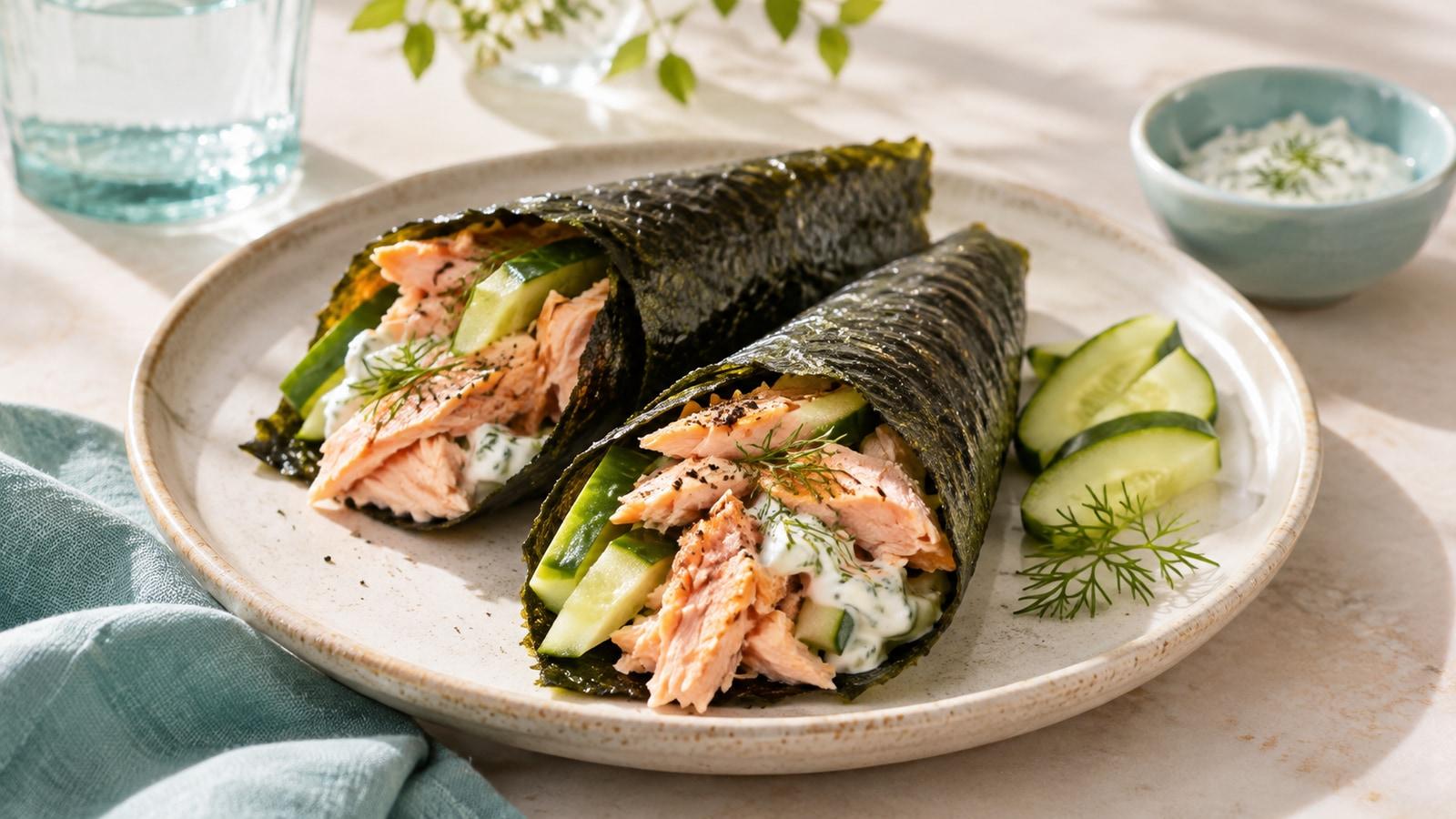
If you have a can of salmon in the pantry, lunch can be as simple as mixing a filling and wrapping it in sheets of nori. These wraps are closer to a hand-held salad than a carefully rolled sushi dinner. There’s no special mat involved, and you can assemble one at a time so the seaweed stays crisp.
Use canned salmon or salmon you’ve cooked and chilled safely. Cucumber adds crunch, while a little yogurt or mayonnaise brings the filling together. Keep the nori separate until you’re ready to eat so it stays crisp.
Ingredients
Makes: about 2 servings
Prep: about 15 minutes, using cooked or canned salmon
- 1 can (about 5–6 ounces) salmon, drained, or an equal amount of cooked salmon
- 2 tablespoons plain yogurt or mayonnaise
- 1 teaspoon lemon juice, or to taste
- ½ cup cucumber, cut into thin sticks or small dice
- ½ cup finely shredded carrot
- 4 small sheets of plain roasted nori, or larger sheets cut into pieces
- Optional: sliced avocado or a pinch of sesame seeds
Salmon is fish, and some nori snacks and sauces contain added seasonings or allergens. Check the packages if you’re avoiding an ingredient. If you don’t like nori, the same filling can be served with crackers or in lettuce leaves, though the flavor and texture will be different.
Mix and wrap
- Wash your hands. Rinse the cucumber and carrot under running water before cutting them. Prepare the vegetables in small pieces that will fit comfortably inside the nori.
- Drain the canned salmon and place it in a bowl. Flake it with a fork, checking for any bones or skin you prefer to remove. If using cooked salmon, make sure it was cooked and refrigerated safely before flaking.
- Mix the salmon with the yogurt or mayonnaise and lemon juice. Add a little more dressing if you like a softer filling. Keep the mixture chilled until you’re ready to eat.
- Place a small spoonful of salmon on a piece of nori. Add cucumber, carrot, and avocado if using. Fold the nori around the filling and eat it before the sheet softens too much. Repeat with the remaining ingredients.
If a sheet tears, break it into smaller pieces and scoop up a little filling at a time. You don’t need to make a neat cylinder. Put the vegetables beside the filling if that is easier to manage.
Canned or freshly cooked salmon?
Canned salmon is convenient because it’s already cooked and can be kept unopened according to the package directions. Once opened, treat it as a perishable food and refrigerate it promptly. Product sizes and styles vary, so check the label and adjust the amount of dressing to suit the fish you have.
If you’re cooking fish for this recipe, use a food thermometer and cook finfish to 145°F. Keep raw fish separate from vegetables and clean surfaces and utensils after handling it. Refrigerate the cooked salmon promptly, then assemble the salad with clean utensils. This recipe doesn’t use raw fish.
Salmon supplies protein. It can be part of a varied eating pattern, but an exact nutrition number for these wraps would depend on the fish, dressing, and toppings you use. If you need guidance on seafood choices for a particular health situation, ask your care team.
Adjust the filling to your appetite
Make one or two small wraps and keep the rest of the filling chilled until you want it. For a fuller meal, add fruit, soup, or another side you enjoy. Set out extra nori separately so you can make another wrap without the unused sheets getting damp.
Yogurt gives the filling a tangier taste, while mayonnaise makes it richer. Start with a little, then add more if needed. Thin strips of cucumber offer crunch; finely diced cucumber is easier to tuck into a small sheet. Add avocado just before eating if you enjoy it.
When taking a GLP-1 medication, appetite and food preferences can change. Pick an amount that feels manageable and choose another meal if fish doesn’t sound good that day. Persistent nausea or difficulty eating or drinking is a reason to contact your care team, not something a recipe can fix.
Packing and storing the components
Refrigerate the salmon mixture within two hours of preparation, or within one hour if exposed to temperatures above 90°F. Keep the refrigerator at 40°F or below and use the prepared filling within three to four days, taking into account the age of any previously cooked salmon. Keep the nori dry and separate until serving.
For lunch away from home, use an insulated bag with ice packs to keep the fish filling cold. Pack the nori separately and assemble the wraps just before eating. Don’t leave a fish salad sitting at room temperature for the afternoon.
Fold a sheet or use it to scoop: either way, keep the filling chilled and make each bite when you’re ready to eat.