










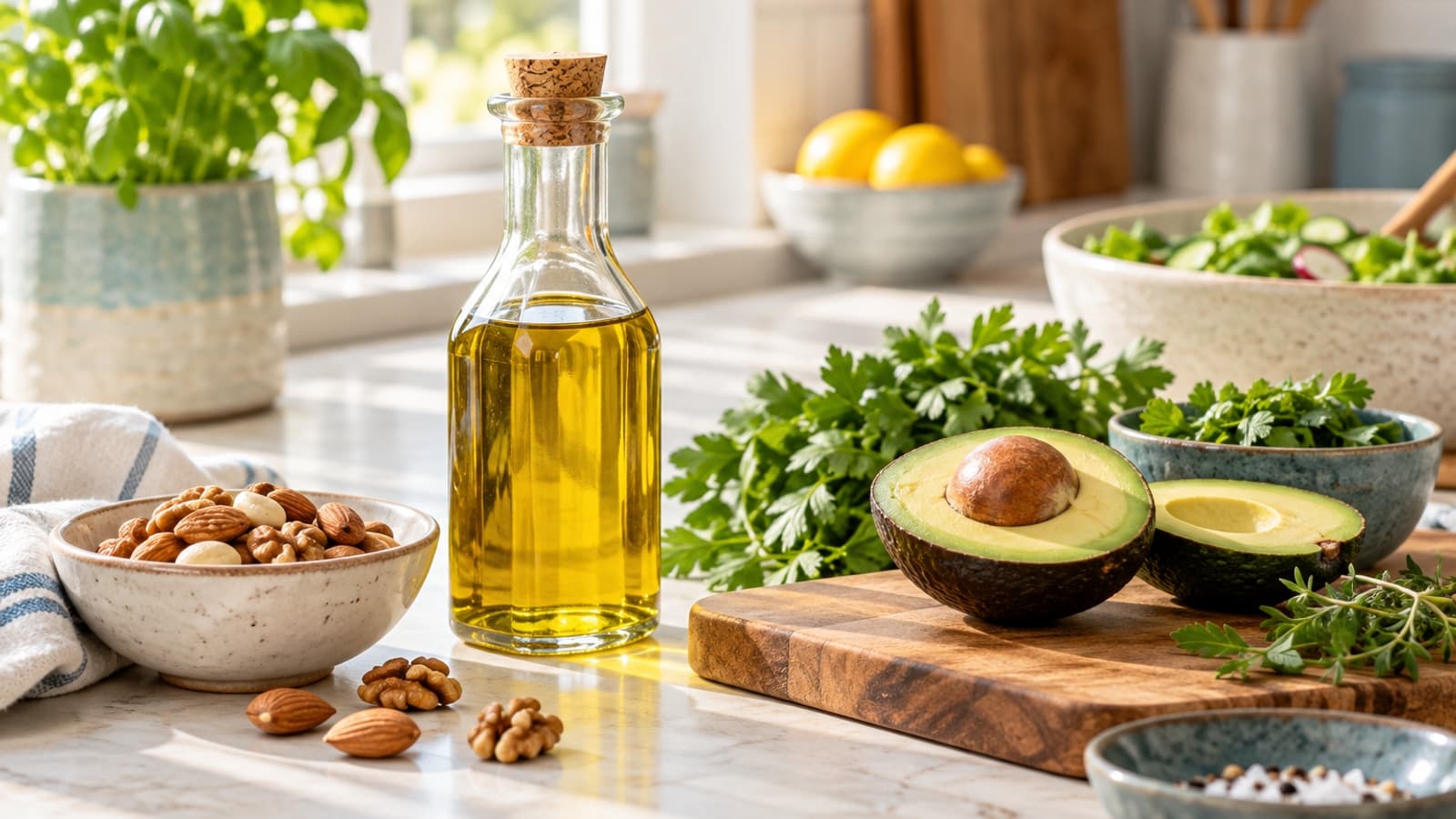
You don't have to give up flavor to think about the kind of fat in your meals. A little olive oil can make roasted vegetables taste wonderful; avocado can give a sandwich the creamy texture you wanted.
Fat helps food taste satisfying and gives your body energy. It also helps you absorb certain vitamins. The question is less “Should I eat fat?” and more “Which foods am I using regularly, and what do I enjoy?”
Two names you'll see often
Saturated fat is found in foods such as butter, full-fat dairy and fatty cuts of meat. Coconut and palm oils contain substantial saturated fat too. Unsaturated fats are common in foods such as olive oil, canola oil, nuts, seeds, avocado and fish.
Most foods contain a mixture of different types of fat. A bottle of olive oil isn't made of only one type, and a food isn't defined by fat alone. It may also provide protein, fiber or other nutrients.
Replacing some saturated fat with unsaturated fat can help lower LDL cholesterol and support heart health. That's a pattern across meals, not a promise about what will happen after one swap.
Start with a meal you already make
Consider one change that sounds appealing:
- Roast vegetables with olive or canola oil and your favorite spices.
- Spread avocado or hummus on a sandwich for a creamy element.
- Add chopped nuts or seeds to oatmeal or yogurt if they suit your needs.
- Try fish, beans or tofu in a meal where you might usually use a fattier meat.
- Mix herbs and lemon into a small amount of olive oil for a simple dressing.
You don't need to make every change. If a family recipe gets its character from a little butter, you can enjoy it and still use different fats elsewhere. Taste, culture, allergies and cost all matter when deciding which ideas belong in your kitchen.
What about cooking?
Different oils have different flavors. Olive oil can be lovely with vegetables, while a neutral oil may suit a dish where you don't want a strong taste. Use the amount your recipe needs, and pay attention to the oil and cooking method you choose.
For a salad dressing, try combining oil with vinegar or citrus and herbs. For a warm dish, a modest drizzle may be enough to carry spices and prevent sticking. You can add more if the meal needs it.
Nuts and seeds bring texture as well as unsaturated fats. If whole nuts are difficult to chew, a suitable nut or seed butter may work better. Avoid any ingredient you're allergic to and check packaged foods for the allergens relevant to you.
Reading a label
On packaged foods, the Nutrition Facts panel lists total fat and saturated fat per serving. Start by checking the serving size; two packages aren't easy to compare if one lists a tablespoon and the other lists a much larger amount.
If you're choosing between similar products for the same job, look at saturated fat alongside the ingredients, flavor and price. A lower number isn't the only feature that matters, and one packaged food doesn't determine the quality of your whole diet.
If you're taking a GLP-1
Some people notice that large or especially rich meals are less comfortable during treatment. The type of fat and the amount in a meal are separate questions. A food with unsaturated fat can still feel too rich in a large portion.
If that's happening, try a smaller amount or put a dressing on the side while you figure out what feels comfortable. Our guide to fat, portions and digestive comfort on a GLP-1 has more ideas.
Persistent symptoms deserve a conversation with your care team. For everyday cooking, choose a few swaps that taste good enough to repeat. That's much more useful than a cupboard full of ingredients you don't like.