










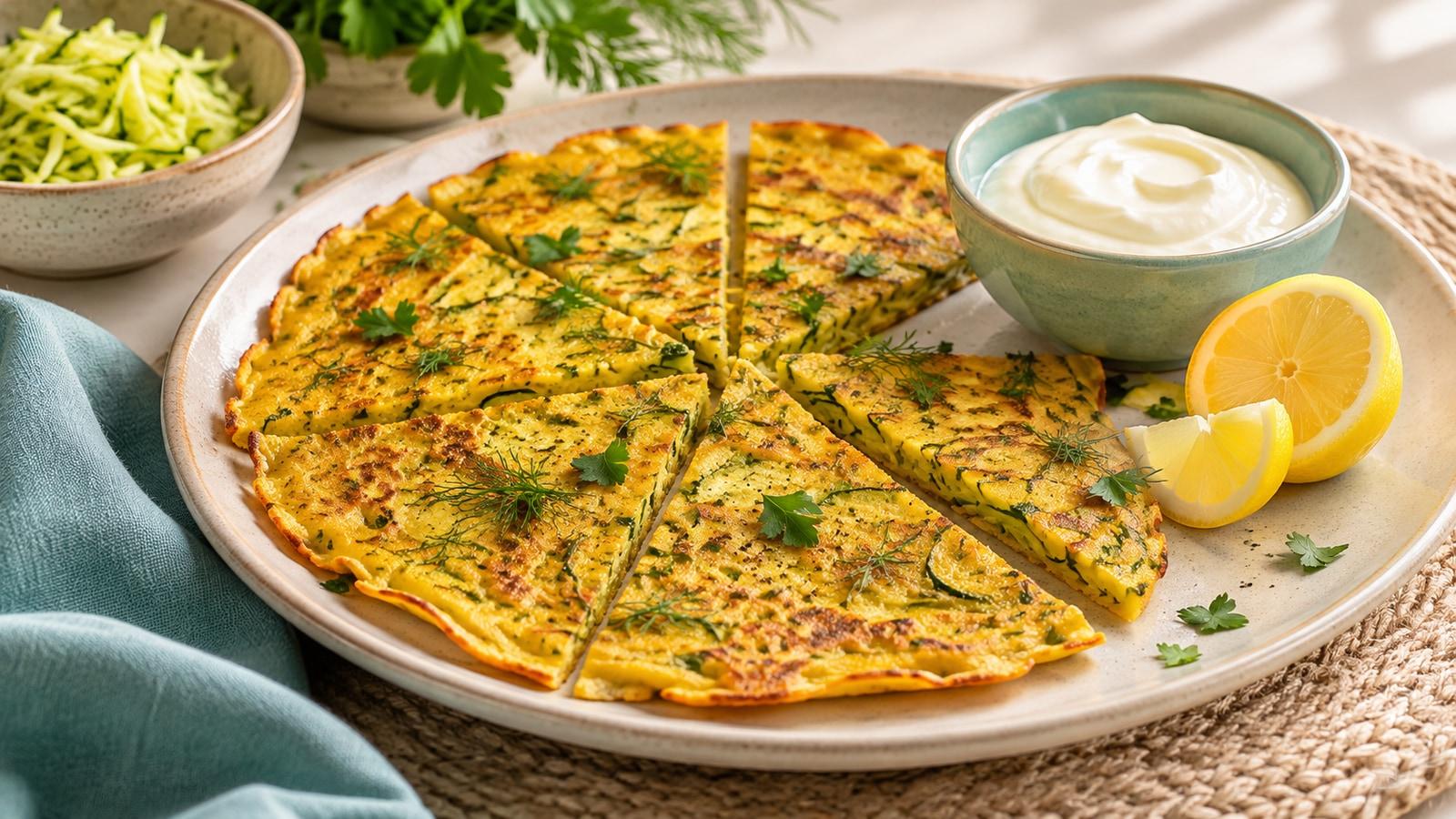
This isn't the kind of pancake you cover with syrup. Chickpea flour, grated zucchini and herbs make a savory skillet pancake that can be cut into wedges and served with yogurt or a side you enjoy.
The batter is simple, but the center needs time to cook through. Keep the pancake reasonably thin, use moderate heat and don't taste the raw batter. The result is intended to be tender inside with lightly browned edges, not a stack of fluffy breakfast pancakes.
Ingredients
This starting recipe is intended to make one medium pancake, enough for one or two portions depending on the rest of the meal.
- ½ cup chickpea flour
- ½ cup water, plus a little more if needed
- ½ cup finely grated zucchini
- 1 tablespoon chopped parsley or cilantro
- ¼ teaspoon ground cumin
- A small pinch of salt and black pepper
- 1 to 2 teaspoons olive oil for the skillet
- Plain yogurt and lemon for serving, optional
Chickpea flour can be sold under different names. Check the package ingredients and any allergen information relevant to you. If you need the meal to be gluten-free, check the product for that specific need rather than assuming every flour was handled the same way.
Prepare the zucchini and batter
Rinse the zucchini and herbs under running water. Grate the zucchini, then press it gently in a clean towel to remove some excess moisture. You don't need to squeeze it completely dry, but a very wet filling can make the pancake harder to cook through.
Whisk the chickpea flour, water, cumin, salt and pepper in a bowl until there are no obvious lumps. Fold in the zucchini and herbs. The batter should be pourable but not watery; add a small splash of water if it is too thick to spread.
Treat the flour and batter as raw ingredients. Don't taste the uncooked mixture, and wash your hands, utensils and work surface after handling it. Keep the raw batter away from the yogurt and other ready-to-eat toppings.
Cook the pancake
Heat the oil in a nonstick skillet over medium heat. Pour in the batter and spread it into an even, fairly thin layer. Let it cook until the underside is browned and the edges begin to set, then turn it carefully with a wide spatula. Cook the other side until the center is fully cooked and no wet batter remains.
Lower the heat if the outside is browning before the middle cooks. A smaller pancake can be easier to turn; you can divide the mixture into two if that better fits your pan. Follow the flour package's cooking guidance when provided, and do not serve raw or partially cooked batter.
Transfer to a clean plate and cut into wedges. Add a spoonful of yogurt and a little lemon if you like. Keep the topping separate until the pancake is cooked so raw batter doesn't touch it.
Give it a different direction
Parsley and cumin make one mild combination. You could instead use cilantro and a little paprika, or leave out the spices and serve with a familiar sauce. Start with a small amount of seasoning and adjust the cooked pancake at the table.
If dairy isn't part of your diet, choose a suitable non-dairy topping or leave it off. Add a side of fruit, cooked vegetables or another food that makes the meal satisfying. If a strong or acidic topping doesn't feel comfortable, a milder option works just as well.
Chickpeas are a source of plant protein, and the flour gives this pancake a different texture from a wheat-flour version. It isn't necessary to calculate a perfect amount of any one nutrient at breakfast. Choose a portion and sides that fit your appetite and any individual nutrition plan.
Make the prep manageable
You can wash and grate the zucchini ahead, then refrigerate it covered. Measure the dry ingredients separately and mix the batter when you're ready to cook. Keep your grater and cutting board clean before moving to ready-to-eat foods.
If you're new to this type of pancake, use a pan you know well and keep the first batch small. A pancake that breaks while turning can still be cooked fully and served in pieces. The shape matters less than making sure the batter is cooked through.
Store and reheat
Refrigerate cooked leftovers in a covered container within two hours, or within one hour if the temperature is above 90°F. Keep the refrigerator at 40°F or colder and use cooked leftovers within three to four days, or freeze them for later.
Reheat leftovers to 165°F, including the center. Add cold yogurt or other toppings after reheating. If the pancake seems dry, a spoonful of topping at the table can help without adding moisture to the raw batter.
Once you're comfortable with the basic method, change the herb or side to suit the morning. It's a small skillet meal with room for your own preferences.