










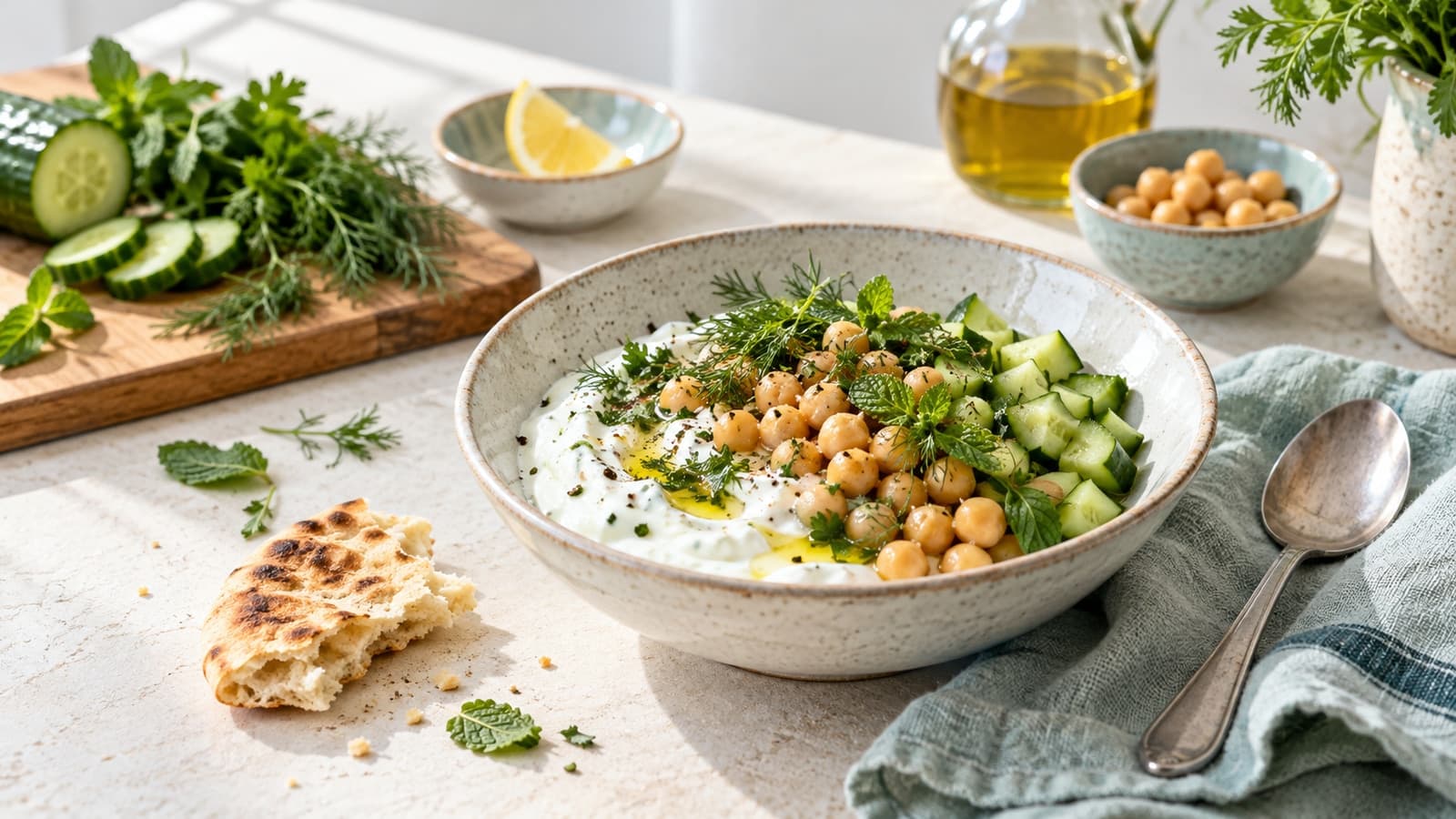
Yogurt usually gets paired with fruit at breakfast, but a savory bowl can be just as easy. Cucumber brings crunch, chickpeas make it more substantial and a few herbs add flavor without much preparation.
This combination is handy when you want a cool lunch and don't feel like turning on the stove. Keep the ingredients separate until you're ready to eat, or mix them together if you prefer.
Gather the basics
For one bowl, start with plain yogurt, a few spoonfuls of drained canned chickpeas, chopped cucumber and an herb you like. Dill, parsley and mint each give the bowl a different flavor. A piece of pita or toast can go alongside it.
There isn't one required ratio. A thicker layer of yogurt makes the bowl creamy; more cucumber gives you more crunch. Add a little lemon if you enjoy the tartness, or skip it. A drizzle of oil or a pinch of seasoning is optional too.
Rinse the cucumber and herbs under running water before cutting them. Drain and rinse canned chickpeas, then use a clean spoon for each ingredient. If you're opening a large can for one lunch, put the unused chickpeas in a covered container and refrigerate promptly.
Decide how you want to eat it
For a layered bowl, spoon yogurt into the dish first, then add the chickpeas, cucumber and herbs. You can take a little of each with your spoon or stir the whole thing together.
If whole chickpeas feel too firm, mash some with a fork. Finely chopped or grated cucumber gives a different texture from larger pieces; remove some of the watery center if you want a thicker bowl. You can also keep the cucumber on the side and dip it into the yogurt.
Prefer a wrap? Spoon a modest amount into a pita and eat it soon after assembling. Keeping the filling and bread apart until lunch helps if you dislike soggy bread. A container of the components can also travel in an insulated bag with a cold source.
Pick the yogurt that works for you
Plain yogurts vary in thickness, flavor and protein. Greek-style yogurt may be thicker than a regular one, but the label tells you more about a particular product and serving. Stir in a little water if you want a looser consistency.
Dairy yogurt contains milk. A lactose-free dairy yogurt is still not appropriate for a milk allergy. If you choose a plant-based yogurt, check its ingredient list for allergens and compare the protein on the label; products made from different ingredients aren't all nutritionally equivalent.
If yogurt isn't something you enjoy or can eat, use a different suitable base. A bean spread or another dip may provide a different flavor and texture, but check its ingredients and amounts rather than assuming it is an identical substitute.
Make the meal fit the day
Chickpeas can cause gas for some people. Use an amount you tolerate, mash them if you enjoy that texture, or choose another protein food that works for you. Mashing changes the texture; it isn't a guarantee that a food will be comfortable.
If you're on a GLP-1 and a large lunch doesn't sound appealing, make a smaller first bowl and keep the remaining ingredients chilled. You can add the pita, fruit or another food when you want it. On a hungrier day, make a larger bowl or add a side from the start.
Keep yogurt and prepared perishable ingredients refrigerated. Once they've been sitting out, refrigerate them within two hours, or within one hour in temperatures above 90°F. Don't pack a cold lunch for a long trip without a way to keep it cold.
For more simple lunches, see our low-cook meal ideas. This one can be as simple as yogurt, chickpeas and cucumber, with herbs added when you have them.