










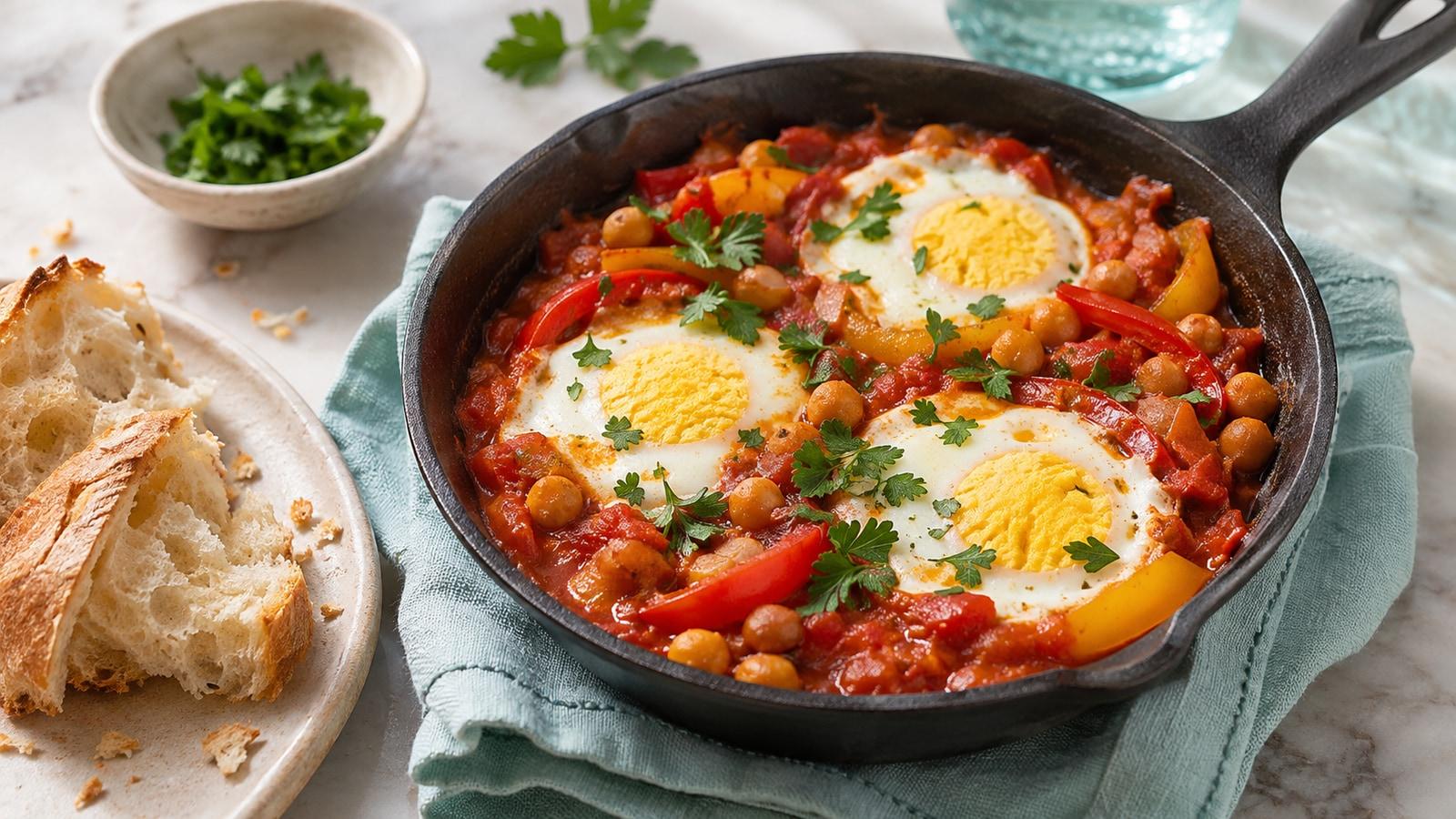
Shakshuka is a skillet dish built around eggs cooked in a seasoned tomato and pepper sauce. Adding chickpeas makes this version more substantial, and bread on the side is useful for catching the sauce. It's a flexible breakfast or lunch for a day when you'd like to bring the pan to the table.
The sauce can be made ahead, but add and cook the eggs when you're ready to serve. For this version, cook the eggs fully so the whites and yolks are firm; the dish should reach 160°F in the center.
Ingredients
This starting recipe is intended for about two portions.
- 1 teaspoon olive oil
- ½ small onion, diced
- 1 bell pepper, diced
- 1 garlic clove, minced
- 1 can (about 14 ounces) crushed or diced tomatoes
- 1 cup canned chickpeas, drained and rinsed
- ½ teaspoon ground cumin
- ½ teaspoon paprika
- A small pinch of salt and black pepper
- 2 eggs
- Chopped parsley or cilantro, optional
- Bread for serving, optional
Choose mild or smoked paprika according to your preference. Canned tomatoes and chickpeas vary in salt, so check the labels and taste the cooked sauce before adding more. If tomato or spicy food bothers you, this may not be the most comfortable dish; a different breakfast base is fine.
Build the sauce
Rinse the bell pepper and herbs under running water, then chop them. Heat the olive oil in a skillet over medium heat. Add the onion and pepper and cook, stirring, until they begin to soften. Stir in the garlic, cumin and paprika for a short time, taking care not to burn them.
Add the tomatoes and chickpeas. Stir and bring the mixture to a gentle simmer. Cook until the pepper is tender and the sauce has thickened enough to hold a shallow well. If it's too thick, add a splash of water; if it's very loose, simmer a little longer.
Taste the cooked sauce and adjust the seasoning before adding eggs. Use a clean spoon each time you taste. You can stop here and refrigerate the sauce if you're preparing it ahead.
Add and cook the eggs
Make two shallow wells in the sauce with a spoon. Crack one egg into each well, then cover the skillet. Cook gently until the whites and yolks are firm and the center of the egg dish reaches 160°F on a food thermometer. The time depends on the pan, sauce depth and heat, so check the eggs rather than relying on a clock alone.
If the sauce bubbles vigorously before the eggs are done, lower the heat. Keep cooking until the eggs are fully set. Wash your hands and any surfaces that touched raw egg, and use a clean utensil for serving.
Sprinkle with parsley or cilantro if you like. Serve with bread for dipping, or choose another side that suits your meal. Keep the hot skillet away from the edge of the table and use a trivet under it.
Make it fit your table
The chickpeas add a plant-protein source and a different texture from the eggs. If you prefer fewer chickpeas, use less and save the remainder for another meal. You can also offer bread or a side separately so each person chooses an amount that suits their appetite.
For a milder flavor, use less paprika and skip hot pepper. For more heat, offer hot sauce at the table. A spoonful of yogurt can add a cool contrast if you enjoy dairy; keep it refrigerated until serving.
If you have an egg allergy, set aside your portion of the sauce in a separate clean pan before any eggs are added, using clean utensils to avoid cross-contact. Make sure the other ingredients and preparation are safe for your needs. A chickpea-and-tomato skillet without eggs is a different dish, but it can use the same sauce as a starting point.
Prepare the sauce ahead
Cook the tomato, pepper and chickpea mixture, then divide it into a shallow container and refrigerate promptly. When you're ready for breakfast, reheat the sauce to 165°F, transfer it to the skillet and bring it back to a gentle simmer before adding fresh eggs. Cook the eggs fully as described above.
If you save the completed dish instead, cool and refrigerate it promptly and reheat the entire portion to 165°F. The eggs may become firmer on reheating, which is one reason making the sauce ahead and adding fresh eggs later may be preferable.
Store leftovers safely
Refrigerate perishable leftovers within two hours, or within one hour if the temperature is above 90°F. Keep the refrigerator at 40°F or colder. Use cooked leftovers within three to four days or freeze suitable portions for later. Label the container with the date.
Add fresh herbs or cold yogurt after reheating. If the sauce has thickened in the refrigerator, stir in a splash of water while warming it.
Shakshuka is a useful way to turn a can of tomatoes and a few pantry ingredients into a meal. Keep the seasoning comfortable for your table and give the eggs the time they need to cook through.