










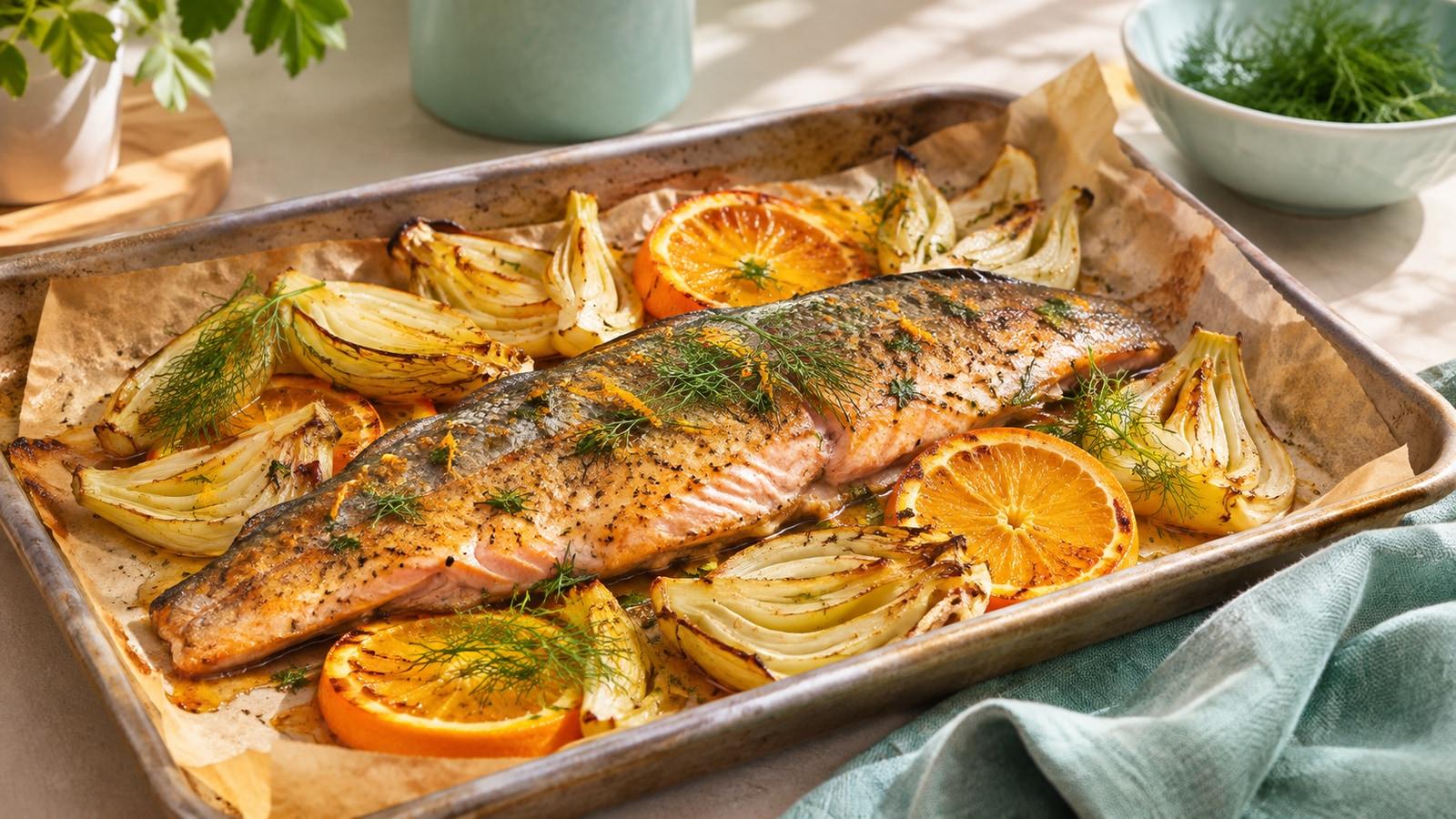
Roasted fennel softens and becomes sweeter in the oven, while orange adds a fresh, citrusy finish to mild trout. This sheet-pan dinner uses a short ingredient list and leaves room for a side of potatoes or rice if you want one.
The fennel needs a head start because it takes longer than most trout fillets. Roast it first, then add the fish and check the thickest part with a thermometer.
Ingredients
Makes: about 4 servings
Prep: about 15 minutes
Cook: about 25–30 minutes
- 4 trout fillets, about 4–6 ounces each
- 2 fennel bulbs
- 1 orange
- 1 tablespoon olive oil
- Black pepper to taste
- Chopped parsley or fennel fronds, optional
- Cooked potatoes or rice, optional
Fennel bulbs vary in size. Trim the stalks and any damaged outer layer, then slice the bulbs thinly so they soften at a similar pace. The feathery fronds can be saved as a garnish if they’re fresh and clean.
Start with the fennel
- Heat the oven to 425°F. Wash your hands and rinse the fennel, orange, and herbs under running water.
- Cut the fennel bulbs in half through the core, then slice thinly. Toss with most of the oil on a rimmed baking sheet and spread in a single layer.
- Roast for about 15 minutes, turning once. The slices should begin to soften before the fish goes on the pan.
- While the fennel roasts, cut the orange into wedges or thin slices. Set aside a few wedges for serving.
Add the trout
Remove the pan from the oven and make room for the trout. Put the fillets on the sheet, brush with the remaining oil, and add pepper. Arrange some orange slices around the fish. Wash your hands and any utensils or surfaces that touched raw seafood.
Return the pan to the oven. Roast for about 10–15 minutes, depending on the thickness of the fillets, until the thickest part of each reaches 145°F on a food thermometer. Check the fennel separately; remove it earlier or give it a few more minutes if necessary.
Serve with the reserved orange wedges and a little parsley or fennel frond. Use a clean serving utensil for the cooked fish.
What to expect from fennel
Raw fennel has a noticeable anise-like flavor. Roasting softens that flavor and brings out sweetness. Thin slices become tender faster; thicker wedges retain more bite. If you’re new to fennel, slice it thinly and try a small amount alongside a familiar vegetable.
The core is firm but edible when cooked. Slice it thinly with the rest of the bulb, or trim out the toughest center if you prefer. Avoid crowding the pan; two sheets may be useful if the bulbs are large.
Orange wedges let everyone adjust the citrus. A squeeze over the cooked fish is brighter than slices roasted on the pan. If you prefer less acidity, use only a small amount or skip the final squeeze.
Checking the fish
Fillets can vary in thickness even within the same package. Begin checking thinner pieces early, and let a thicker one continue cooking until it reaches 145°F. Insert the thermometer into the thickest part, away from the pan.
If you buy frozen trout, thaw it safely in the refrigerator and follow the package directions. Keep raw fish separate from the fennel and other ready-to-eat foods during preparation. Wash hands, boards, and counters after contact with raw seafood.
Fish is a common allergen. If someone must avoid it, choose a suitable alternative protein and prepare it separately. Don’t assume another type of fish is safe for a person with a fish allergy.
Make it a full meal
Trout provides protein, and fennel adds a vegetable with a different texture. Rice, potatoes, or a piece of bread can make the plate more substantial. If roasting potatoes, start them on a separate tray before the fennel because they may need more time.
For a softer side, cook the fennel until it is very tender and serve it over rice with the pan juices. For a brighter plate, add a small salad or fresh herbs after cooking. Portions can vary with appetite and the rest of the meal.
You can replace some fennel with sliced carrots or another vegetable, but cut it according to how long it needs to cook. Add quicker-cooking vegetables later so they don’t become overly soft while the fish finishes.
Saving a serving
Put leftovers in shallow containers and refrigerate within two hours, or one hour above 90°F. Store at 40°F or below and use within three to four days. If saving cooked rice, cool and refrigerate it within one hour, use it within 24 hours, and reheat it only once. Reheat to 165°F, checking the center of the fish. Covering the dish and adding a spoonful of water can help keep the trout from drying out; add fresh orange after warming.
Leftover fennel is useful in a grain bowl or alongside eggs. The fish can be flaked into a salad after it has been stored safely. Keep chilled foods refrigerated until serving and use clean utensils.
Starting the fennel first is the small step that makes the timing easier. After that, the oven and a thermometer do most of the work.