










You open the refrigerator and find half a lemon, a jar of mustard and not much else. Before ordering dinner, check the pantry. A few shelf-stable foods can make a meal even when the grocery trip didn’t happen.
A useful pantry meal starts with a few foods that can meet each other in a bowl. You don’t need a perfectly stocked cabinet; you need a combination you like enough to use.
Build a small backup set
Choose a base such as rice, pasta, couscous or shelf-stable tortillas. Add a protein food you enjoy, such as canned beans, lentils or a shelf-stable pouch of fish if it’s safe for you. Then pick a vegetable option that can stay unopened in the pantry, such as canned tomatoes or vegetables.
Flavor is the part people sometimes forget. A small jar of salsa, dried herbs or a favorite sauce can make the other ingredients feel like dinner. Read the storage directions: some sauces stay in the pantry only until they’re opened.
If cooking equipment is limited, check preparation instructions before buying. Dry pasta requires water and a way to boil it; some shelf-stable rice pouches are designed for a microwave. Availability and instructions differ, so choose a combination your kitchen can actually handle.
Three starting points
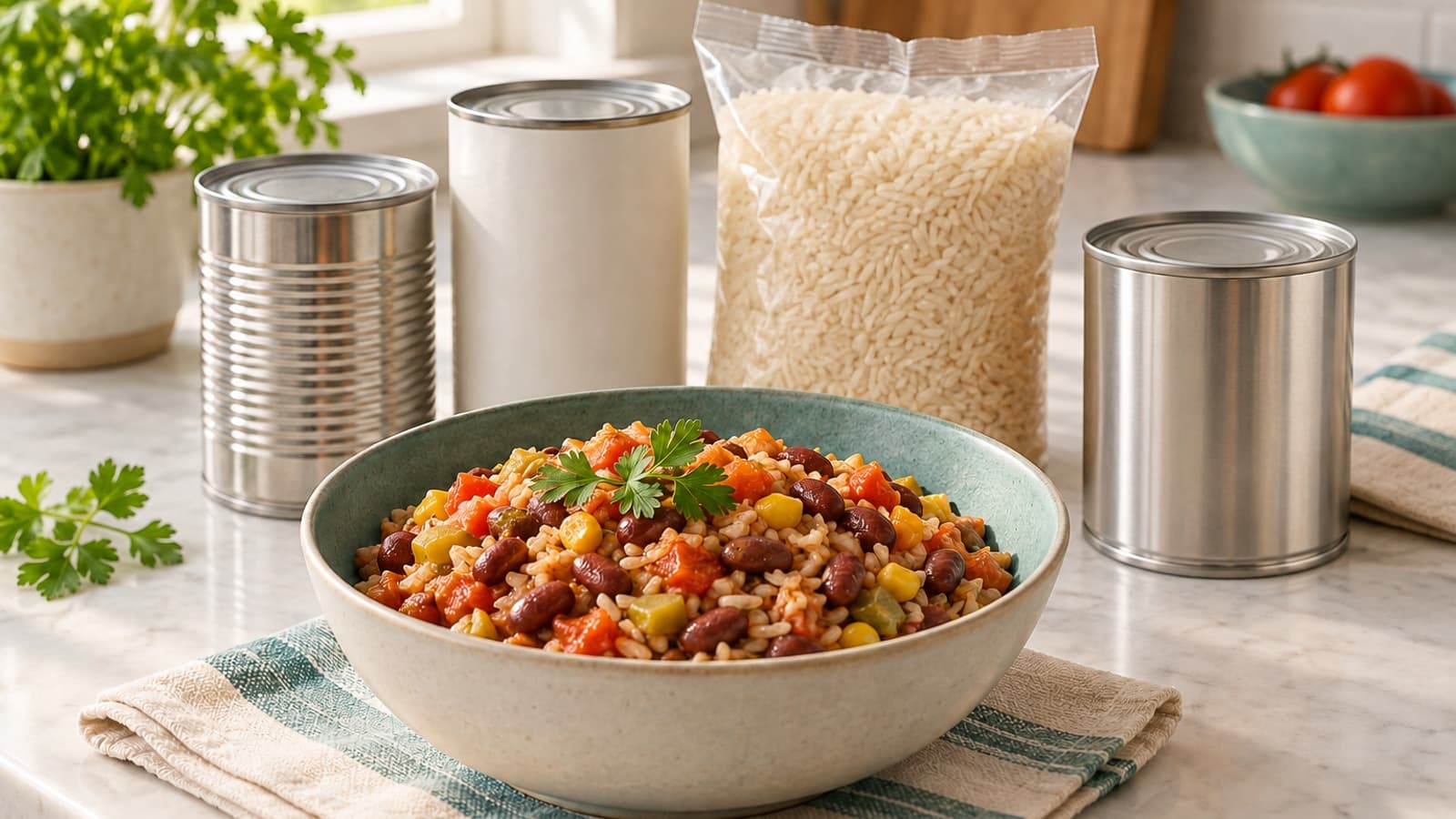
For a bean-and-rice bowl, warm suitable canned beans and a rice pouch according to their directions. Add drained canned corn or tomatoes and a little salsa. Start with a modest amount of each and save the rest safely if you don’t need a large meal.
For a quick pasta, prepare the pasta and add canned tomatoes and lentils. A little olive oil, herbs or shelf-stable grated topping can add flavor if those foods suit you. Check the ingredients and storage directions for the specific topping.
For a no-cook option, pair shelf-stable crackers or tortillas with a suitable pouch of fish or beans, then add canned vegetables or fruit on the side. Some products need heating even though they are shelf-stable; follow their directions rather than assuming every can or pouch is ready to eat.
These are flexible ideas, not tested recipes. Adjust the ingredients for your preferences, allergies, available equipment and appetite.
Make the quantities work
If your appetite is smaller on a GLP-1, a large can might make more than one meal. Buy smaller packages when they’re available, or plan a second use before opening a larger one. A can of beans could become a rice bowl today and part of a soup tomorrow, provided the leftovers are stored safely.
Avoid building a backup shelf entirely from foods you dislike just because they keep well. Rotate the foods into regular meals and replace them as needed. That way you know how to use them before an unexpectedly busy night.
Check the label if sodium or another nutrient matters to you. Seasoned beans, soups and sauces can vary. Compare portions you actually expect to use, and choose a flavor you’ll be glad to find when the fridge is bare.
Know what belongs in the pantry
Shelf-stable means a product can be kept at room temperature under its stated unopened storage conditions. It doesn’t mean every package of that food can stay on a shelf forever. A refrigerated pouch, for example, belongs in the refrigerator even if a similar-looking product does not.
Avoid cans that are bulging, leaking, rusted or badly damaged. Once opened, put unused perishable food into a covered food-safe container and refrigerate promptly; follow the product’s directions. Don’t taste food to decide whether a questionable package is safe.
For more combinations, see our low-cook meal ideas. Pick one backup meal, put its ingredients together and use it the next time shopping slips down the list.