










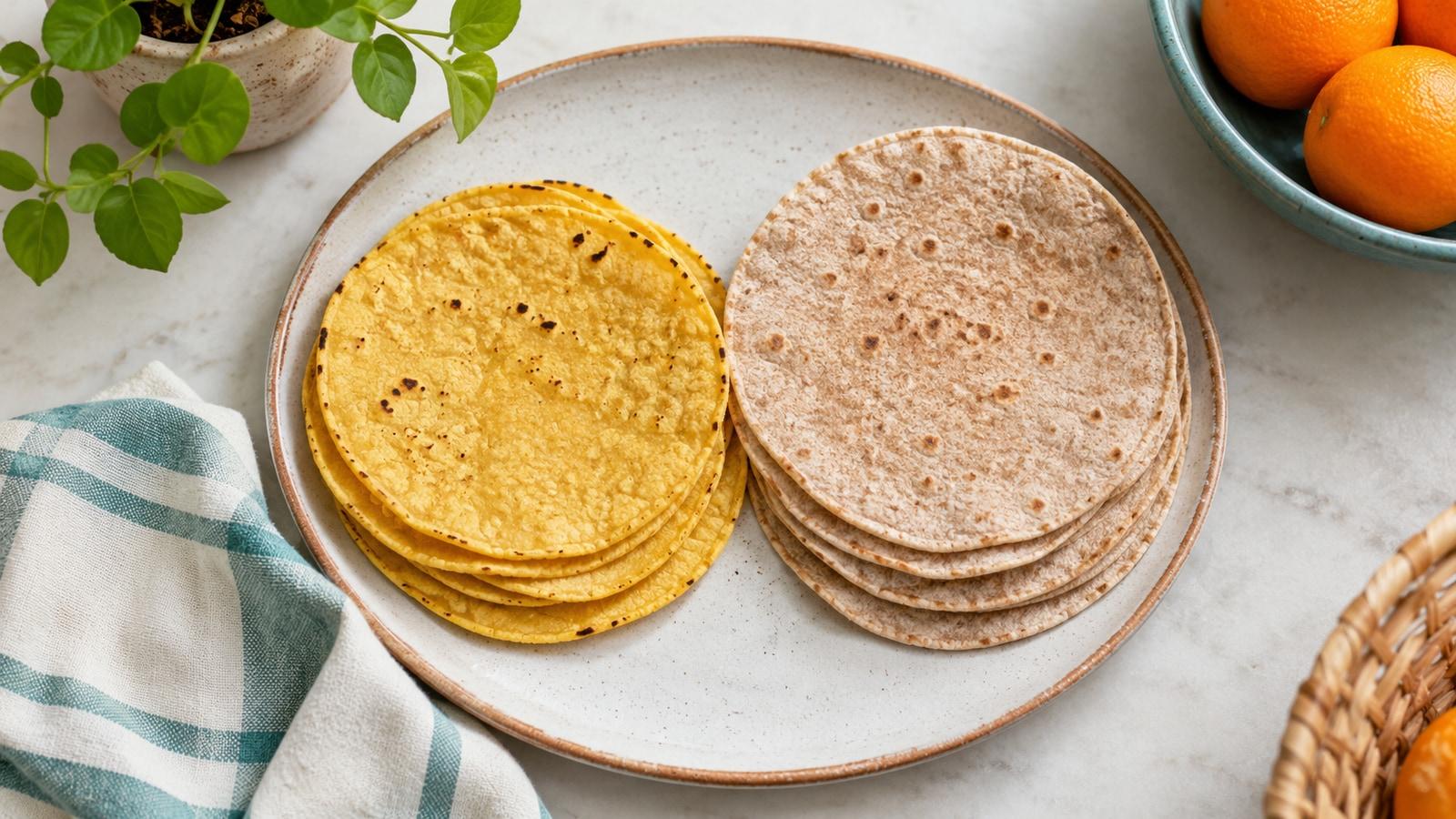
The tortilla aisle can make a simple dinner feel like a quiz. Corn or flour? Small or burrito-size? Is the package with the biggest “whole grain” claim the one you need?
You don't have to pick a winner for every meal. A good tortilla is one you enjoy, can afford, and will use. The label can help you compare options without turning tacos into a math assignment.
Start with the meal, not the front of the package
Think about what you're making. Small corn tortillas can be handy for tacos or tostadas. A larger, flexible flour tortilla might be easier to fold around beans, chicken, vegetables, and rice for a wrap. Whole-wheat tortillas can work well for either, though flavor and flexibility vary by brand.
Tortillas are part of family meals and food traditions for many people. You don't need to give up a familiar food to make a meal more balanced. If your usual tortillas make dinner satisfying and convenient, keep them in the mix.
What goes inside matters, too. A couple of tortillas with a protein food and some vegetables make a different meal from the tortilla alone. Choose fillings you like rather than treating a particular wrapper as the whole nutrition plan.
Compare the size you will actually eat
A small tortilla and a large wrap are not the same amount of food. Check the serving size near the top of the Nutrition Facts label before comparing calories, fiber, or sodium. One package might list values for one tortilla, while another lists values for two.
Here's an imaginary example: package A lists 80 calories for two small tortillas. Package B lists 120 calories for one larger tortilla. If your meal uses the listed amount from each, those are the numbers to compare. If you use a different number, adjust accordingly. The example is only about reading labels; it doesn't describe a particular brand.
A labeled serving size is a reference amount, not a rule about how much you must eat. Your appetite and the rest of the meal can help guide your portion. If you're on a GLP-1 and meals feel more filling than they used to, you might start with one taco and have another if you want it. The aim is to eat enough, not to make the smallest possible plate.
Corn, flour, and whole wheat: what changes?
Corn tortillas are made from corn; flour tortillas commonly use wheat flour. Whole-wheat versions use whole-wheat flour, although the complete ingredient list differs between products. Texture, thickness, flavor, sodium, and fiber can all vary, so the name alone won't tell you everything.
If whole grain is important to you, look at the ingredient list for a whole-grain ingredient such as whole-wheat flour or whole corn. A brown color or the word “wheat” on the front isn't enough to tell you how much whole grain is in a product. Compare the fiber on the label if that's useful for your needs.
Corn itself does not contain wheat, but a particular packaged product may have other ingredients or manufacturing considerations. If you need to avoid gluten or have a food allergy, check the package and ask the manufacturer about the product when needed. Don't assume every tortilla with “corn” in its name meets your needs.
Give the back label a quick look
You can compare two packages in under a minute:
- Check how many tortillas make up a serving and notice their size.
- Look at fiber if you want to add more of it to meals.
- Compare sodium, especially if a clinician has asked you to limit it.
- Read the ingredients for foods you need to avoid.
More fiber can be helpful as part of an overall eating pattern, but a very high-fiber product isn't automatically the most comfortable one. Some people notice digestive changes when they increase fiber quickly. If a particular wrap leaves you uncomfortable, a different portion or another tortilla may work better. Persistent digestive symptoms are worth discussing with your care team.
Build a dinner that fits your appetite
For a quick meal, warm tortillas according to the package, then add black beans, chicken, fish, tofu, or another filling you enjoy. Add tomatoes, cabbage, avocado, salsa, or cooked vegetables if they appeal to you. A little cheese or a spoonful of yogurt can add flavor and texture.
If your appetite is small, put a modest amount of filling on the table and let everyone assemble their own. You can keep extra ingredients refrigerated promptly and use them in another meal. If you're consistently unable to eat enough, don't rely on portion tricks alone; talk with a health professional about what's making meals difficult.
Buy what you'll use
Check the storage directions on the package, and consider whether you can use the quantity before it loses quality. Some tortillas can be frozen; follow the package instructions and separate portions if that makes them easier to use later.
The practical choice might be corn tortillas for taco night and a pack of flour tortillas for lunches. Or it might be the same kind your family has always bought. Use the label to answer your questions, then make dinner.