










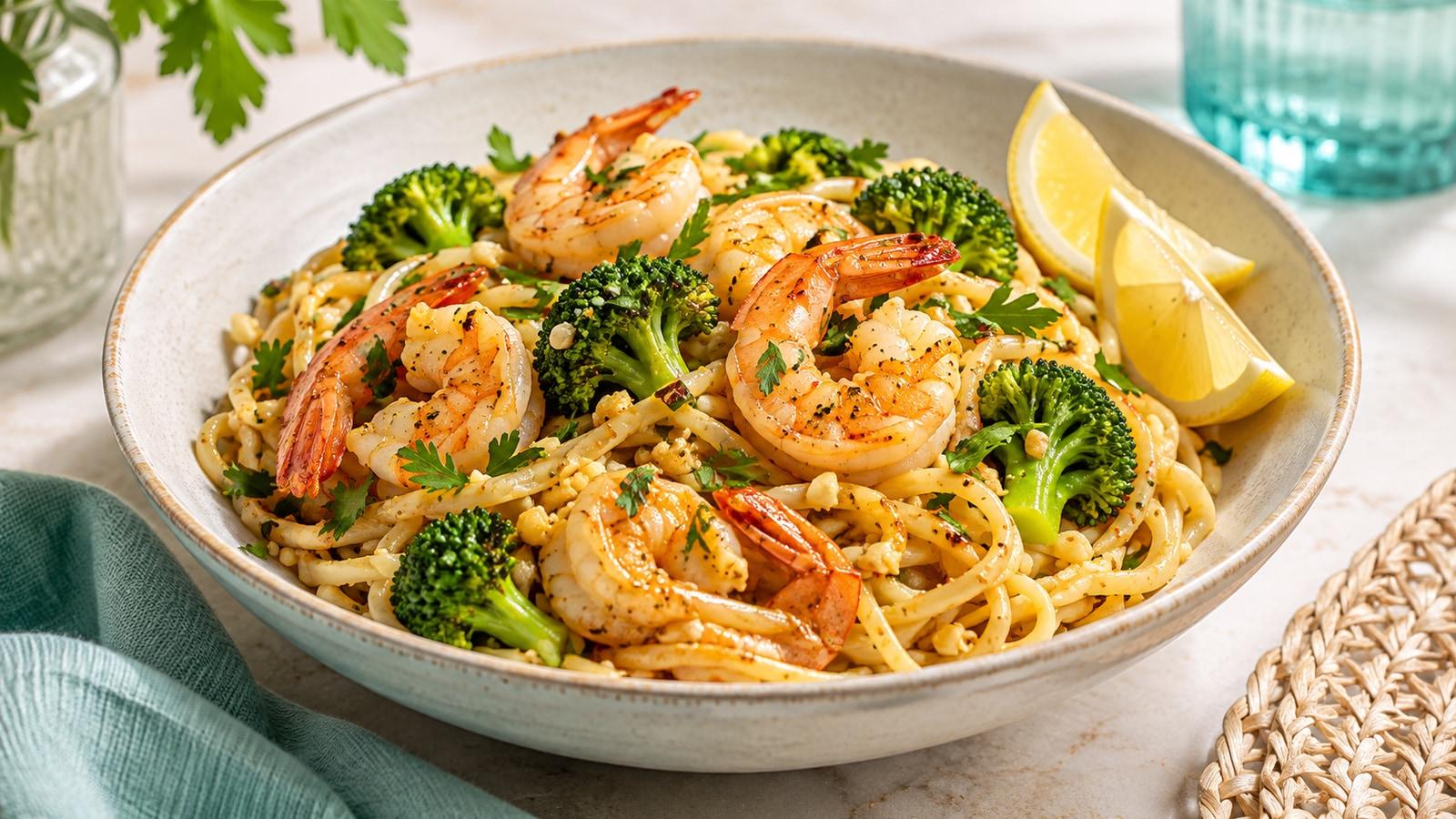
Garlic noodles, tender broccoli, and shrimp make a quick dinner that doesn’t need a complicated sauce. A little pasta water brings the pan together, while lemon or soy sauce can add a finishing note if you like.
Shrimp cook quickly, so get the noodles and vegetables ready before they go into the skillet. That gives you time to watch them rather than rushing to drain pasta while the pan is still on the heat.
Ingredients
Makes: about 4 servings
Prep: about 15 minutes
Cook: about 15–20 minutes
- 8 ounces dry whole-grain noodles or pasta
- 1 pound peeled, deveined raw shrimp
- 3 cups small broccoli florets
- 1 tablespoon olive oil
- 2–3 garlic cloves, thinly sliced
- ¼ cup lower-sodium broth or water
- 1 teaspoon lemon juice, optional
- Black pepper and chopped parsley, optional
If the shrimp are frozen, thaw them safely in the refrigerator and follow the package directions. Check whether they are raw or fully cooked; this method assumes raw shrimp. Keep seafood refrigerated until you’re ready to cook it.
Prepare the ingredients
- Wash your hands and rinse the broccoli, lemon, and parsley under running water. Cut the broccoli into small, similar-sized florets.
- Bring a pot of water to a boil and cook the pasta according to its package directions. Add the broccoli during the final few minutes if there is room, or cook it separately until tender. Reserve a cup of pasta water before draining.
- Mix the broth and lemon juice in a small bowl. Have a clean plate and serving utensils ready before handling the shrimp.
Cook and toss
Pat the shrimp dry with a paper towel and discard it. Warm the oil in a wide skillet over medium heat. Add the shrimp in a single layer and cook, turning, until the flesh is pearly or white and opaque throughout. Work in batches if the pan is crowded. Move the cooked shrimp to a clean plate.
Wash your hands and any surfaces or utensils that touched raw seafood. Add garlic to the skillet and stir briefly until fragrant, lowering the heat if it browns too quickly. Pour in the broth mixture, then add the drained noodles and broccoli.
Return the cooked shrimp to the pan and toss. Add a splash of reserved pasta water if the noodles look dry. Finish with parsley and pepper if you like, then serve promptly.
Keep the garlic gentle
Thin garlic slices can turn dark quickly in a hot pan. Once the shrimp come out, reduce the heat and give the skillet a moment to cool if needed. Add the broth as soon as the garlic smells fragrant. Burnt garlic can make the whole dish bitter.
If you prefer a milder flavor, use two cloves or mince them finely. For a brighter plate, pass lemon wedges at the table. A small amount of lower-sodium soy sauce is another option, but it changes the flavor and may add wheat and soy allergens.
The reserved pasta water helps loosen the noodles without a heavy sauce. Add it a little at a time and toss; you can always add more. If the pan is too wet, let it simmer briefly before adding the shrimp back.
Getting shrimp and broccoli right
Shrimp change appearance as they cook. Look for flesh that is pearly or white and opaque throughout, and make sure the pieces are cooked all the way through. Cooking in a single layer helps you see and turn them. Don’t put cooked shrimp back on the plate that held them raw.
If your shrimp are already fully cooked, follow their package instructions instead of treating them as raw. Add them near the end and heat as directed. Shrimp are crustacean shellfish, a common allergen; choose a different protein for someone who must avoid shellfish.
Broccoli stems take longer than small florets. Peel the tough outer stem and slice the center thinly if you want to use it. Cook the vegetables longer for a softer texture, or keep them a little crisp if that’s your preference.
Choose the noodle and portions you like
Whole-grain wheat pasta provides fiber; shrimp provide protein. Choose a noodle shape that holds the garlic and broccoli comfortably on a fork. For a gluten-free meal, select suitable labeled noodles and check any broth or sauce. Wheat pasta and ordinary soy sauce can contain gluten.
Serve the pasta and shrimp together, or let people add their own amounts at the table. A side salad or another cooked vegetable can round out the meal. If you prefer a softer bowl, use a small pasta shape and cook the broccoli until tender.
Leftovers
Place leftovers in shallow containers and refrigerate within two hours, or within one hour above 90°F. Store at 40°F or below and use within three to four days. Reheat to 165°F, stirring so the center warms evenly. A spoonful of water or broth can loosen noodles that have absorbed the sauce. Add fresh parsley or lemon after reheating.
Keep raw seafood separate from the cooked pasta and vegetables during preparation, and wash the sink, board, and counter after contact. A little organization at the beginning makes the fast cooking step much easier to manage.