










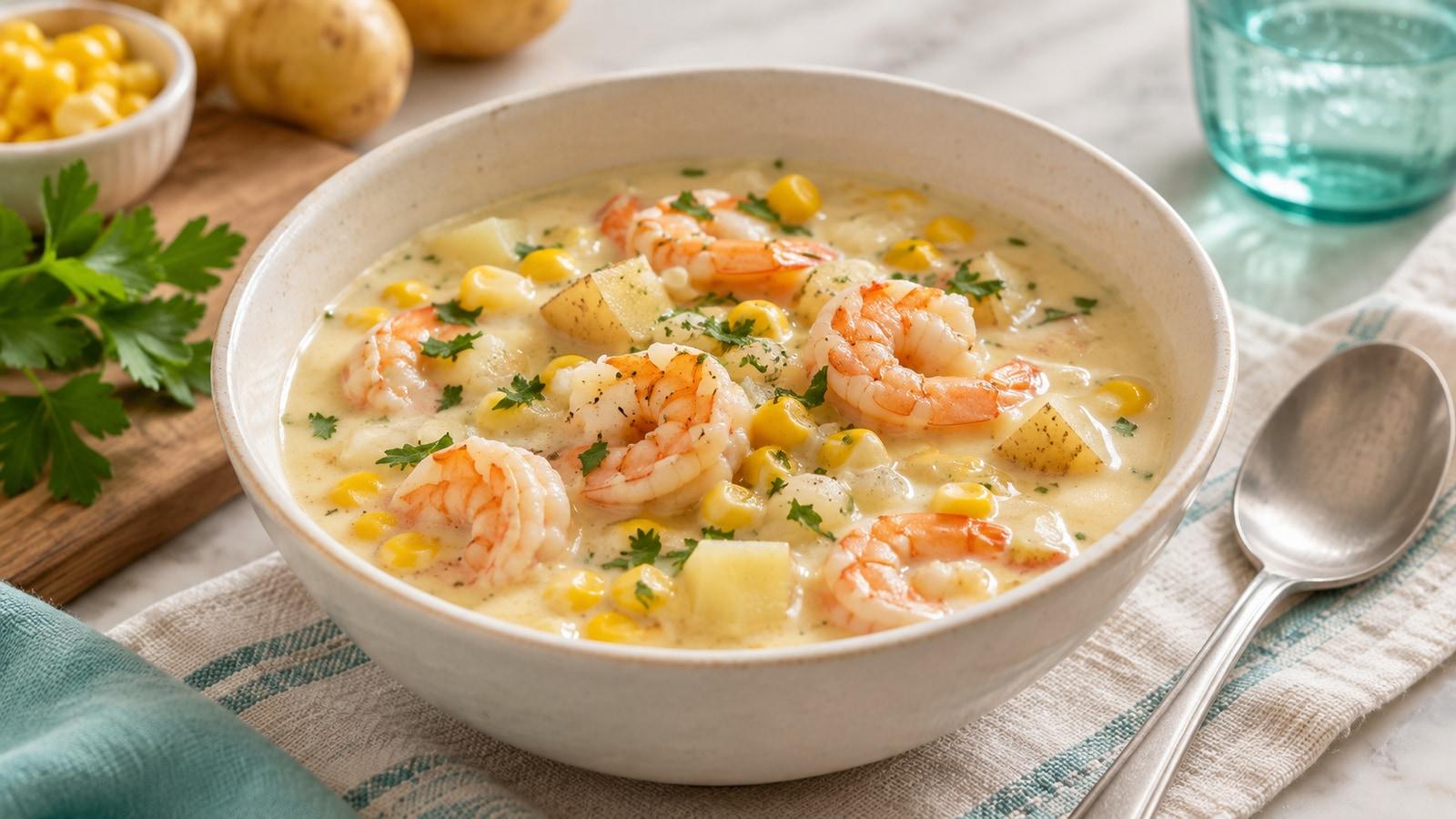
This chowder brings together potatoes, sweet corn, and shrimp in a lightly creamy broth. The potatoes give the bowl body, while the shrimp cook near the end so they don’t spend too long in the pot.
You can make the base ahead and add the shrimp when you’re ready to eat. If you do, chill the base promptly and keep the raw shrimp refrigerated separately until cooking.
Ingredients
Makes: about 4 servings
Prep: about 15 minutes
Cook: about 25–30 minutes
- 1 pound peeled, deveined raw shrimp
- 1 tablespoon olive oil
- 1 small onion, diced
- 1 celery stalk, diced
- 2 medium potatoes, scrubbed and diced
- 2 cups lower-sodium broth
- 1½ cups corn kernels
- 1 cup pasteurized milk
- ½ teaspoon dried thyme
- Black pepper and chopped parsley, optional
If using frozen shrimp, thaw them safely in the refrigerator and check whether they are raw or already cooked. This method assumes raw shrimp. Follow the package cooking directions for frozen corn before adding it to the chowder.
Build the base
- Wash your hands and rinse the celery, potatoes, and parsley under running water. Dice the potatoes into small, similar-sized pieces.
- Warm the oil in a pot over medium heat. Add onion and celery and cook until softened, about 5 minutes. Stir in thyme.
- Add potatoes and broth. Bring to a boil, then reduce to a simmer. Cook for about 12–15 minutes, until the potatoes are tender when pierced with a fork.
- Add cooked corn and milk. Warm gently. Mash a few potato pieces against the side of the pot and stir them in to give the broth a little body.
Add the shrimp
Keep raw shrimp refrigerated until the base is ready. Add them to the pot and simmer gently until the flesh is pearly or white and opaque throughout. The time depends on the size of the shrimp, so check several pieces.
Wash your hands and any board, utensil, or surface that touched raw seafood with soap and water. Use a clean spoon to serve the chowder. Finish with parsley and pepper if you like.
If using fully cooked shrimp, follow their package instructions and add them near the end. They need warming rather than the same cooking time as raw shrimp.
A creamy texture without a thick roux
Mashing a few potatoes gives the broth a slightly thicker feel while leaving most pieces intact. For a smoother chowder, mash more potatoes before adding the shrimp. For a brothier bowl, leave them whole and add a little more broth.
Milk can scorch if the pot boils hard. Keep the heat gentle and stir occasionally, especially after adding the milk. If the chowder becomes too thick, a splash of broth or milk will loosen it. Taste with a clean spoon and adjust the pepper at the end.
Cutting the potatoes into similar sizes helps them cook evenly. A very large cube can remain firm after the smaller pieces are tender, so test one of the largest pieces before adding the shrimp.
Sweet corn and seasoning
Corn adds sweetness and texture. Canned corn can be drained and added to the pot; frozen corn should be cooked according to its package. If you like a little more savory flavor, add a pinch of smoked paprika or a small amount of garlic with the onion.
Thyme is optional. Parsley gives the finished bowl a fresher note, and a squeeze of lemon at the table can brighten it. If you like spice, add hot sauce to your own serving rather than the whole pot.
Shrimp are crustacean shellfish, a common allergen, and milk is another common allergen. Choose a different protein and a suitable milk alternative if needed. Check broth and packaged corn for ingredients relevant to the person eating.
Make it a meal
Shrimp provide protein, while potatoes and corn make the chowder more substantial. Serve a bowl with a salad, cooked vegetables, or a piece of bread if you want another side. Start with a portion that suits your appetite and return for more if you’re still hungry.
For a softer texture, dice the potatoes small and cook them until tender. If you prefer more bite, leave the vegetables a little larger while still making sure the potatoes are fully cooked and the shrimp are opaque.
You can add cooked greens near the end or replace some corn with another vegetable. Different vegetables need different cooking times, so add firmer ones earlier and delicate leaves later.
Store and reheat
Refrigerate leftover chowder in shallow containers within two hours, or within one hour above 90°F. Keep it at 40°F or below and use within three to four days. Bring it to a rolling boil when reheating, stirring so it heats evenly. Dairy can separate or scorch, so use a suitable pot, stir carefully, and add a little broth if needed.
Keep raw shrimp separate from the cooked chowder base when making it ahead. Refrigerate both promptly and cook the shrimp fully when you finish the meal. Don’t use the same plate for raw and cooked seafood unless it has been washed.