










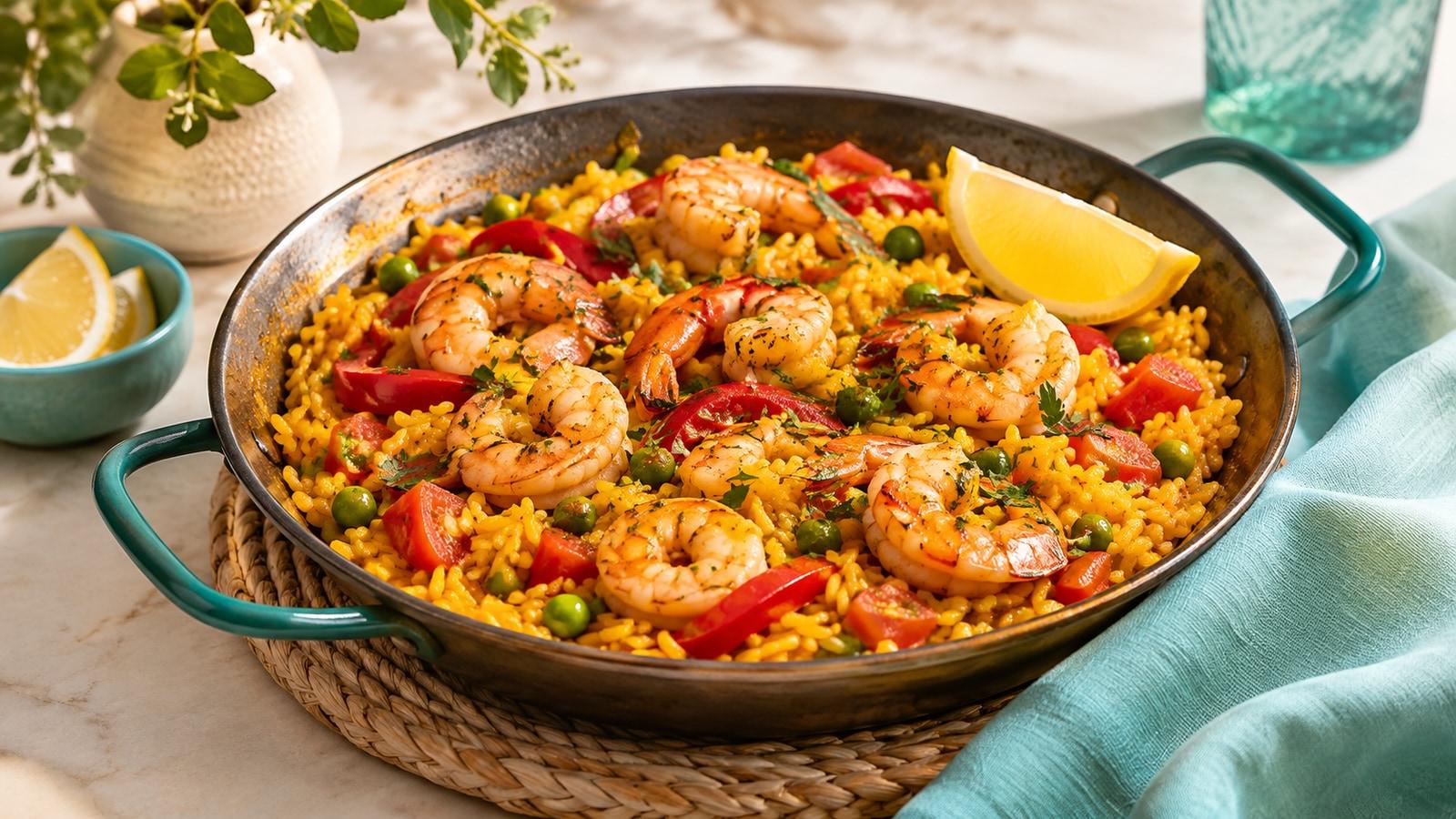
This shrimp and vegetable rice dish takes inspiration from seafood paella. It cooks in a wide skillet with peppers, tomatoes, peas, and a little saffron or paprika. Lemon goes on at the table, and the finished pan can be shared among several people.
Paella has roots in Valencia and has many variations. This is a simplified home adaptation rather than a claim to make a traditional Valencian paella. A wide pan helps the rice cook in a relatively shallow layer, but you don’t need special cookware to try it.
Ingredients
Makes: about 4 servings
Prep: about 15 minutes
Cook: about 30 minutes
- 1 pound peeled, deveined raw shrimp
- 1 tablespoon olive oil
- 1 small onion, diced
- 1 bell pepper, diced
- 2 garlic cloves, minced
- 1 cup short-grain rice suitable for paella
- 1 can (14–15 ounces) diced tomatoes
- About 2 cups lower-sodium broth, plus more as needed
- A small pinch of saffron or ½ teaspoon paprika
- 1 cup peas
- Lemon wedges and chopped parsley, optional
Rice varieties absorb different amounts of liquid. Check the package for its cooking guidance and keep extra warm broth or water nearby. If using frozen shrimp, thaw them safely in the refrigerator. Follow the package cooking directions for frozen peas.
Start with the vegetables
- Wash your hands and rinse the pepper, lemon, and parsley under running water. Dice the onion and pepper before handling raw shrimp.
- Warm the oil in a wide skillet over medium heat. Add onion and pepper and cook until softened. Stir in garlic and saffron or paprika briefly.
- Add the rice and stir to coat. Add tomatoes and broth, bring to a simmer, and spread the rice in an even layer. Cook according to the rice package’s timing, adding a little warm liquid if it begins to dry before the grains are tender.
Add the seafood near the end
When the rice is nearly tender, add the cooked peas and arrange the raw shrimp on top. Continue cooking until the rice is tender and the shrimp flesh is pearly or white and opaque throughout. Check several shrimp, especially the largest ones.
Keep the raw shrimp refrigerated until you’re ready to add them. Wash your hands and any plate or utensil that touched raw seafood, and use clean equipment for serving. If the rice needs more time after the shrimp are cooked, remove the shrimp to a clean plate, finish the rice, then return them to the pan.
Let the pan rest briefly and serve with lemon and parsley. Don’t leave cooked rice or seafood at room temperature for an extended period; refrigerate leftovers promptly.
Give the rice room
A wide skillet creates a thinner layer than a deep saucepan. That helps the rice cook more evenly, but the exact time depends on the pan and grain. Start checking near the package’s suggested time. The rice should be tender rather than hard in the center.
Some paella preparations are prized for a toasted layer of rice on the bottom. For this adaptation, focus first on cooking the rice and shrimp safely; don’t raise the heat so high that the bottom burns while the center is still firm.
Tomatoes contribute liquid, and different brands vary. Add broth gradually if the pan dries out. If it seems very wet near the end, simmer uncovered for a few minutes while watching the shrimp so they don’t overcook.
Season and serve
Saffron has a distinctive flavor and color, but it can be expensive. A pinch is enough to begin. Paprika gives a different flavor and is a practical alternative, not an exact replacement. Keep hot pepper separate if some people prefer a mild dish.
Lemon adds brightness after cooking. Pass wedges rather than squeezing the entire pan if you’re serving people with different preferences. Parsley is optional and can be scattered over individual plates.
Shrimp provide protein. Rice is the base, while peppers, tomatoes, and peas add vegetables. A salad or another cooked vegetable can go alongside. Portion according to appetite and the rest of the meal.
Shrimp are crustacean shellfish, a common allergen. Choose a different protein and prepare it separately for someone who must avoid shellfish. If using a packaged broth or seasoning blend, check its ingredients for allergens relevant to your household.
Safe storage
Cool and refrigerate leftover rice and shrimp in shallow containers within one hour of cooking the rice. Use within 24 hours and reheat only once, to 165°F throughout. Stir or rearrange so the food warms evenly; a spoonful of water can loosen the rice.
Keep raw seafood separate from cooked rice and vegetables during preparation. Wash hands, boards, and counters after contact with raw shrimp, and don’t put cooked shrimp back on the raw plate.
If your burner heats one side of the skillet more strongly than the other, rotate the pan occasionally to help the shallow layer of rice cook more evenly.