










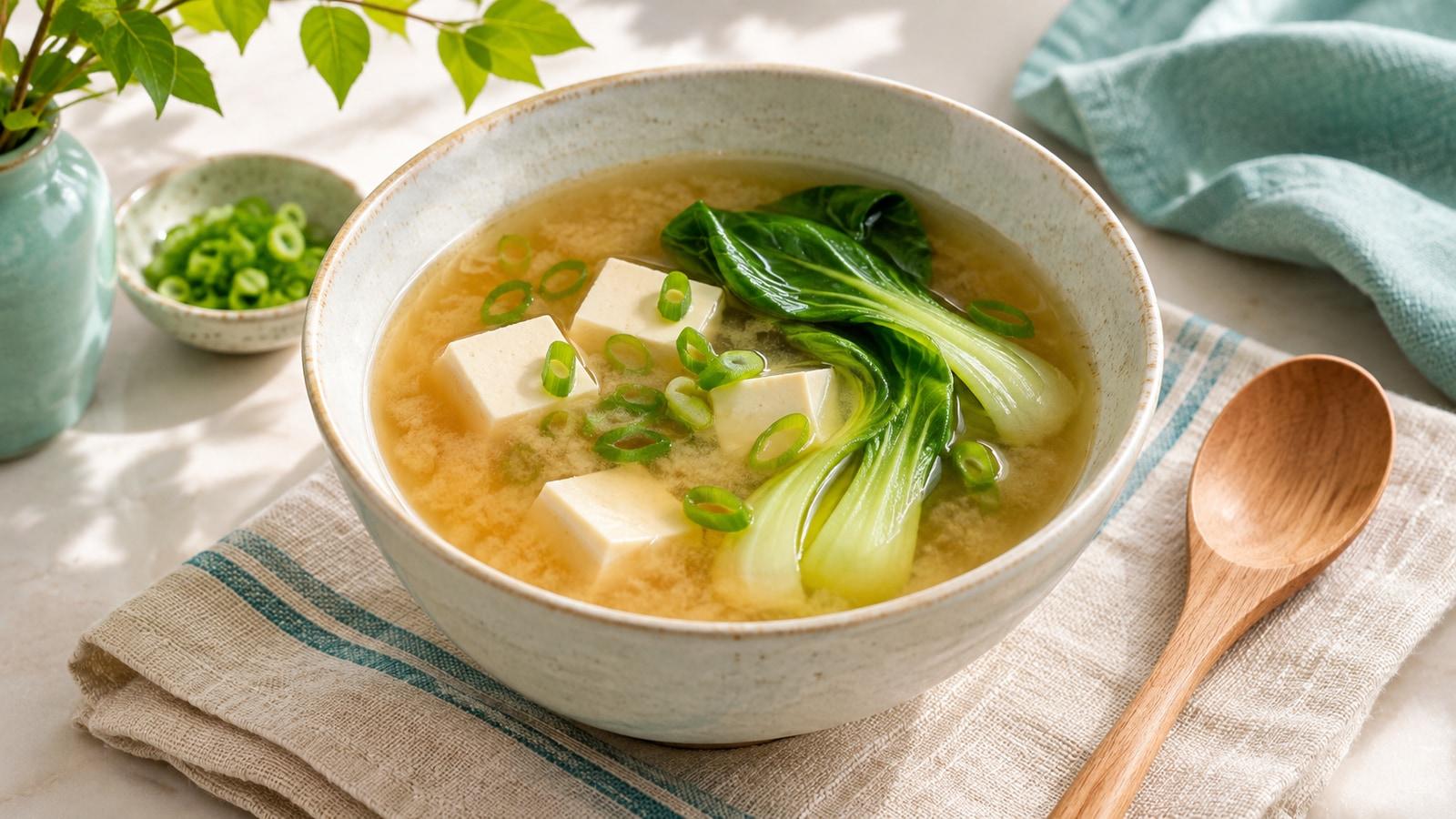
Some lunches call for a bowl you can put together without turning on the oven or washing a stack of pans. This miso soup uses soft tofu, bok choy, and a simple broth. It’s light enough to serve in a mug or small bowl, with room for noodles or rice if you want something more substantial.
Miso is a flavorful paste, so a little goes a long way. Different varieties and brands can taste quite different. Start with the smaller amount below, then taste the broth before adding more.
Ingredients for a small pot
Makes: about 3 servings
Prep: about 10 minutes
Cook: about 15 minutes
- 4 cups water or lower-sodium vegetable broth
- 1 small head bok choy, about 2 cups chopped
- 12 ounces silken tofu, drained and cut into small cubes
- 2 to 3 tablespoons miso paste, to taste
- 1 teaspoon finely grated fresh ginger, optional
- 1 green onion, thinly sliced, optional
- Optional cooked noodles or rice, for serving
The ingredients are easy to scale down for one person. If you’re unfamiliar with miso, check the label for ingredients that matter to you. Miso is often made from soy, and some varieties contain barley or other grains. Someone avoiding gluten should choose a product suitable for their needs rather than assuming every miso is gluten-free.
Put it together
- Wash your hands. Rinse the bok choy under running water, separating the leaves so you can wash away grit near the base. Chop the stems into small pieces and slice the leaves. Keep them in separate piles because the stems take a little longer to soften.
- Bring the water or broth to a simmer in a saucepan. Add the ginger if using and the chopped bok choy stems. Simmer until the stems begin to soften, about 3–4 minutes.
- Add the leaves and tofu. Continue heating gently until the greens are tender and the tofu is heated through. Stir carefully; silken tofu breaks apart easily.
- Put the miso in a small bowl. Ladle in a little warm broth and stir until smooth. Turn off the heat, then stir the miso mixture back into the pot.
- Taste and add a little more miso if you like. Divide into bowls and finish with green onion. Add cooked noodles or rice if desired.
If you prefer the tofu in larger pieces, leave the cubes a little bigger and spoon the broth over them gently. For a more uniform texture, use a spoon to break the tofu into smaller pieces after it has warmed.
Choosing and handling tofu
Silken tofu has a softer texture than the firm tofu used in many stir-fries. It doesn’t need pressing for this soup. Packages vary: some are sold refrigerated, while others are shelf-stable until opened. Follow the storage directions on the package and refrigerate unused tofu promptly after opening.
Tofu adds plant protein to the broth. If you’re looking for a meal that lasts longer, a side of rice, noodles, or toast can round it out. Exact protein amounts vary by product and portion, so the package is a better guide than a generic number.
Soy is a common allergen, and both tofu and many miso pastes contain it. This recipe isn’t a good fit for someone avoiding soy unless they use appropriate alternatives. Ask a qualified professional if you need help navigating an allergy rather than relying on a casual substitution.
Adjust the bowl to your appetite
The first bowl can be small. Add more broth, tofu, or noodles if you’re still hungry. If you prefer softer vegetables, simmer the bok choy a little longer. If you like more bite, check it sooner. A squeeze of lime or a few herbs at the table can add freshness without changing the pot for everyone.
If you’re taking a GLP-1 medication, a warm, mild meal may sound appealing on some days and not on others. That’s a matter of preference, not a promise that the soup will prevent nausea. Choose foods and portions you tolerate, and contact your care team if symptoms persist or interfere with eating or drinking.
For a packed lunch, keep the soup cold with an insulated container and ice packs, then heat it thoroughly when you’re ready to eat. Add noodles separately if you prefer them to keep their texture. Don’t leave the soup sitting at room temperature throughout a workday.
Store and reheat
Transfer leftovers without rice to shallow containers and refrigerate within two hours, or within one hour if the food has been exposed to temperatures above 90°F. If using rice, cool and refrigerate it within one hour, use it within 24 hours, and reheat it only once. Add previously chilled rice only to the portion you plan to eat now. Keep the refrigerator at 40°F or below and use the soup within three to four days. If you freeze a portion, the tofu’s texture may change when thawed.
Bring leftover soup to a rolling boil when reheating, stirring gently. Add fresh green onion after heating if you like. A splash of water can help if noodles have absorbed some of the broth.
The appeal here is the choice: keep it simple with tofu and greens, or add a grain and a few toppings for a fuller meal. Either way, you can prepare the components without making lunch an all-afternoon project.