










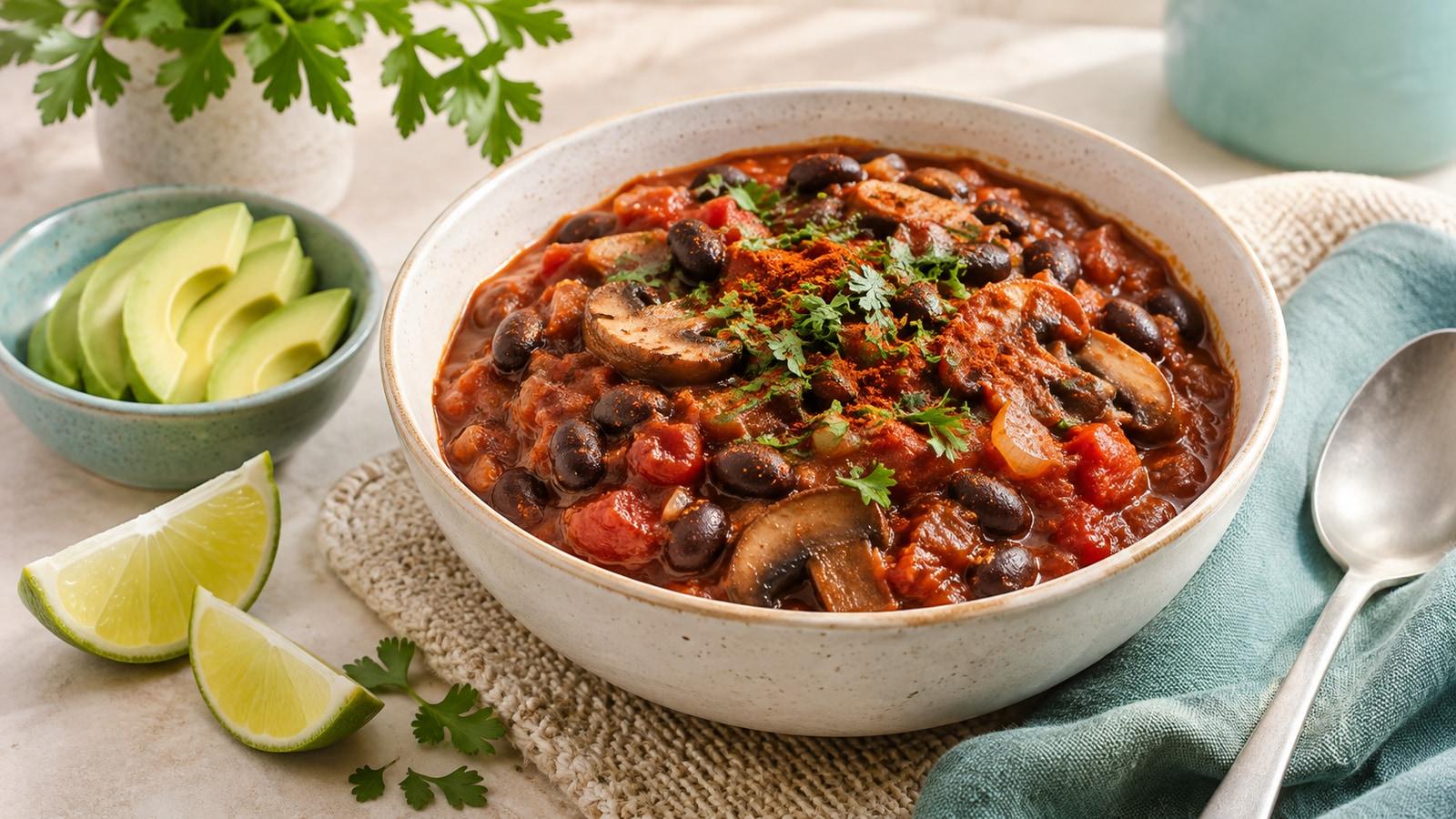
This chili gets its depth from browned mushrooms and smoked paprika. Black beans make it hearty, and the toppings can go on the table instead of into the pot. That means one person can add avocado and lime while another keeps their bowl simple.
There’s no need to chase a particular level of heat. Start mild and add hot sauce to individual portions if you want it. The pot is designed to be adaptable, especially on a night when you’re cooking for more than one appetite.
Ingredients
Makes: about 4 servings
Prep: about 15 minutes
Cook: about 30 minutes
- 1 tablespoon olive oil
- 1 small onion, diced
- 1 bell pepper, diced
- 8 ounces mushrooms, finely chopped
- 2 garlic cloves, minced
- 1 teaspoon smoked paprika
- 1 teaspoon ground cumin
- 1 teaspoon mild chili powder, or to taste
- 2 cans (15 ounces each) black beans, drained and rinsed
- 1 can (14–15 ounces) crushed tomatoes
- 1 cup lower-sodium vegetable broth, plus more as needed
- Lime wedges, plain yogurt, avocado, or cilantro, optional
Check the chili powder blend if you’re sensitive to heat: some blends are much hotter than others. Smoked paprika adds a smoky flavor without requiring a spicy pepper. Regular paprika also works if that’s what’s in the cupboard.
Make the chili
- Wash your hands and rinse the pepper, mushrooms, and any fresh toppings. Chop the onion, pepper, and mushrooms into small pieces.
- Warm the oil in a large pot over medium-high heat. Add the mushrooms and spread them out. Let them cook for a few minutes, stirring occasionally, until they release moisture and begin to brown. If the pot is crowded, cook them in two batches.
- Add the onion and pepper. Cook until they begin to soften, about 5 minutes. Stir in garlic, paprika, cumin, and chili powder for about 30 seconds.
- Add the beans, tomatoes, and broth. Stir, bring to a boil, then reduce the heat and simmer uncovered for about 15–20 minutes. Stir occasionally and add a splash of water if it becomes too thick.
- Taste and adjust the seasoning. Serve with the toppings you like, leaving them separate for anyone who wants a different combination.
Why brown the mushrooms first?
Mushrooms contain a lot of moisture. If they go straight into a crowded pot with the other vegetables, they tend to steam. Giving them a little space and time lets some of that moisture evaporate and encourages browning, which adds a savory note to the chili.
You don’t need to mince them perfectly. Smaller pieces mix into each spoonful and help make a thick, cohesive pot. Larger pieces are fine if you prefer a more noticeable mushroom texture. Button or cremini mushrooms both fit; use what looks good and fits your budget.
If the bottom of the pot develops brown bits, add a spoonful of broth after the spices and scrape gently with a wooden spoon. Those bits can dissolve into the sauce. Lower the heat if the garlic or spices begin to darken too quickly; burnt garlic will taste bitter rather than smoky.
Make the bowl work for you
Black beans supply plant protein and fiber. Rinsing canned beans removes some of the liquid they were packed in, and lower-sodium varieties give you more control over the finished seasoning. If beans are new to your routine, begin with a smaller serving and see what feels comfortable.
A spoonful of plain yogurt adds a cool contrast. Avocado brings a creamy texture; diced onion or cilantro adds a fresh one. Set out a little of each instead of building every bowl the same way. For a dairy-free meal, skip the yogurt or choose a dairy-free alternative you enjoy.
The chili can stand alone, or you can ladle it over a small scoop of rice or a baked potato. Cool and refrigerate any cooked rice within one hour, use it within 24 hours, and reheat it only once. Crushed tortilla chips make a crisp topping, while cornbread on the side gives the meal a different feel. If you’d rather have a soupier bowl, add more broth and warm it through before serving.
A practical pot for later
This is a useful recipe for making ahead because the components hold up well when reheated. Divide leftovers into shallow containers and refrigerate within two hours of cooking, or within one hour above 90°F. Keep the refrigerator at 40°F or below and use leftovers within three to four days. When you’re ready to eat, bring the chili back to a rolling boil, stirring so it heats evenly. Add fresh toppings after reheating.
If you plan to freeze some, leave a little space in the container for expansion and label it with the date. Thaw it safely in the refrigerator, not on the counter. A splash of water can loosen chili that has thickened in the fridge or freezer.
You can swap one can of black beans for pinto beans, add diced zucchini with the peppers, or use fire-roasted tomatoes for a different flavor. Keep the basic balance in mind: enough liquid for the beans to simmer, enough time for the vegetables to soften, and toppings added at the end. That’s a flexible dinner without a long list of separate steps.