










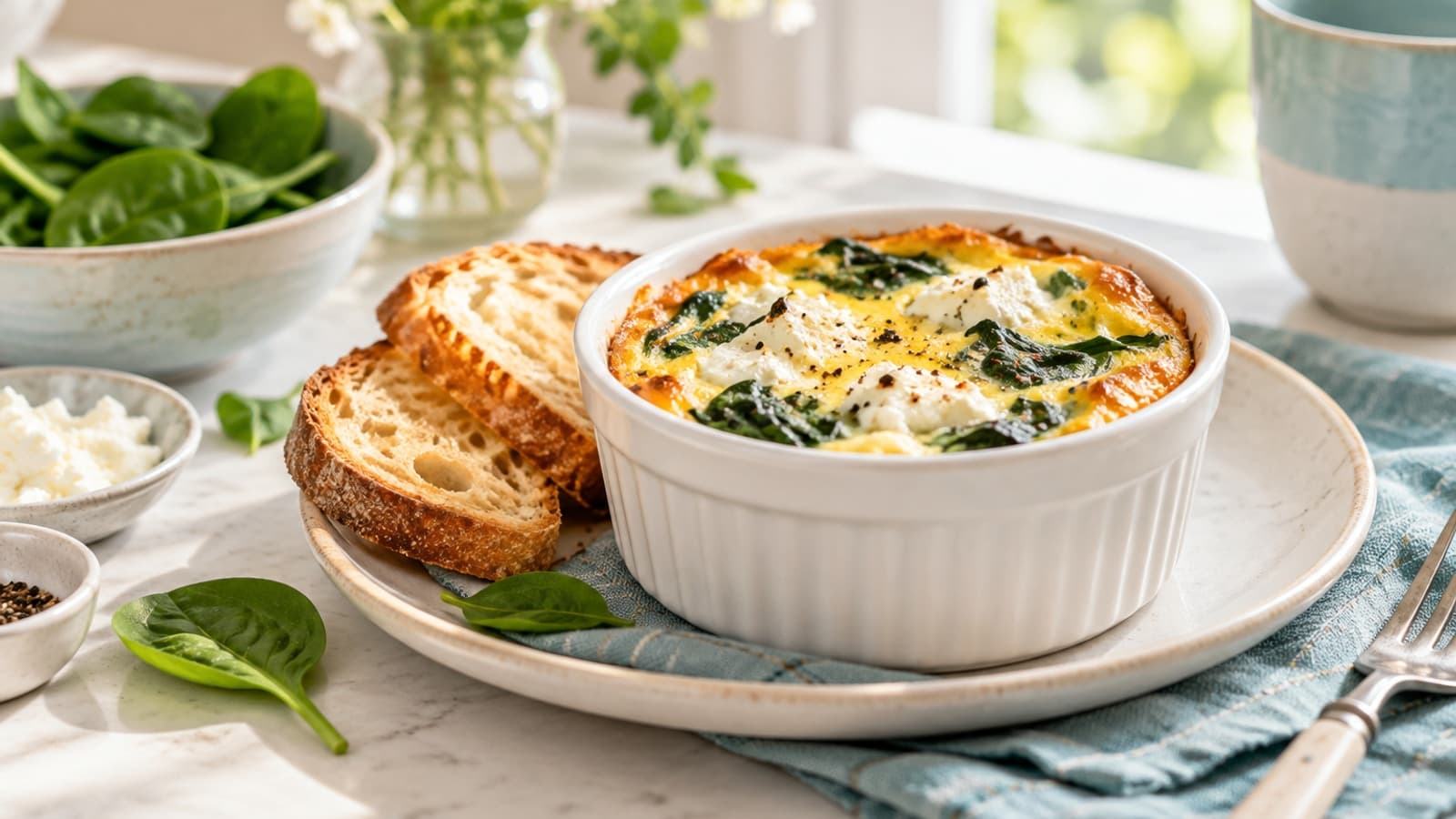
A warm breakfast doesn't have to begin with a big skillet. An individual dish of baked eggs, spinach and ricotta can be assembled in a small oven-safe ramekin and served with whatever else you want alongside it.
This is a flexible starting idea. The size of your dish and the amount you add will affect how long it takes to cook, so the center temperature matters more than an exact timer.
What to have on hand
For one ramekin, try two eggs, a spoonful or two of ricotta and a small handful of cooked spinach. Add black pepper or an herb if you like. A little oil or butter for the dish can help keep the egg from sticking.
Use an oven-safe ramekin with enough room for the mixture. If you're cooking for someone else too, use a second dish rather than overfilling the first. Put the ramekins on a baking sheet so they're easier to move in and out of the oven.
Rinse fresh spinach and cook it until wilted before adding it. If you use frozen spinach, follow the package's cooking directions; not every frozen vegetable is ready to eat straight from the bag. Drain excess liquid so it doesn't make the eggs watery.
Assemble and bake
Heat the oven to 375°F. Lightly coat the ramekin, then add the cooked spinach. Beat the eggs in a clean bowl and pour them over the spinach; add small spoonfuls of ricotta. You can stir the cheese in for a more even mixture or leave the spoonfuls visible.
Bake until the egg mixture is fully set and reaches 160°F in the center on a food thermometer. Check the thickest part without touching the dish with the probe. If the center isn't ready, return it to the oven and check again. Depth, ingredients and oven temperature can all change the cooking time.
Use an oven mitt and place the hot ramekin on a heat-safe surface. Let it cool enough to eat comfortably. Wash hands, utensils and surfaces after contact with raw egg, and use a clean thermometer when checking the finished dish.
Make it a breakfast you want
Serve with a piece of toast, fruit or another side you enjoy. The egg and ricotta contribute protein, while the particular amounts depend on what you put in the ramekin. The side is there if you want it, not because every breakfast has to follow the same formula.
Ricotta contains milk. It isn't suitable for a milk allergy, and lactose-free dairy still contains milk proteins. If you need to avoid dairy, use a suitable recipe and check the ingredients of any replacement. Eggs are an allergen too, so choose a different breakfast if you need to avoid them.
Spinach can be swapped for another cooked vegetable you like. Cut it small enough to fit the dish, and avoid adding so much liquid that the center is hard to cook evenly. Herbs, a little pepper or a familiar seasoning can change the flavor without complicating the prep.
Plan for your morning
If you're taking a GLP-1 and aren't very hungry first thing, you might prefer one egg in a smaller suitable dish and have toast or another food later. If you want a larger breakfast, add a side or make an amount that fits your appetite. Adjust the cooking check for the dish you actually prepare.
You can cook the spinach ahead and keep it refrigerated until breakfast. If you have cooked leftovers, refrigerate them within two hours, or one hour above 90°F, and reheat leftovers to 165°F throughout. Use a clean, covered container and follow food-specific storage guidance.
Our breakfast ideas for smaller appetites offer more options for mornings when eggs aren't what you want. The goal is a breakfast you can prepare and enjoy, with enough flexibility for the day ahead.