










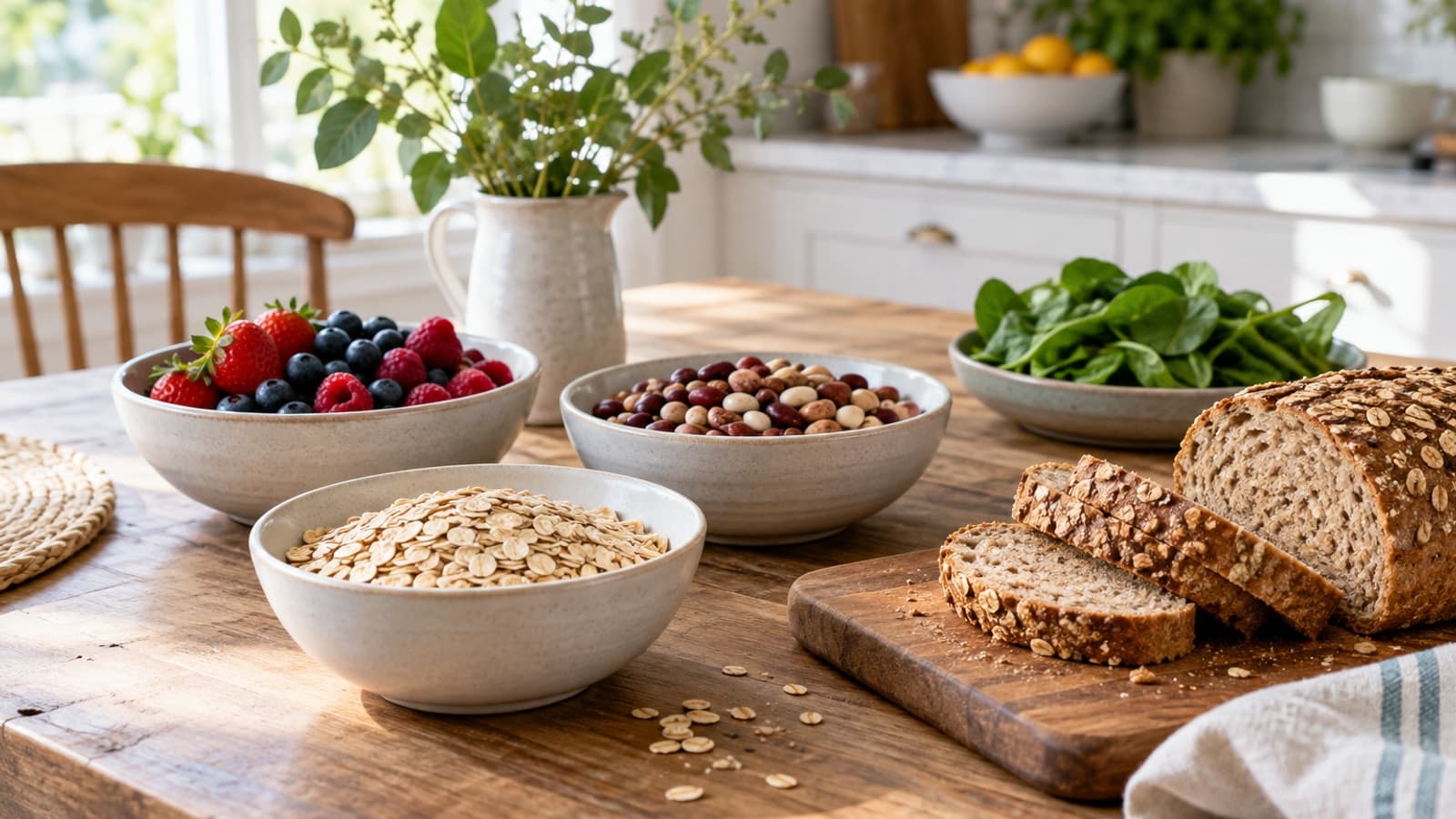
A bowl of oatmeal and a slice of whole-grain toast both bring fiber to breakfast. You may have heard that one kind of fiber is “soluble” and another is “insoluble,” then wondered whether you need to count them separately.
For most people, the useful takeaway is simpler: most fiber-rich foods contain a mix of soluble and insoluble fiber. Different foods have different proportions, so eating a variety over time makes more sense than trying to sort every bite into one category.
What does soluble mean?
Soluble fiber attracts water and can form a gel during digestion. Think of the way oats thicken as they cook. Oats, barley, beans, lentils, peas, nuts, seeds and some fruits and vegetables are sources.
That doesn't mean all of the fiber in a bowl of oats is soluble. It's a helpful example of a food that contains it, not a label for every component in the bowl. Similarly, an apple, a serving of beans or a handful of berries can contribute more than one type.
Some soluble fibers can help lower cholesterol. That benefit isn't a reason to treat one food as medicine or expect an immediate change from a single serving. Your overall eating pattern and health history still matter.
What about insoluble fiber?
Insoluble fiber doesn't dissolve in water. It adds bulk to stool and helps food move through the digestive tract. Wheat bran, whole grains and vegetables are examples of foods that provide it.
Picture the texture of wheat bran or the firm skin of a piece of produce. Those aren't perfect scientific tests, but they make the idea a little easier to picture while shopping. You can't reliably identify every type of fiber just by looking at a food.
Both types have a place. You don't need a separate “soluble meal” and “insoluble meal,” and a food isn't automatically better because it shows up on one list instead of another.
Build a plate without doing the math
Try using foods you already like as the starting point:
- Stir a spoonful of oats into yogurt and add sliced fruit.
- Add a small serving of beans to rice, soup or a familiar taco filling.
- Choose whole-grain toast with eggs, nut butter or another food you enjoy.
- Put cooked vegetables alongside a sandwich or dinner you already make.
These are examples, not a daily checklist. Frozen vegetables, canned beans and ordinary store-brand oats count too. Rinsing canned beans and adding them to a dish you know can make the change feel less like a whole new eating plan.
The Nutrition Facts panel lists total dietary fiber. Some labels also give a soluble or insoluble amount, but that extra breakdown won't appear on every package. Compare similar foods by the serving size you would actually eat rather than assuming the largest number on the front is the best choice.
Take your stomach into account
If you're on a GLP-1 and your appetite is smaller, suddenly piling a large salad, a big bowl of beans and a fiber supplement into the same day may be uncomfortable. A quick increase in fiber can cause gas, bloating or cramps.
Add a modest amount, see how it feels and give yourself time to adjust. Cooked vegetables or a small portion of beans may be easier to fit into a meal than a very large raw salad. Drink fluids as appropriate for your health needs. Our guide to adding fiber gradually on a GLP-1 goes into the practical side.
If constipation, abdominal pain or other symptoms persist, talk with your care team instead of continuing to add fiber in the hope that more will fix everything. Some people have medical reasons to follow different food or fluid guidance.
You don't have to memorize two perfect food lists. Keep a few fiber-containing foods you enjoy in rotation, change the amount at a comfortable pace and let variety do some of the sorting for you.