










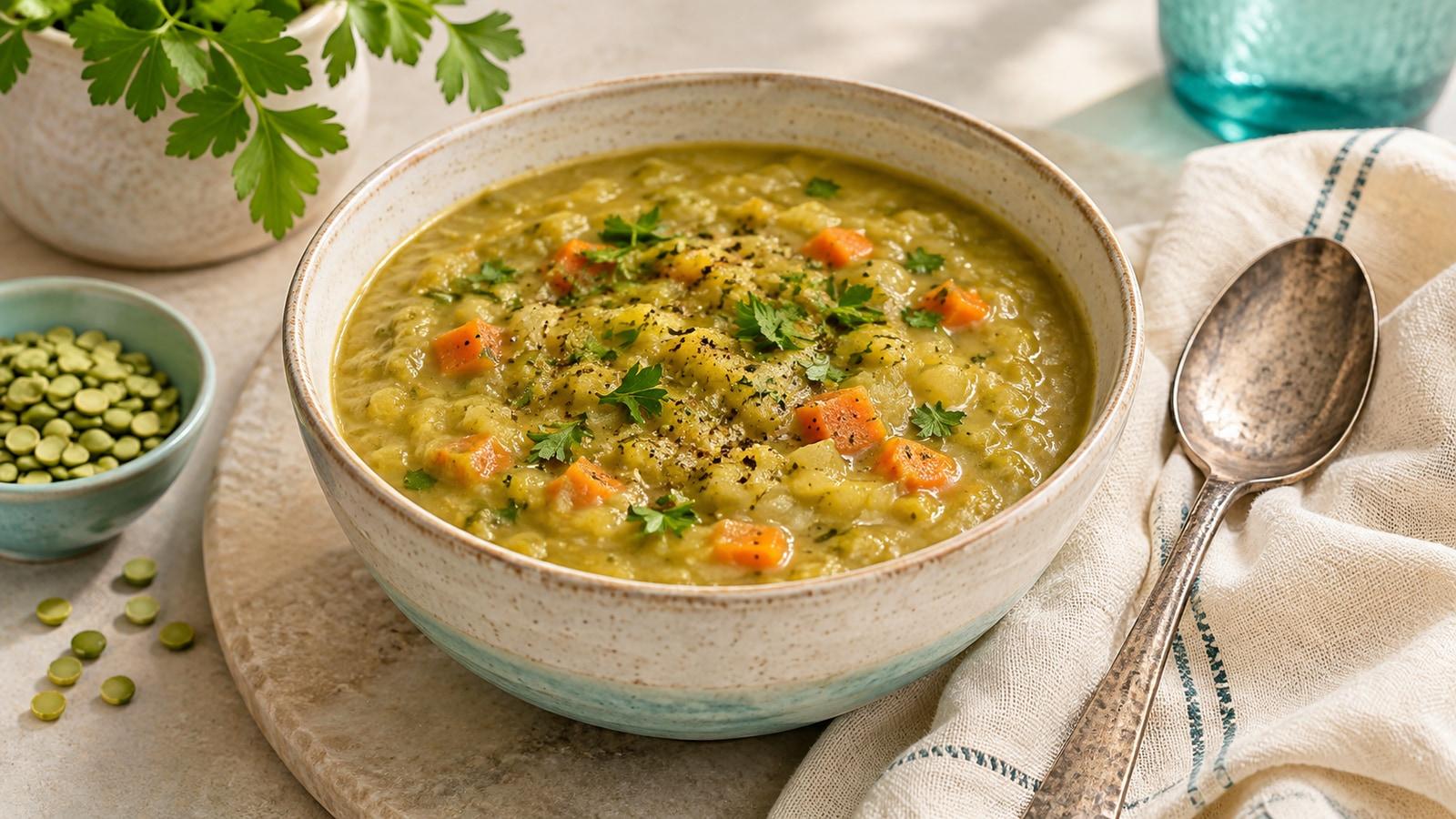
Split pea soup is the sort of meal that takes its time on the stove but doesn’t demand much attention once it’s simmering. The peas soften into the broth, carrots add a little sweetness, and a few herbs give the pot a savory finish.
This version is meat-free and flexible. Keep it thick enough for a spoon to stand in, or add broth for a looser soup. It also makes several portions, so you can freeze some if you don’t want the same lunch all week.
Ingredients
Makes: about 4–5 servings
Prep: about 15 minutes
Cook: about 50–70 minutes, depending on the peas
- 1 tablespoon olive oil
- 1 small onion, diced
- 2 carrots, diced
- 1 celery stalk, diced
- 1 cup dry green or yellow split peas, picked over and rinsed
- 5 cups lower-sodium vegetable broth or water
- ½ teaspoon dried thyme
- 1 bay leaf, optional
- Black pepper to taste
- Optional: chopped parsley, lemon, or toast for serving
Dry split peas may contain small pieces of debris, so spread them out and pick through them before rinsing. Packages can differ; follow the cooking instructions on yours, including any preparation directions.
Make the soup
- Wash your hands. Rinse the carrots and celery under running water, then dice them. Pick over and rinse the split peas.
- Warm the oil in a soup pot over medium heat. Add the onion, carrots, and celery and cook, stirring occasionally, until the onion starts to soften.
- Add the peas, broth, thyme, and bay leaf if using. Bring to a boil, then lower the heat to a gentle simmer. Cover partly and stir from time to time so the peas don’t settle and stick.
- Cook until the peas are very tender, beginning to check around 50 minutes. Add water or broth if the soup becomes too thick before the peas are cooked.
- Remove the bay leaf. Mash a portion of the peas with a spoon for a thicker texture, or leave the soup as it is. Taste and add pepper; add parsley or lemon to individual bowls if you like.
The peas should be tender, not hard in the center. Older dried legumes can take longer to soften, and the heat of a simmer varies. Plan a little extra time instead of treating the cooking time as a deadline.
Thick or brothy?
Split peas break down as they cook. If you like a smooth soup, stir and mash some against the side of the pot. An immersion blender is another option, used carefully with its blade submerged. Let hot soup cool somewhat before using a countertop blender, work in small batches, and follow the appliance instructions for hot liquids; a tightly sealed blender can build pressure.
For a soup with more visible pieces, stop mashing when some peas have softened into the broth and others remain intact. The soup will continue to thicken as it cools. Add a little water or broth when reheating until it reaches the consistency you want.
Carrots cut into small pieces soften more quickly than large chunks. If you want them very tender, give the vegetables a few extra minutes of simmering. If you like a bit more texture, cut them slightly larger and check them alongside the peas.
Add flavor at the table
Thyme and a bay leaf give the pot a mild base. A squeeze of lemon, chopped parsley, or a little black pepper can brighten an individual bowl. Taste before adding salt, especially if you used a seasoned broth.
For a fuller meal, serve the soup with toast, a side salad, or another food you enjoy. Split peas contribute plant protein and fiber. If you’re not used to eating legumes, begin with a modest bowl and see how it feels for you; you can save the rest rather than forcing a larger portion.
Some split pea soups include ham or another meat. This pot doesn’t need it, but you can add safely cooked meat to an individual serving if you prefer. Reheat cooked leftovers to 165°F and account for when the meat was originally cooked.
Cool, freeze, and reheat
Divide extra soup into shallow containers and refrigerate promptly, within two hours of cooking or one hour if exposed to temperatures above 90°F. Keep the refrigerator at 40°F or below and use refrigerated soup within three to four days. Freeze portions sooner if you don’t expect to eat them in that window.
Leave a little room in a freezer-safe container for expansion and label it with the date. When reheating, bring the soup to a rolling boil and stir; add liquid as needed because split pea soup can become very thick after chilling.
For a lunch away from home, transport the chilled soup with an ice pack and reheat it when you’re ready to eat. Keeping a single portion separate saves you from repeatedly warming the whole pot.
If a GLP-1 medication has changed your appetite, start with a serving that feels manageable. Persistent nausea or difficulty eating and drinking is worth discussing with your care team. This soup is simply one meal option, not a treatment for those symptoms.
Once the peas are tender, the rest is up to you: a thick bowl with toast, a brothy cup beside lunch, or a container in the freezer for a day when you don’t feel like cooking.