










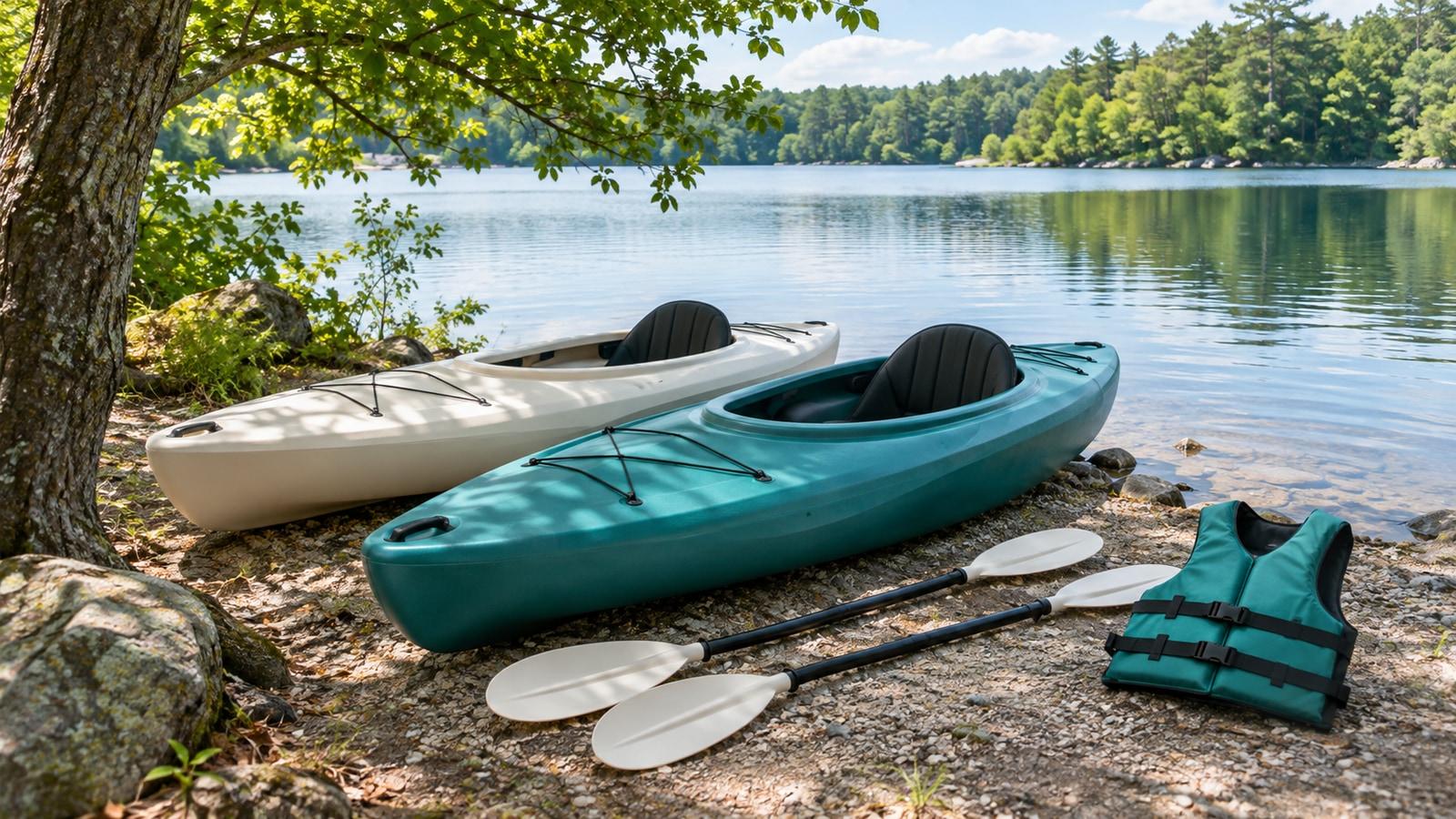
The class listing says the kayak, paddle, and life jacket are included. That still leaves a few practical questions: Will the seat fit? How do you get out if the boat tips? And what happens if your shoulders tire halfway through the lesson?
A beginner class is a place to ask. You don't need your own kayak, but you do need instruction, suitable equipment, and a plan for the conditions.
Pick a class that really is for beginners
Look for an introductory course led by qualified instructors in an appropriate, sheltered setting. Ask how many participants each instructor supervises, what skills the session covers, and whether the class includes getting in and out of the boat, basic strokes, and what to do after a capsize. Some first lessons take place in a pool; others use calm outdoor water.
Tell the organizer about any access needs before booking. Ask about the launch surface, transfer assistance, boat dimensions, available adaptations, and whether there is a suitable life jacket. If you have shoulder limitations or another concern, a clinician or physical therapist can help you consider whether and how to participate. The instructor can then help you explore equipment and technique that fit your needs.
Ask about breaks and how much of the class takes place on the water.
Make the boat fit before launch
Ask what type of kayak the class uses. A sit-inside boat has an opening for the paddler; a sit-on-top has a more open seating area. Entry, exit, and recovery differ, so tell the instructor if one arrangement feels difficult and ask to see the actual boat before committing.
On land, ask how the seat and foot supports are adjusted. A comfortable fit should let you reach the supports without feeling wedged in, and you should be able to understand how to leave the boat. An instructor can help you try the setup rather than assuming one position suits every body.
If transfers are a concern, describe the help or equipment you normally use and ask whether the launch can accommodate it. A ramp, dock, or shoreline can each present different challenges. You deserve a clear answer before you arrive with your gear.
Get a life jacket that fits
Wear a properly fitted, U.S. Coast Guard-approved life jacket appropriate for the activity whenever you’re on the water. The class provider may supply one, but check that it fits before the lesson. Look at the label for its intended size, and ask the instructor to help adjust the straps so the jacket is secure and comfortable.
Try moving your arms with it on. It should allow you to paddle without the jacket riding up or restricting your movement. If the available size doesn’t fit, ask the provider about alternatives before getting into a boat. A jacket is useful only if it can be worn properly.
Dress for the possibility of getting wet, not just for the air temperature. Cold water can be dangerous even on a sunny day. Ask the instructor what clothing and footwear are appropriate for the water and weather, and bring a dry change of clothes if recommended.
Learn the exit before the distance
In a good first lesson, the instructor will explain how to enter and leave the kayak and what to do if it overturns. Listen to the safety briefing even if the water looks calm. Ask how the group practices a wet exit or other recovery skills for the type of boat you’re using, and tell the instructor if you have concerns about the practice.
You don’t need to teach yourself a rescue from an article. The details depend on the kayak, the water, your equipment, and your abilities. Learn and practice with an instructor in a suitable setting, and make sure you understand how to get help.
Stay with the group. Beginners benefit from paddling with experienced people who know the route and conditions. The class should have a plan for weather changes and an emergency, as well as a clear meeting point and return time.
Give your body time to learn
The first session may feel more like learning to steer than getting a workout. Ask the instructor to show you where to hold the double-bladed paddle and how a forward stroke differs from a turning stroke. Try a few movements under their supervision before worrying about speed.
Start gently and take the breaks offered. If your shoulders, wrists, or back hurt, tell the instructor rather than trying to match someone else’s pace. They may be able to adjust the paddle, seating, or activity; sometimes stopping is the better choice. If you have a recent injury or have been given restrictions, follow your care team’s advice.
If you’re managing your weight, kayaking can be a way to spend time moving outdoors without centering every minute on a number. If you take a GLP-1 medication and feel nauseated or unwell on class day, rescheduling is reasonable. Persistent symptoms or trouble eating and drinking are worth discussing with your care team.
A simple packing conversation
Before you leave home, ask the provider what they supply and what you should bring. Common possibilities include the clothing they recommend for the water, secure footwear, a dry change of clothes, sun protection, and any personal items you need in a waterproof container. Don’t assume a phone alone is an emergency plan; the instructor should explain the group’s safety arrangements.
Avoid alcohol before and during paddling. Tell someone on shore where the group is going and when you expect to return, following the organizer’s trip plan. Conditions can change, and a class may be postponed because of wind, lightning, water levels, or temperature. That’s part of sensible planning.
Afterward, note what worked about the boat and setup. If you'd like another lesson, getting comfortable is a worthwhile goal on its own.