










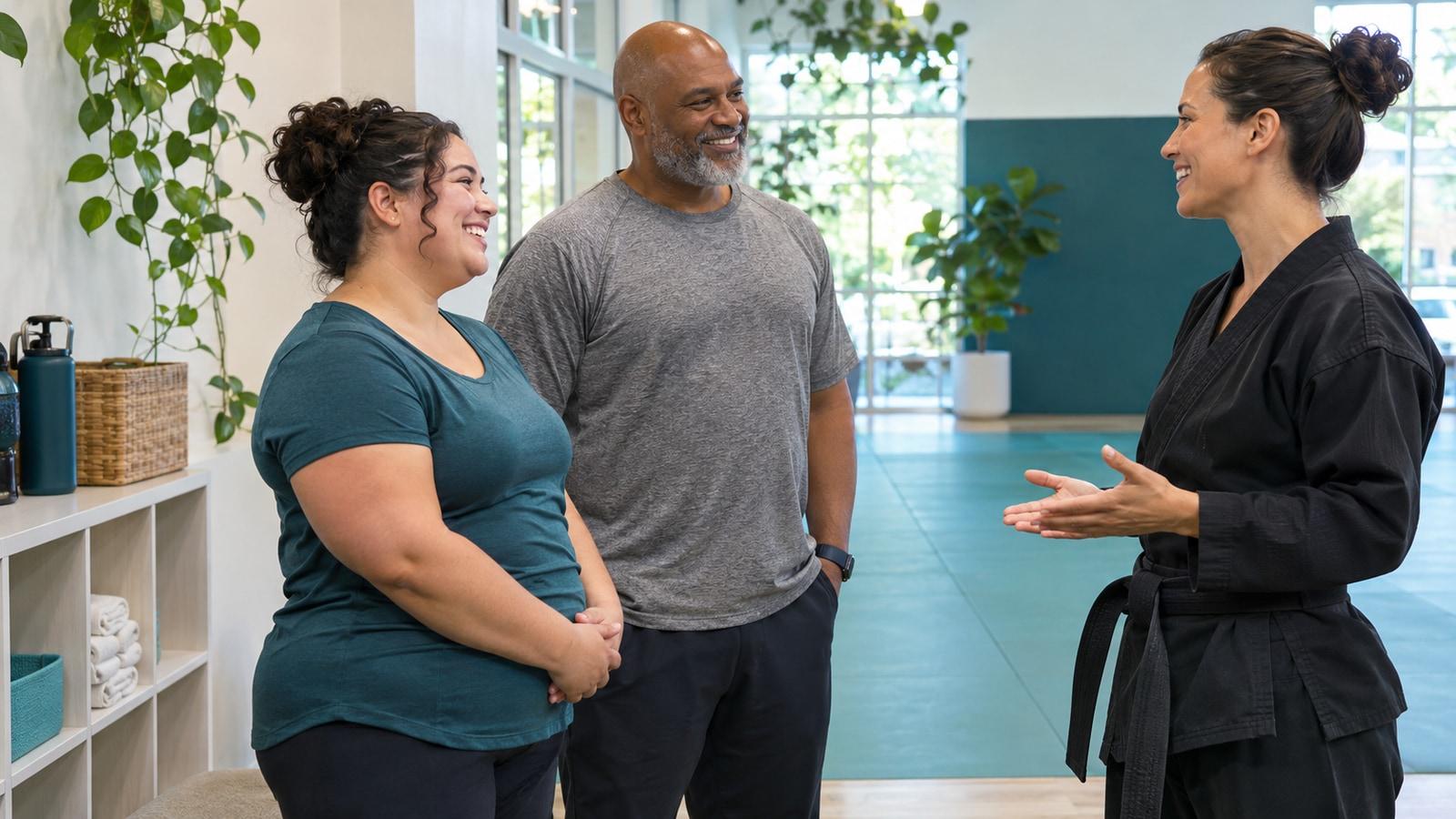
Walking into a martial-arts studio for the first time can feel like arriving halfway through a conversation. People may know where to stand, what to wear, and how to follow the instructor’s cues. You’re allowed to be the person who asks what happens next.
Martial arts cover a wide range of activities. One class may focus on individual forms and controlled practice; another may include grappling or contact with a partner. A little research before your first visit helps you find a class that matches what you want to learn.
Decide what you’re looking for
Do you want a social activity, a chance to learn a skill, a structured class, or a particular style of practice? You don’t have to know the answer perfectly, but it helps to tell a studio what appeals to you. Ask whether the beginner class includes sparring, throws, ground work, or physical contact and whether those activities are optional.
If you don’t want contact, say so before you register. A class described as “beginner” may still include partner drills, and the amount of contact can differ between studios teaching the same discipline. Ask to observe a class or speak with the instructor about what a first session actually involves.
You can also ask about class size, the instructor’s experience teaching adults who are new to the activity, and how they handle students who need a break or a different version of a movement. A respectful answer should make it easier to decide whether the setting feels right.
Talk through access and health needs
If you use a mobility aid, have a vision or hearing access need, or need an adaptation to participate, ask specific questions. How do students enter the practice space? Are instructions demonstrated and spoken? Can movements be practiced seated or with support? What happens if getting down to or up from the floor is difficult?
You don’t have to disclose every detail of your medical history. Share the information needed for the accommodations and safe participation you want. If you have a recent injury, a condition that makes contact or falls particularly risky, or restrictions from a clinician, discuss the class with your care team before attending.
Injuries can occur in martial arts, and the risks vary with the activity and amount of contact. Protective gear and supervision help but don’t guarantee that an injury won’t happen. Ask what the class does when someone is hurt and how partners communicate during drills.
Prepare for the first visit
The studio can tell you whether to wear comfortable exercise clothes, a uniform, or something else, and whether shoes are worn on the practice surface. Ask what equipment is provided and what you would need to bring. There’s no reason to buy a full set of gear before you know you want to return.
Arrive a little early if you can. That gives you time to locate the changing area, meet the instructor, and say, “This is my first class. Could you show me where to begin?” Let them know if you want to watch a movement before attempting it or need instructions repeated.
Bring a drink and plan for breaks. A class may include a warm-up, individual practice, and partner work, but the structure varies. You can ask what to expect without committing to every part of the session.
Learn at a pace you can control
Start with the instructor’s easier version and concentrate on understanding the movement. You don’t need to stretch farther, kick higher, or move faster to match the person beside you. If a drill involves a partner, agree on the level of contact and how either person will signal that they want to stop.
A good practice partner respects that signal immediately. If someone ignores your boundaries or an instructor pressures you to continue after you’ve said no, step away and speak with the instructor or leave. You can look for another class; your comfort and consent matter.
Pause for pain, dizziness, chest discomfort, or unusual shortness of breath. Seek appropriate medical help for severe or persistent symptoms. If a movement feels wrong, ask for an alternative rather than forcing your body into the same position as someone else.
Judge the class by more than the workout
Afterward, consider whether the instructions were clear, whether you felt able to ask questions, and whether the pace left you interested in learning more. A class can be challenging and still make space for beginners. It can also be a poor fit even if other people enjoy it.
If you’re working on weight management, martial arts can be one way to move and learn a skill; you don’t need to make the class a test of calorie burn. If you take a GLP-1 medication and feel unwell, rest or reschedule, and discuss persistent symptoms or trouble eating and drinking with your care team.
You can try one class, ask a few questions, and make a decision afterward. Being new is a normal part of learning—there’s no expectation that you arrive knowing the routine.