










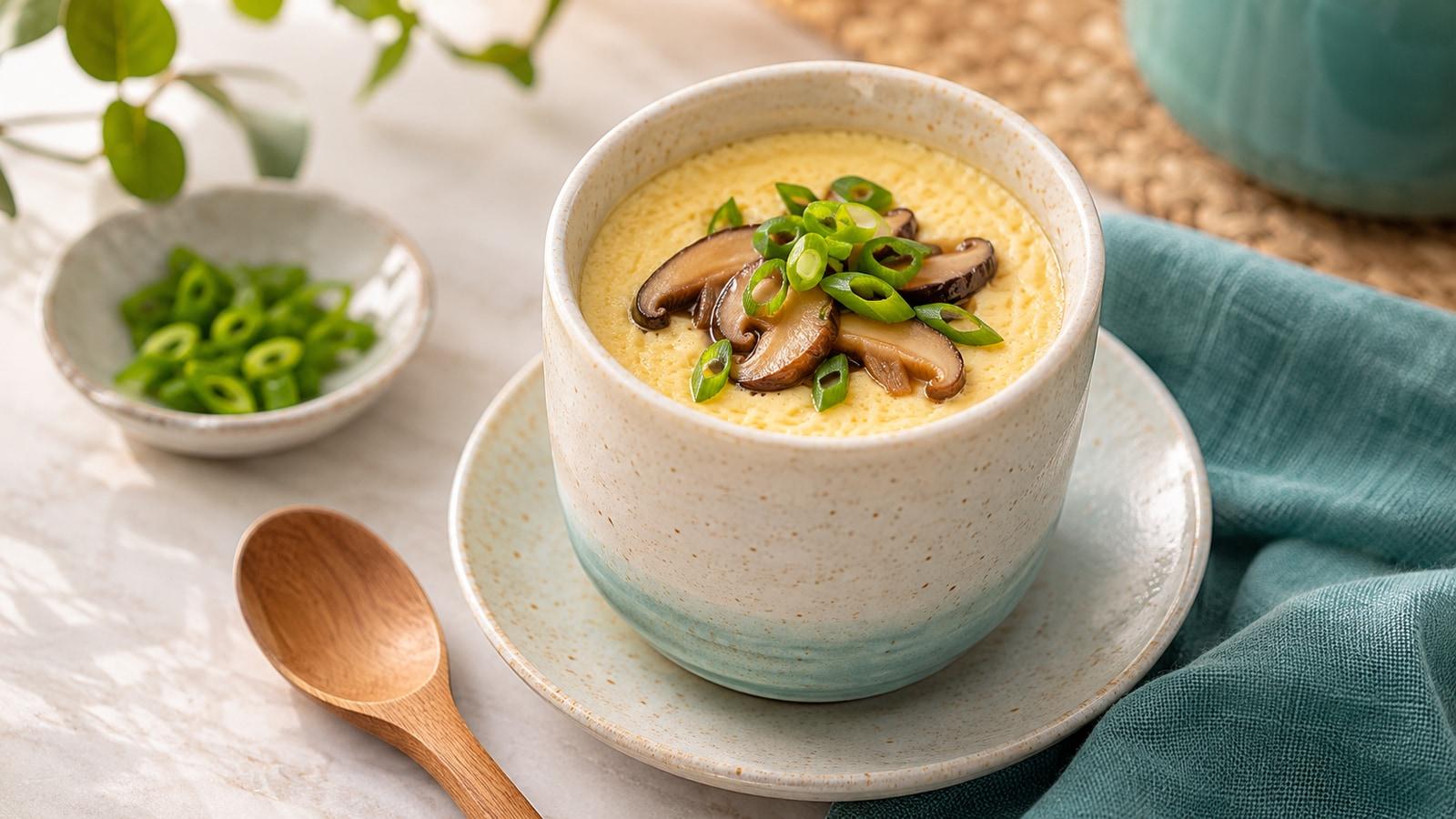
A savory egg custard can be a gentle, warm dish with a soft texture. This version steams an egg-and-broth mixture in small cups with mushrooms and scallions. It takes inspiration from Japanese chawanmushi, while keeping the ingredients and equipment simple for a home kitchen.
The heat should stay gentle. A hard boil can create bubbles and a rough texture; a steady steam gives the custard time to set more evenly.
Ingredients
Makes: about 2–3 small servings
Prep: about 15 minutes
Steam: about 15–20 minutes
- 2 large eggs
- 1½ cups lower-sodium broth, cooled to room temperature or chilled
- 4 ounces mushrooms, thinly sliced
- 1 teaspoon neutral oil
- 1 teaspoon lower-sodium soy sauce, optional
- 1 scallion, thinly sliced
- Black pepper, optional
Use a broth you enjoy. Some stocks contain fish, shellfish, soy, or wheat ingredients, so check the label for allergens. You’ll also need small heatproof cups that fit inside a covered pot or steamer.
Prepare the mushrooms and mixture
- Wash your hands and rinse the mushrooms and scallion under running water. Slice them thinly.
- Warm the oil in a skillet and cook the mushrooms until tender. Divide them among the heatproof cups.
- Beat the eggs gently in a bowl, then stir in the broth and soy sauce if using. Avoid whipping a lot of air into the mixture.
- Pour the egg mixture through a fine sieve into a clean jug or bowl, then divide it among the cups. Cover each cup loosely with a heatproof lid or foil.
The egg mixture is raw. Don’t taste it, and wash the bowl, sieve, and utensils after use. Use clean equipment for the finished custards.
Steam gently
Set a steamer rack in a pot and add water below the level of the cups. Bring the water to a gentle simmer, place the cups on the rack, and cover the pot. Steam for about 15–20 minutes, depending on cup size and depth.
Check that the center of each custard reaches 160°F on a food thermometer. If it hasn’t, continue steaming and check again. Carefully remove the cups with oven mitts or tongs, avoiding the hot steam. Add scallion and pepper if you like.
Don’t let the pot boil dry. Add hot water carefully if needed, keeping it out of the custard cups. Let the custards cool briefly before eating.
A smoother custard
Gentle mixing and straining remove some bubbles and bits of egg that can make the texture uneven. Pour slowly and skim off large bubbles if you see them. A loose cover helps prevent water droplets from falling onto the surface during steaming.
Keep the water at a gentle simmer rather than a vigorous boil. If the custard develops bubbles, the heat may have been too high or the mixture may have been whisked vigorously. It can still be edible once safely cooked; adjust the heat next time if you prefer a smoother surface.
Cup size matters. A deep cup takes longer to heat in the center than a shallow one. Use similar cups and check each custard rather than assuming they all finish at the same time.
Broth and filling choices
Broth gives the custard its savory flavor. A mild vegetable broth keeps the mushrooms noticeable; a fish-based stock creates a different taste. Check the ingredients if anyone has a fish or shellfish allergy.
Mushrooms should be sliced thinly and cooked until tender before going into the cups. You can use a small amount of cooked spinach or other soft vegetables instead. Follow the package cooking directions for frozen vegetables and avoid overfilling the cups.
Soy sauce is optional and may contain wheat. Soy and wheat are common allergens, and wheat contains gluten. Choose a suitable labeled sauce if needed, or leave it out and season the broth another way.
Serving the custard
Eggs provide protein. The soft custard can be a snack or a side with rice and vegetables. For a larger meal, add another dish that suits your appetite. Let the cups cool enough to handle and eat with a small spoon.
Egg is a common allergen. Choose a different dish for someone who must avoid it. If using a broth with other allergens, keep the ingredients clear for anyone sharing the meal.
Chawanmushi has many variations and can include different fillings. This mushroom version is a simplified adaptation; the gentle steaming method is the useful technique to practice.
Leftovers
Refrigerate cooked custards in small covered containers within two hours, or within one hour above 90°F. If serving rice, cool and refrigerate it within one hour, use it within 24 hours, and reheat it only once. Reheat leftovers to 165°F, checking the center. Gentle reheating may help the texture, but the safe temperature still matters.
Keep fresh scallions separate until serving. Don’t leave the custards on the counter while waiting for another part of the meal. Clean the steamer and any utensils that touched raw egg before using them again.
The custard is ready when the center has reached temperature, not simply when the surface looks set. Once you know how your cups and steamer behave, you can adjust the broth and fillings.