










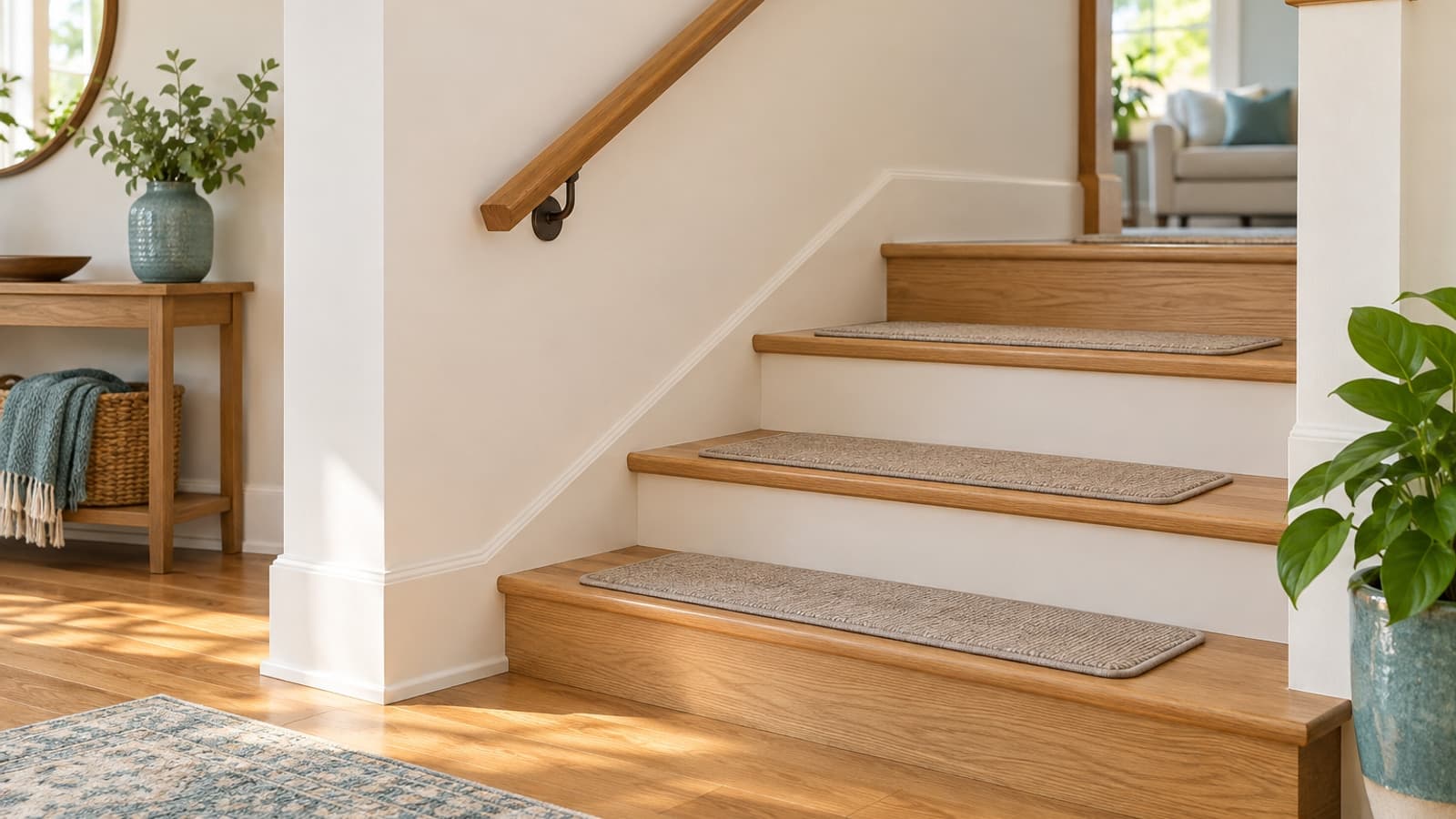
Stairs can be a useful everyday goal: getting to an appointment, entering a house or reaching the next floor. A step-up is one way to practice a related movement, with the height and support chosen for you.
Start with a low, stable step and support nearby. If you’re concerned about falling or you’ve been told to limit weight through a leg, get individual guidance before trying it.
Pick a step you can trust
The bottom step of a staircase with a secure handrail is one possibility. A purpose-built exercise step may be another if it is stable, nonslip and positioned beside a fixed support. Avoid a stool, box, loose book or anything that can slide or tip.
Choose a height that lets you place your whole foot on the step and move without a large lunge. A lower step may be more manageable than the stair you normally use. If even a low step makes you feel unsteady, try a different exercise with a professional rather than improvising a taller support.
Clear the area above and below the step. Wear shoes that feel secure, check the surface for moisture and make sure the handrail is firmly attached. A rail is there to help; you don’t need to let go to make the exercise worthwhile.
Practice the movement slowly
Stand facing the step with your support within reach. Place one foot fully on the step, hold the rail as needed and rise onto it. Bring the other foot up when you feel steady. Then step back down carefully, maintaining your grip on the rail.
Begin with a few repetitions at a pace you can control. Rest when needed and, if appropriate for you, practice leading with the other leg as well. You don’t have to match another person’s count or speed. Notice whether your foot stays secure and whether you can lower yourself without dropping quickly.
If the position is confusing, ask a physical therapist or trainer to watch. Individual instructions may differ after surgery or an injury; follow your own plan instead of a generic example.
Adjust before adding more
If a step feels too high, choose a lower stable option or use a different movement. If you need the handrail throughout, keep using it. The goal is a controlled practice, not a test of how little support you can manage.
Pay attention to your knee and hip. A movement that causes sharp pain or worsening discomfort is a reason to stop and get advice. Don’t push through pain to reach a certain number. A supported sit-to-stand or gentle marching near a fixed counter might be alternatives to discuss with a professional.
When the movement feels familiar, you might add a small amount of work or change the step height, but not both automatically. The new setup should be just as stable, and you should still be able to pause and step down safely. Holding weights is optional and may not suit someone who needs a hand free for balance.
Connect practice to the real stairs
Your home stairs, a curb and a gym step may differ in height, lighting and handrail access. Practice does not guarantee that every staircase will feel the same. Use the rail when you need it and allow time for the trip.
If GLP-1 symptoms leave you dizzy or unable to eat or drink, address those symptoms with your care team before a workout. Stop if you feel faint or unusually breathless. Call 911 for new or unexplained chest pain or other possible signs of a heart attack. Other severe symptoms also need emergency attention.
Our strength and function guide offers ways to notice changes in daily activities. A steadier step is a useful goal even if the practice remains low and supported.