










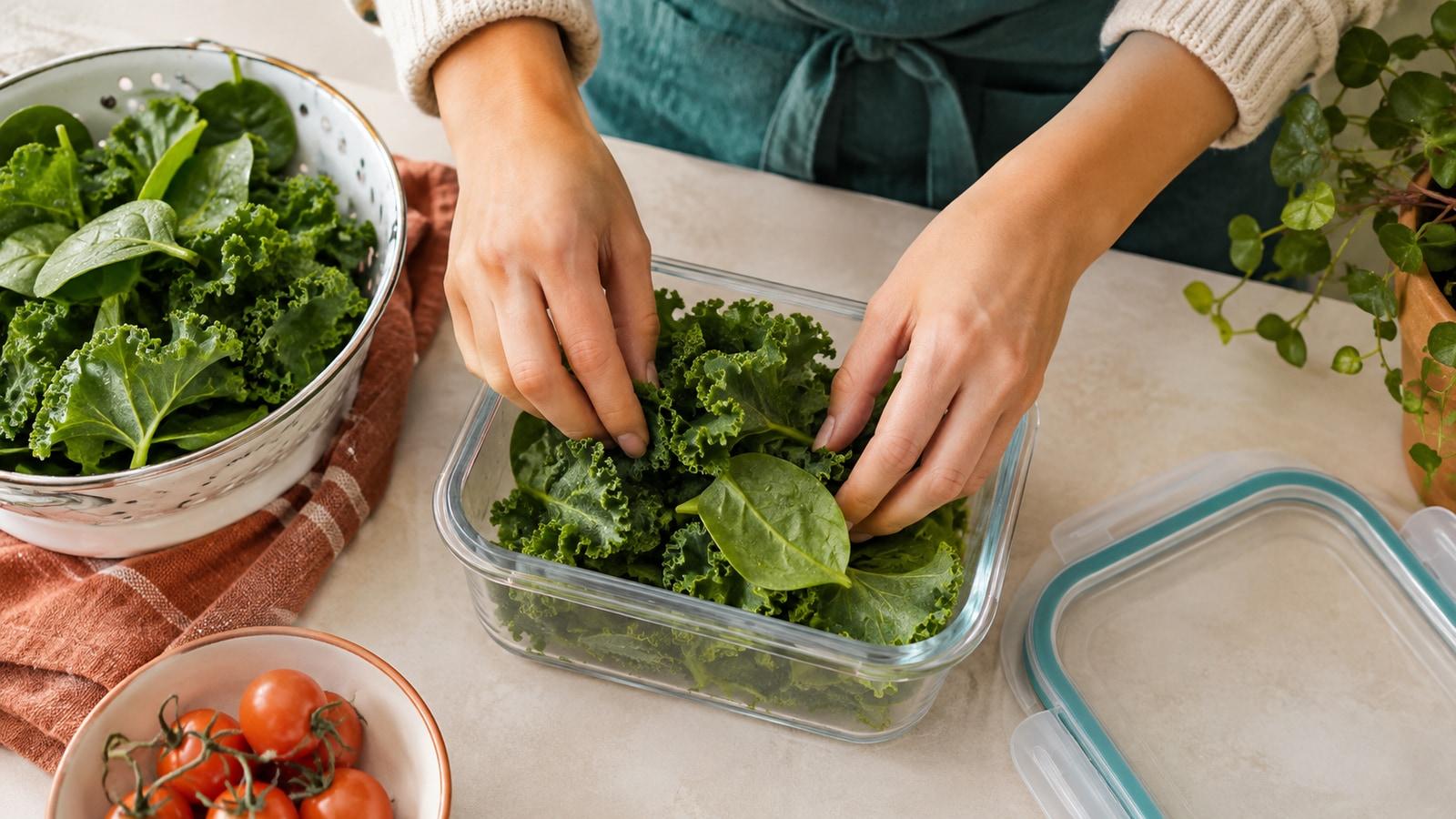
You bring home a bunch of greens with good intentions, wash it, and put it away. A few days later, the leaves are wet and flattened at the bottom of the container. The problem may be less about your meal plan than about how the greens were dried and stored.
There is no method that keeps every leaf crisp for a fixed number of days. Buying an amount you can use, keeping it cold and handling it with clean tools are a good place to start.
Check the package before you wash
Some bagged greens are labeled “ready to eat” or “pre-washed.” They don't need another wash at home. Keep them refrigerated and follow the package's storage and use instructions. If you choose to wash them anyway, use clean hands, surfaces and utensils to avoid introducing contamination.
For loose greens or a bunch that isn't labeled ready to eat, wash under running water before preparing or eating. Don't use soap, detergent or a produce wash. Washing can reduce some contamination, but it doesn't remove every germ.
You can wash greens just before using them, or wash a manageable amount ahead if that makes meals easier. If you wash them ahead, dry them gently with a clean towel or paper towel before storing. The goal is to avoid putting dripping leaves into the refrigerator, not to remove every trace of moisture.
Give delicate leaves some room
A clean salad spinner can remove water without rubbing every leaf. If you don't have one, pat the leaves dry in batches with a clean towel. Avoid packing them down tightly while they're still wet.
Place the greens in a clean covered container or a food-safe storage bag and refrigerate at 40°F or below. A clean paper towel can absorb some surface moisture; replace it if it becomes wet. Keep the container away from raw meat, poultry and seafood and their juices.
Different greens are sturdier than others. Tender spinach may need gentler handling than kale, and a large head of lettuce may store differently from cut leaves. Check the package when there is one, and use what you bought rather than relying on one storage rule for every vegetable.
Wash a portion if the whole bunch is too much
If you are cooking for one or have limited refrigerator space, you don't have to prepare everything at once. Wash and dry what you expect to use soon, and store the rest appropriately until you're ready. Keep unwashed and ready-to-eat food separated so dirt or juices don't spread.
For someone with limited hand strength or energy, a smaller bag of ready-to-eat greens may be worth the convenience. Frozen greens can also be useful in cooked dishes. Compare the price and package size with how much you can reasonably use; the largest container isn't a bargain if most of it spoils.
Make them easy to find
Store the greens where you will see them when choosing a meal, as long as the refrigerator remains at a safe temperature. A small note with the purchase date or the day you opened the package can help when several containers look alike.
Think beyond a large salad. A handful of spinach can be added to eggs or soup; lettuce can go into a sandwich; cooked greens can sit beside beans and rice. Choose preparations that suit your appetite and any instructions you have about food texture or safety.
If you're eating smaller portions with a GLP-1 medicine, buying a smaller quantity or using greens in more than one kind of meal may reduce waste. Persistent trouble eating or drinking deserves a conversation with your care team; a storage trick cannot solve that problem by itself.
Know when to discard
Throw away leaves that are rotten or have obvious spoilage. Follow a recall notice if the product has been recalled, even if the greens look and smell normal. Harmful germs don't always produce a visible or noticeable change, so appearance is not proof that food is safe.
If the refrigerator has been too warm or the food was left out for an uncertain period, use food-safety guidance rather than tasting it to decide. Clean the container and any surfaces that came into contact with spoiled food before using them again.
A simple routine
When you get home, put perishable greens in the refrigerator promptly. Check whether the package says they're ready to eat. Wash loose greens before use, dry any that you plan to store after washing, and keep them in a clean container away from raw foods.
Then make the next meal easy: decide where the greens might fit and keep the rest visible. The best storage system is one that protects the food and works with the way you actually cook.