










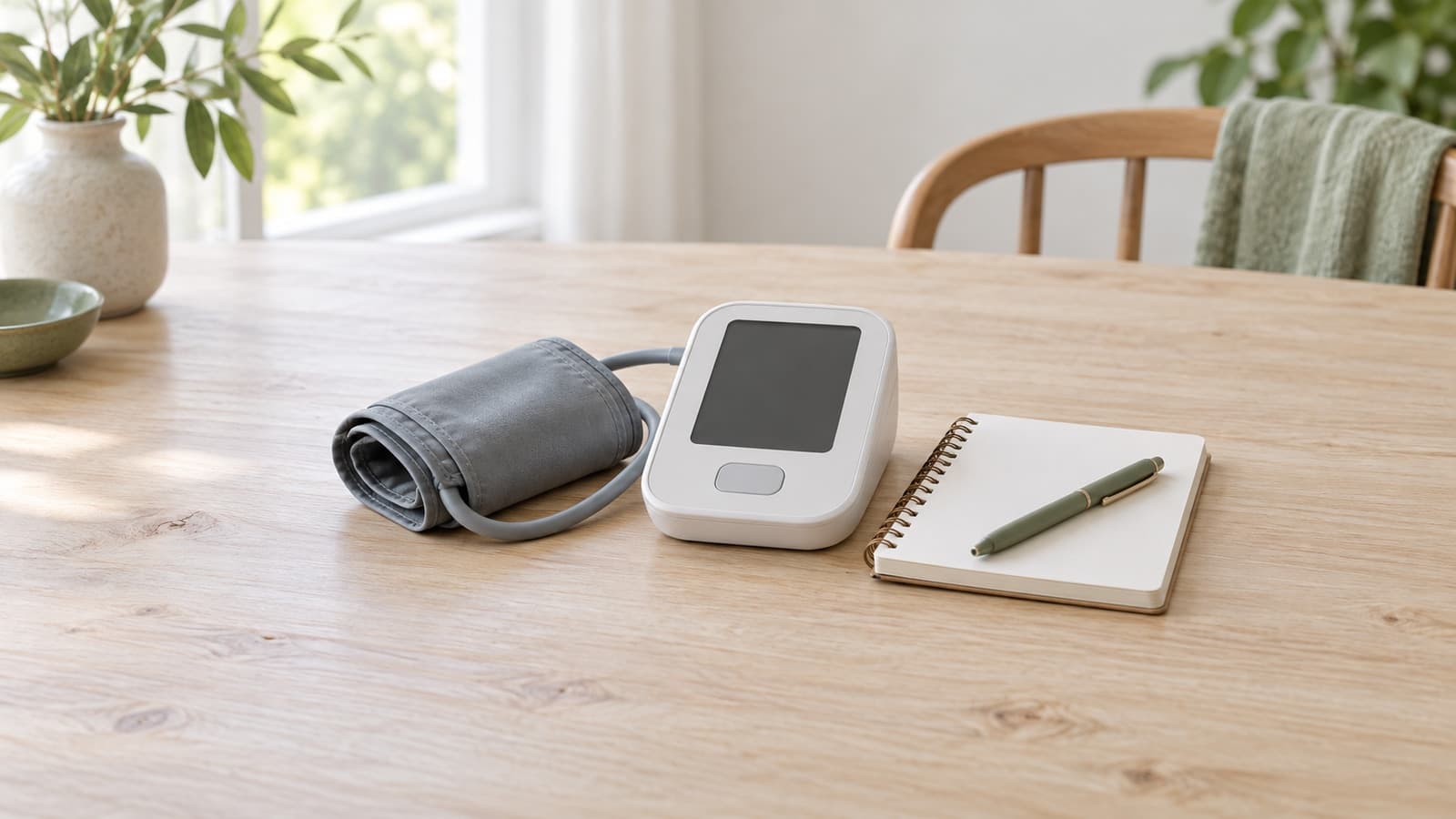
The little screen gives you two numbers, but the way you got there matters too. If your clinician has asked you to check your blood pressure at home, a few small setup choices can make the results easier to use.
A useful reading starts before you press the button. Follow your own care plan first, and bring questions about your monitor to your next appointment.
Choose a cuff that fits
An automatic upper-arm monitor with a cuff that fits your arm is a common choice for home checks. A cuff that is too small or too large can affect the result. Ask your healthcare professional how to measure for the right size and whether your device is appropriate for you.
Take the monitor to an appointment if you can. Your care team can check how you position it and help you compare its readings with the office device. If an upper-arm cuff isn’t suitable for you, ask what alternative to use rather than guessing.
Give yourself a quiet start
Plan ahead so you aren’t rushing straight from a workout or a cup of coffee. The usual preparation is to avoid smoking, caffeine and exercise for 30 minutes beforehand, empty your bladder, and sit quietly for at least five minutes. Keep your phone and conversation for after the reading.
Sit in a chair with your back supported, feet flat on the floor and legs uncrossed. Rest your arm on a table so the cuff is at heart level. Put the cuff on bare skin above the bend of your elbow, following the instructions for your model. If getting into this position is difficult, ask your clinician for an accessible setup.
Take the reading, then another
Stay still and quiet while the cuff measures. Unless your clinician gives you different instructions, take a second reading about a minute later and record both. Note the date, time and any context your care team wants to know, such as a missed dose or symptoms. A notebook is fine; you don’t need a special app.
Ask how often and when to check. The answer depends on why you’re monitoring. If the device shows an error or a surprising result, check its directions and cuff placement. Don’t take reading after reading for reassurance if it’s making you anxious; discuss a sensible plan with your clinician.
When you make the log, include both numbers and the time rather than writing down only the highest result. If you missed a scheduled check, make a note and return to the plan you agreed on with your care team. Ask how they want you to send or bring the record.
Know when to act
Outside pregnancy and the postpartum period, if the top number is higher than 180 or the bottom number is higher than 120 and you also have symptoms such as chest pain, shortness of breath, weakness, vision changes or trouble speaking, call 911. Don’t wait for another reading to come down. New severe symptoms deserve emergency attention even if you cannot get a reading.
If a reading is that high and you have no such symptoms or other new, concerning symptoms, wait at least a minute and measure again. If it remains that high, contact your healthcare professional immediately.
If you are pregnant or recently gave birth, contact your obstetric team about high readings or new symptoms. A top number of 160 or higher or a bottom number of 110 or higher needs immediate attention, even if you feel well. Call your obstetric team immediately; if you cannot reach them, seek emergency care. For symptoms such as a severe headache, vision changes, upper belly pain, chest pain, significant swelling or trouble breathing, call 911. Ask for your own monitoring and urgent-contact plan.
Bring the record, not just one number
A log gives your clinician more context than a single snapshot. Ask what the pattern means for you and whether the monitor needs to be checked. Never stop or adjust a prescribed medicine based on a home reading without advice from the person managing it.
If you take several medicines, our interaction-review guide can help you prepare a list. A simple routine and a clear plan for sharing results are what make home monitoring useful.